
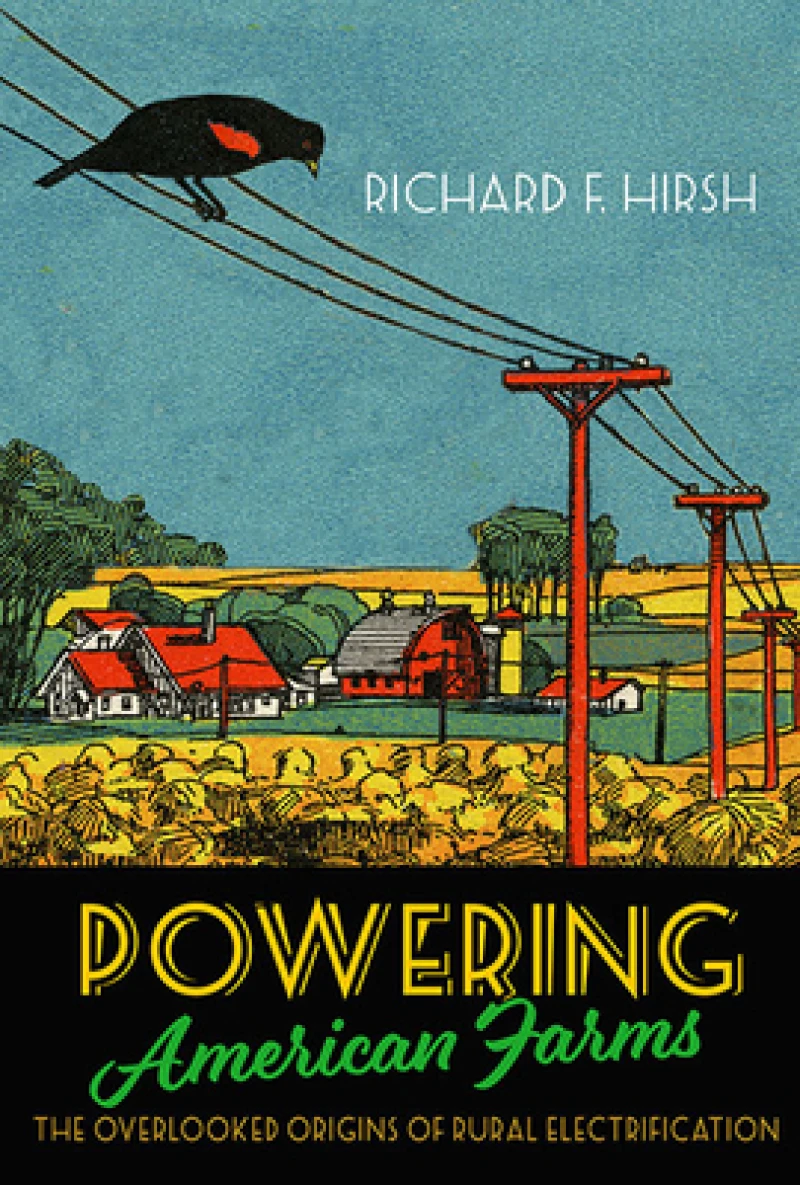
Powering American Farms : The Overlooked Origins of Rural Electrification
Book Details
Format
Hardback or Cased Book
ISBN-10
1421443627
ISBN-13
9781421443621
Publisher
Johns Hopkins University Press
Imprint
Johns Hopkins University Press
Country of Manufacture
US
Country of Publication
GB
Publication Date
Aug 9th, 2022
Print length
400 Pages
Weight
658 grams
Dimensions
22.90 x 15.20 x 3.10 cms
Product Classification:
History of the AmericasHistory of engineering & technology
Ksh 8,450.00
Werezi Extended Catalogue
0 in stock
Delivery Location
Delivery fee: Select location
Secure
Quality
Fast
The untold story of the power industry's efforts to electrify growing numbers of farms in the years before the creation of Depression-era government programs. Even after decades of retelling, the story of rural electrification in the United States remains dramatic and affecting. As textbooks and popular histories inform us, farmers obtained electric service only because a compassionate federal government established the Tennessee Valley Authority and the Rural Electrification Administration (REA) during the Great Depression of the 1930s. The agencies' success in raising the standard of living for millions of Americans contrasted with the failure of the greedy big-city utility companies, which showed little interest in the apparently unprofitable nonurban market. Traditional accounts often describe the nation's population as split in two, separated by access to a magical form of energy: just past cities' limits, a bleak, preindustrial class of citizens endured, literally in near darkness at night and envious of their urban cousins, who enjoyed electrically operated lights, refrigerators, radios, and labor-saving appliances. In Powering American Farms, Richard F. Hirsh challenges the notion that electric utilities neglected rural customers in the years before government intervention. Drawing on previously unexamined resources, Hirsh demonstrates that power firms quadrupled the number of farms obtaining electricity in the years between 1923 and 1933, for example. Though not all corporate managers thought much of the farm business, a cadre of rural electrification advocates established the knowledge base and social infrastructure upon which New Deal organizations later capitalized. The book also suggests that the conventional storyline of rural electrification remains popular because it contains a colorful hero, President Franklin D. Roosevelt, and villainous utility magnates, such as Samuel Insull, who make for an engaging—but distorted—narrative. Hirsh describes the evolution of power company managers' thinking in the 1920s and early 1930s—from believing that rural electrification made no economic sense to realizing that serving farmers could mitigate industry-wide problems. This transformation occurred as agricultural engineers in land-grant universities, supported by utilities, demonstrated productive electrical technologies that yielded healthy profits to farmers and companies alike. Gaining confidence in the value of rural electrification, private firms strung wires to more farms than did the REA until 1950, a fact conveniently omitted in conventional accounts. Powering American Farms will interest academic and lay readers of New Deal history, the history of technology, and revisionist historiography.
Get Powering American Farms by at the best price and quality guaranteed only at Werezi Africa's largest book ecommerce store. The book was published by Johns Hopkins University Press and it has pages.

