
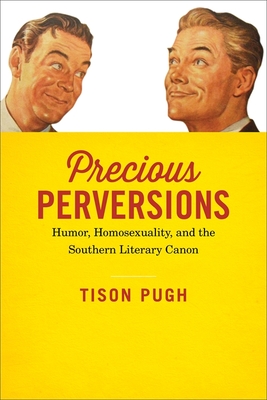
Precious Perversions : Humor, Homosexuality, and the Southern Literary Canon
by
Tison Pugh
Book Details
Format
Hardback
Book Series
Southern Literary Studies
ISBN-10
0807162698
ISBN-13
9780807162699
Publisher
Louisiana State University Press
Imprint
Louisiana State University Press
Country of Manufacture
US
Country of Publication
GB
Publication Date
Mar 21st, 2016
Print length
240 Pages
Weight
333 grams
Dimensions
23.60 x 15.10 x 2.20 cms
Product Classification:
Literature: history & criticismLiterature: history and criticismGender studies, gender groupsGender studies: ‘trans’, transgender people and gender varianceLGBTQIA+ Studies / topicsGender studies, gender groupsGender studies: transsexuals & hermaphroditismGay & Lesbian studies
KSh 5,800.00
Temporarily out of stock, due soon
0 in stock
Delivery Location
Delivery fee: Select location
Secure
Quality
Fast
Challenges the premises that elevate William Faulkner and diminish Rita Mae Brown, that esteem Walker Percy yet marginalize David Sedaris, by arguing for the inclusion of gay comic authors as defining voices in the field.
Southern literature has long been heralded for its tragic sentiments, in its somber and necessary acknowledgments of the region's tormented past, as it has concomitantly asserted an overarchingly heteronormative vision of Southern life. Yet a pantheon of great authors, ranging from Tennessee Williams, Carson McCullers, and Truman Capote to the present-day voices of Florence King, Dorothy Allison, and David Sedaris, collectively attest both to the vibrancy of queer experience and to the prevalence of humor found in this rich regional canon. In Precious Perversions: Humor, Homosexuality, and the Southern Literary Canon, Tison Pugh challenges the premises that elevate William Faulkner and diminish Rita Mae Brown, that esteem Walker Percy yet marginalize David Sedaris, by arguing for the inclusion of gay comic authors as defining voices in the field.
By redefining the tenets of Southern literature, Pugh reveals its long-overlooked or discounted aspects of gay humor. Noting, for example, that Tennessee Williams is revered as a dramatist who probes the heart of the human condition rather than for his submerged camp humor, and that Truman Capote's comic cinema and literature never eclipsed his more serious works, Pugh establishes a history of mainstream and academic critique that has consistently ignored queer humor. Likewise, Florence King and Rita Mae Brown wrote defining narratives of Southern lesbian experience in, respectively, Confessions of a Failed Southern Lady and Rubyfruit Jungle, yet they are almost entirely neglected in accounts of the literary South. More recently, the author shows, the critical reception of Dorothy Allison's Bastard Out of Carolina testifies to an overarching interest in the traumatic aspects of her poetry and fiction rather than in her humor and its cathartic power. Pugh also asserts that David Sedaris, as a writer of the post-Southern South, who appears to fall beyond the parameters of regional literature for many readers, creates a new, humorous vision of the South that recognises both its pained history and its grudging accession to modernity.
Drawing from works of key queer, Southern writers, Pugh sets forth a new vision of Southern literature- one illuminated by the humor of gay voices no longer at the margins.
By redefining the tenets of Southern literature, Pugh reveals its long-overlooked or discounted aspects of gay humor. Noting, for example, that Tennessee Williams is revered as a dramatist who probes the heart of the human condition rather than for his submerged camp humor, and that Truman Capote's comic cinema and literature never eclipsed his more serious works, Pugh establishes a history of mainstream and academic critique that has consistently ignored queer humor. Likewise, Florence King and Rita Mae Brown wrote defining narratives of Southern lesbian experience in, respectively, Confessions of a Failed Southern Lady and Rubyfruit Jungle, yet they are almost entirely neglected in accounts of the literary South. More recently, the author shows, the critical reception of Dorothy Allison's Bastard Out of Carolina testifies to an overarching interest in the traumatic aspects of her poetry and fiction rather than in her humor and its cathartic power. Pugh also asserts that David Sedaris, as a writer of the post-Southern South, who appears to fall beyond the parameters of regional literature for many readers, creates a new, humorous vision of the South that recognises both its pained history and its grudging accession to modernity.
Drawing from works of key queer, Southern writers, Pugh sets forth a new vision of Southern literature- one illuminated by the humor of gay voices no longer at the margins.
Get Precious Perversions by Tison Pugh at the best price and quality guaranteed only at Werezi Africa's largest book ecommerce store. The book was published by Louisiana State University Press and it has 240 pages.
Customers Who Bought This Also Bought

On Freedom
KSh 2,350.00
The Origin of Others
KSh 3,600.00
There Are Places in the World Where Rules Are Less Important Than Kindness
KSh 3,600.00

Amazing Peace
KSh 3,050.00
Lewis Carroll and "Alice" on Stage
KSh 9,350.00

There Are Places in the World Where Rules Are Less Important Than Kindness
KSh 2,350.00
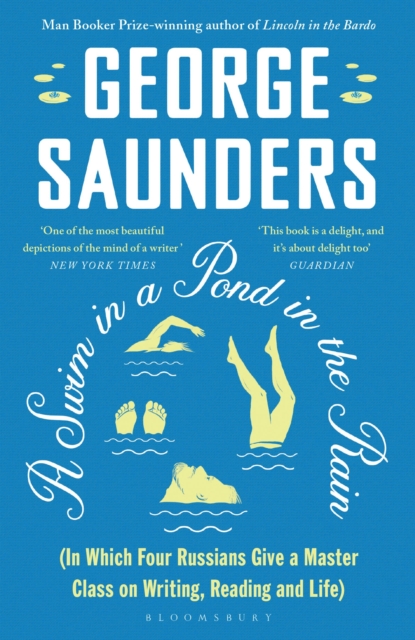
Swim in a Pond in the Rain
KSh 2,000.00

The Obscene Bird of Night – unabridged, centennial edition
KSh 3,050.00

I''m Not Here to Give a Speech
KSh 1,800.00

This Craft of Verse
KSh 3,600.00

On Great Writing (On the Sublime)
KSh 2,000.00

The Naked Eye
KSh 2,350.00
More by Tison Pugh
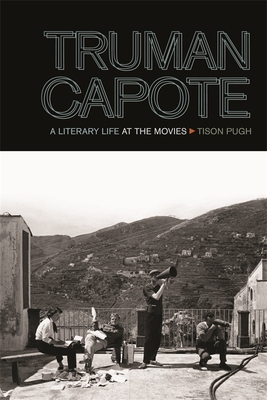
Truman Capote
KSh 7,500.00

Engagements with Literary Gaming
KSh 30,950.00
Queer Chivalry
KSh 6,500.00

Engagements with Literary Gaming
KSh 7,900.00

Southerners Acting Southern
KSh 6,300.00

Harry Potter and Beyond
KSh 3,050.00

An Introduction to Geoffrey Chaucer
KSh 10,100.00

Southerners Acting Southern
KSh 10,100.00
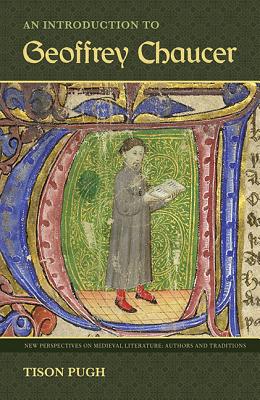
An Introduction to Geoffrey Chaucer
KSh 3,300.00

Queer Oz
KSh 15,850.00
On the Queerness of Early English Drama
KSh 7,900.00

Great Writing 5 with Online Access Code
KSh 8,350.00
More in This Genre
On Freedom
KSh 2,350.00
The Origin of Others
KSh 3,600.00
There Are Places in the World Where Rules Are Less Important Than Kindness
KSh 3,600.00
Amazing Peace
KSh 3,050.00
Lewis Carroll and "Alice" on Stage
KSh 9,350.00
There Are Places in the World Where Rules Are Less Important Than Kindness
KSh 2,350.00
