
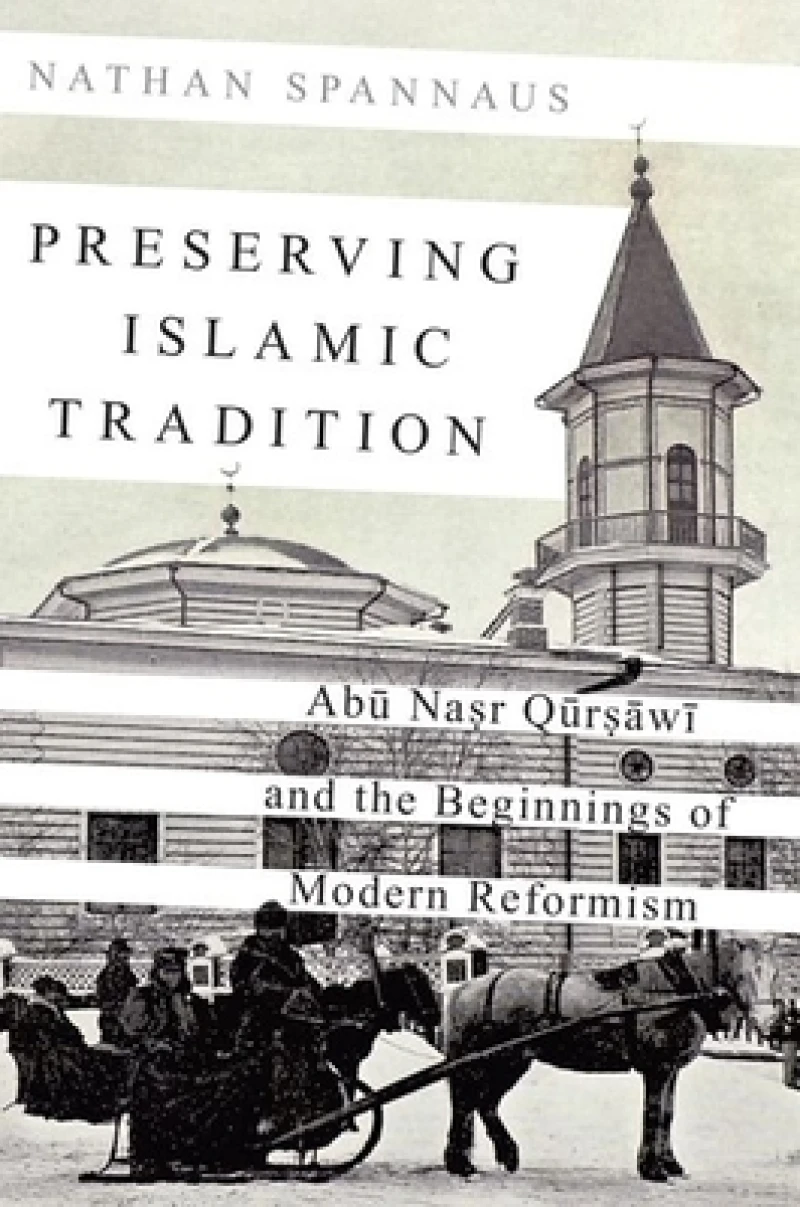
Preserving Islamic Tradition : Abu Nasr Qursawi and the Beginnings of Modern Reformism
Book Details
Format
Hardback or Cased Book
ISBN-10
0190251786
ISBN-13
9780190251789
Publisher
Oxford University Press Inc
Imprint
Oxford University Press Inc
Country of Manufacture
US
Country of Publication
GB
Publication Date
Sep 10th, 2019
Print length
352 Pages
Weight
630 grams
Dimensions
16.10 x 24.40 x 2.90 cms
Product Classification:
20th century history: c 1900 to c 2000Islamic & Arabic philosophyIslamIslamic studies
Ksh 13,750.00
Werezi Extended Catalogue
0 in stock
Delivery Location
Delivery fee: Select location
Secure
Quality
Fast
The end of the eighteenth century was a transformational period for the Muslim communities in the Russian Empire and their relationship with the tsarist state. One of the major figures to emerge out of this context was the reformer Abu Nasr Qursawi (1776-1812). A controversial religious scholar, he put forward a sweeping reform of the Islamic scholarly tradition that was influential among these communities into the twentieth century. Nathan Spannaus presents the first detailed analysis of Qursawi''s reformism, both in its contours and broad historical setting, addressing issues of modernity, secularity, tradition, and intellectual history.
The end of the eighteenth century was a transformational period for the Muslim communities of the Russian Empire and their relationship with the tsarist state. Though they had been under Russian rule since the sixteenth century, it was at this time that they were incorporated into the imperial bureaucracy, most significantly through the founding of an official hierarchy for the Islamic religious scholars in 1788. The introduction of a state-backed structure for Muslim religious institutions altered Islamic religious authority and, in turn, religious discourse. One of the major figures to emerge from this new context was Abu Nasr Qursawi (1776-1812). A controversial figure who was condemned for heresy in Bukhara in 1808, Qursawi put forward a sweeping reform of the Islamic scholarly tradition. Focusing on taqlid, the principle of conformity to established doctrine, Qursawi argued that its overuse had weakened scholarship in the areas of Islamic law (fiqh) and theology (kalam) and undermined scholars'' ability to serve as religious guides. In Preserving Islamic Tradition, Nathan Spannaus presents the first detailed analysis of Qursawi''s reformist project, both in its contours and broad historical setting. Spannaus shows how state control of Muslim institutions impacted religious discourse, but also how it altered the entire religious environment into the twentieth century. Addressing issues of modernity, secularity, tradition, and intellectual history, Preserving Islamic Tradition demonstrates how the interaction with a European imperial state transformed the Islamic tradition, both directly and indirectly, and elicited new forms of religious thought and discourse.
Get Preserving Islamic Tradition by at the best price and quality guaranteed only at Werezi Africa's largest book ecommerce store. The book was published by Oxford University Press Inc and it has pages.

