
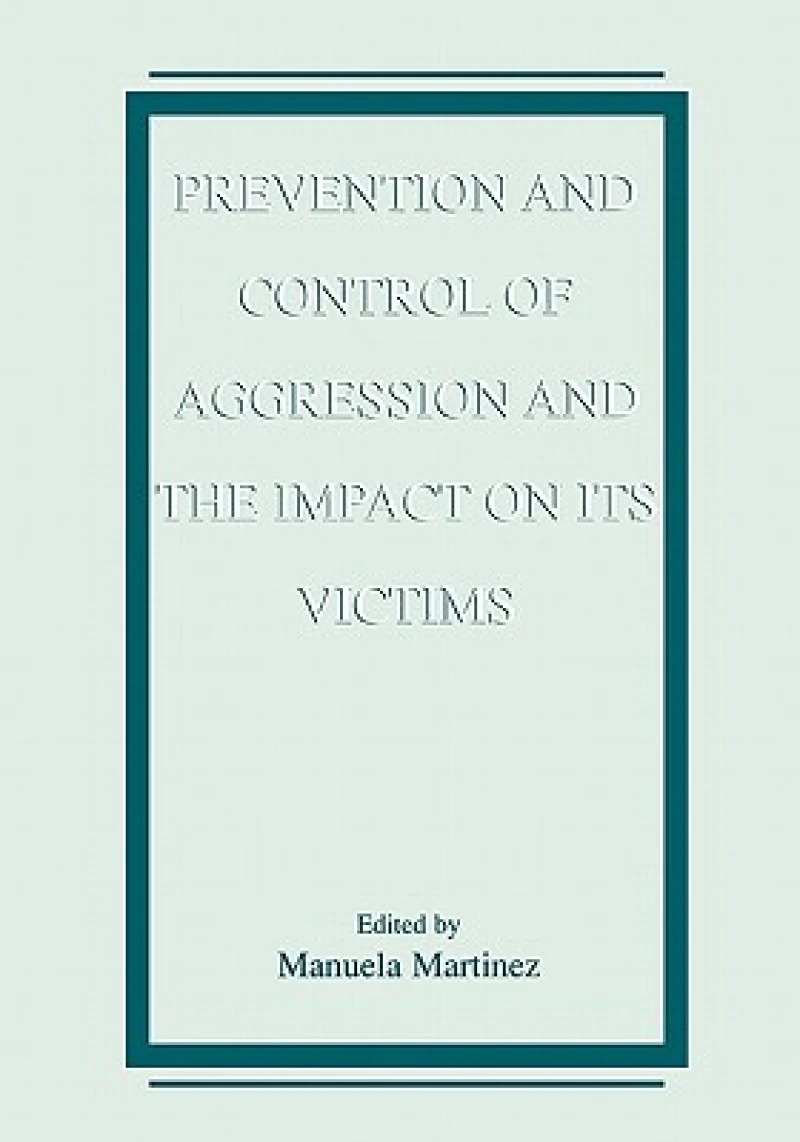
Prevention and Control of Aggression and the Impact on its Victims
Softcover reprint of the original 1st ed. 2001
Book Details
Format
Paperback / Softback
ISBN-10
1441933662
ISBN-13
9781441933669
Edition
Softcover reprint of the original 1st ed. 2001
Publisher
Springer-Verlag New York Inc.
Imprint
Springer-Verlag New York Inc.
Country of Manufacture
US
Country of Publication
GB
Publication Date
Dec 1st, 2010
Print length
452 Pages
Weight
498 grams
Dimensions
20.30 x 12.80 x 3.00 cms
Ksh 16,200.00
Werezi Extended Catalogue
0 in stock
Delivery Location
Delivery fee: Select location
Secure
Quality
Fast
Proceedings of the XIV World Meeting of the International Society for the Research on Aggression: Prevention and Control of Aggression and the Impact on its Victims, held in July 9-14, 2000, in Valencia, Spain.
Proceedings of the XIV World Meeting of the International Society for the Research on Aggression: Prevention and Control of Aggression and the Impact on its Victims, held in July 9-14, 2000, in Valencia, Spain.
Aggression is an aspect of human society that has interested scientists for many decades, and their work has provided important knowledge about its causes and way to prevent and control this behavior. However, not only scientists but many professionals working in the wide spectrum of society, from family to international policy, are interested in having programs of interventions capable of reducing aggression and violence in our society.
This comprehensive book is a compendium of most research approaches that are currently taking place in the field of aggression, focusing on the interventions to control and prevent this behavior and the impact on its victims. The chapters of the book include biological approaches to aggression, such as neuroanatomy, neurochemistry, neuroendocrinology, genetics and psychopathology; information about aggression in children and adolescents in different settings such as family, school and community; characteristics if aggression in specific relationships such as marital and sexual, and specific settings such as bars, prisons and traffic; and cultural approaches to aggression, social prejudice, war and programs of peace. Furthermore, a small number of representative chapters about victims are included, ranging from the impact of aggression on behavior and physiology in animal models to victims of war.
As this book highlights, the interventions to prevent and control aggression have to be diverse (highly heterogenic) in order to deal with all aspects of human beings and society, ranging from pharmacological control in individuals to programs of peace to promote respect among people and among nations.
Scientists, academics and professionals dealing with any facet of aggression and its impact on our society will obtain in this book information about the complexity of this research field and the ways to approach our objective: eliminate aggression from the human behavioral repertoire.
Aggression is an aspect of human society that has interested scientists for many decades, and their work has provided important knowledge about its causes and way to prevent and control this behavior. However, not only scientists but many professionals working in the wide spectrum of society, from family to international policy, are interested in having programs of interventions capable of reducing aggression and violence in our society.
This comprehensive book is a compendium of most research approaches that are currently taking place in the field of aggression, focusing on the interventions to control and prevent this behavior and the impact on its victims. The chapters of the book include biological approaches to aggression, such as neuroanatomy, neurochemistry, neuroendocrinology, genetics and psychopathology; information about aggression in children and adolescents in different settings such as family, school and community; characteristics if aggression in specific relationships such as marital and sexual, and specific settings such as bars, prisons and traffic; and cultural approaches to aggression, social prejudice, war and programs of peace. Furthermore, a small number of representative chapters about victims are included, ranging from the impact of aggression on behavior and physiology in animal models to victims of war.
As this book highlights, the interventions to prevent and control aggression have to be diverse (highly heterogenic) in order to deal with all aspects of human beings and society, ranging from pharmacological control in individuals to programs of peace to promote respect among people and among nations.
Scientists, academics and professionals dealing with any facet of aggression and its impact on our society will obtain in this book information about the complexity of this research field and the ways to approach our objective: eliminate aggression from the human behavioral repertoire.
Get Prevention and Control of Aggression and the Impact on its Victims by at the best price and quality guaranteed only at Werezi Africa's largest book ecommerce store. The book was published by Springer-Verlag New York Inc. and it has pages.

