
Book Details
Format
Hardback
Book Series
Progress in Mathematics
ISBN-10
0817637435
ISBN-13
9780817637439
Edition
2 Revised edition
Publisher
Birkhauser Boston Inc
Imprint
Birkhauser Boston Inc
Country of Manufacture
GB
Country of Publication
GB
Publication Date
Oct 1st, 1994
Print length
480 Pages
Weight
836 grams
Dimensions
24.40 x 16.40 x 3.30 cms
Product Classification:
Number theoryComputer science
KSh 14,400.00
Currently unavailable
0 in stock
Delivery Location
Delivery fee: Select location
Secure
Quality
Fast
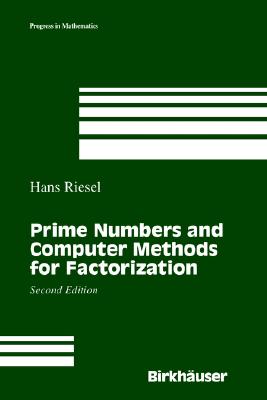
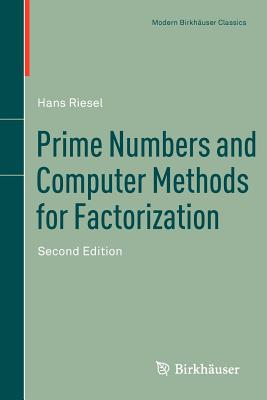
Includes important advances in computational prime number theory and in factorization. This book treats four fundamental problems: the number of primes below a given limit, the approximate number of primes, the recognition of primes, and the factorization of large numbers. It is suitable for mathematicians and students of applied number theory.
1. The Number of Primes Below a Given Limit.- What Is a Prime Number?.- The Fundamental Theorem of Arithmetic.- Which Numbers Are Primes? The Sieve of Eratosthenes.- General Remarks Concerning Computer Programs.- A Sieve Program.- Compact Prime Tables.- Hexadecimal Compact Prime Tables.- Difference Between Consecutive Primes.- The Number of Primes Below x.- Meissel''s Formula.- Evaluation of Pk(x, a).- Lehmer''s Formula.- Computations.- A Computation Using Meissel''s Formula.- A Computation Using Lehmer''s Formula.- A Computer Program Using Lehmer''s Formula.- Mapes'' Method.- Deduction of Formulas.- A Worked Example.- Mapes'' Algorithm.- Programming Mapes'' Algorithm.- Recent Developments.- Results.- Computational Complexity.- Comparison Between the Methods Discussed.- 2. The Primes Viewed at Large.- No Polynomial Can Produce Only Primes.- Formulas Yielding All Primes.- The Distribution of Primes Viewed at Large. Euclid''s Theorem.- The Formulas of Gauss and Legendre for ?(x). The Prime Number Theorem.- The Chebyshev Function ?(x).- The Riemann Zeta-function.- The Zeros of the Zeta-function.- Conversion From f(x) Back to ?(x).- The Riemann Prime Number Formula.- The Sign of li x ? ?(x).- The Influence of the Complex Zeros of ?(s) on ?(x).- The Remainder Term in the Prime Number Theorem.- Effective Inequalities for ?(x), pn, and ?(x).- The Number of Primes in Arithmetic Progressions.- 3. Subtleties in the Distribution of Primes.- The Distribution of Primes in Short Intervals.- Twins and Some Other Constellations of Primes.- Admissible Constellations of Primes.- The Hardy-Littlewood Constants.- The Prime k-Tuples Conjecture.- Theoretical Evidence in Favour of the Prime k-Tuples Conjecture.- Numerical Evidence in Favour of the Prime k-Tuples Conjecture.- The Second Hardy-Littlewood Conjecture.- The Midpoint Sieve.- Modification of the Midpoint Sieve.- Construction of Superdense Admissible Constellations.- Some Dense Clusters of Primes.- The Distribution of Primes Between the Two Series 4n + 1 and 4n + 3.- Graph of the Function ?4,3(x) ? ?4,1(x).- The Negative Regions.- The Negative Blocks.- Large Gaps Between Consecutive Primes.- The Cramér Conjecture.- 4. The Recognition of Primes.- Tests of Primality and of Compositeness.- Factorization Methods as Tests of Compositeness.- Fermat''s Theorem as Compositeness Test.- Fermat''s Theorem as Primality Test.- Pseudoprimes and Probable Primes.- A Computer Program for Fermat''s Test.- The Labor Involved in a Fermat Test.- Carmichael Numbers.- Euler Pseudoprimes.- Strong Pseudoprimes and a Primality Test.- A Computer Program for Strong Pseudoprime Tests.- Counts of Pseudoprimes and Carmichael Numbers.- Rigorous Primality Proofs.- Lehmer''s Converse of Fermat''s Theorem.- Formal Proof of Theorem 4.3.- Ad Hoc Search for a Primitive Root.- The Use of Several Bases.- Fermat Numbers and Pepin''s Theorem.- Cofactors of Fermat Numbers.- Generalized Fermat Numbers.- A Relaxed Converse of Fermat''s Theorem.- Proth''s Theorem.- Tests of Compositeness for Numbers of the form N = h · 2n ± k.- An Alternative Approach.- Certificates of Primality.- Primality Tests of Lucasian Type.- Lucas Sequences.- The Fibonacci Numbers.- Large Subscripts.- An Alternative Deduction.- Divisibility Properties of the Numbers Un.- Primality Proofs by Aid of Lucas Sequences.- Lucas Tests for Mersenne Numbers.- A Relaxation of Theorem 4.8.- Pocklington''s Theorem.- Lehmer-Pocklington''s Theorem.- Pocklington-Type Theorems for Lucas Sequences.- Primality Tests for Integers of the form N = h · 2n ? 1, when 3?h.- Primality Tests for N = h · 2n ? 1, when 3?h.- The Combined N ? 1 and N + 1 Test.- Lucas Pseudoprimes.- Modern Primality Proofs.- The Jacobi Sum Primality Test.- Three Lemmas.- Lenstra''s Theorem.- The Sets P and Q.- Running Time for the APRCL Test.- Elliptic Curve Primality Proving, ECPP.- The Goldwasser-Kilian Test.- Atkin''s Test.- 5. Classical Methods of Factorization.- When Do We Attempt Factorization?.- Tri
Get Prime Numbers and Computer Methods for Factorization by Hans Riesel at the best price and quality guaranteed only at Werezi Africa's largest book ecommerce store. The book was published by Birkhauser Boston Inc and it has 480 pages.
Customers Who Bought This Also Bought

The Random Number Code
KSh 36,000.00

Algebra and Discrete Mathematics for Economics
KSh 13,150.00
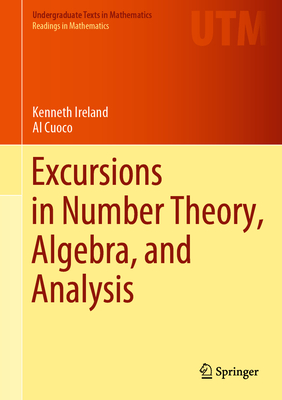
Excursions in Number Theory, Algebra, and Analysis
KSh 9,900.00
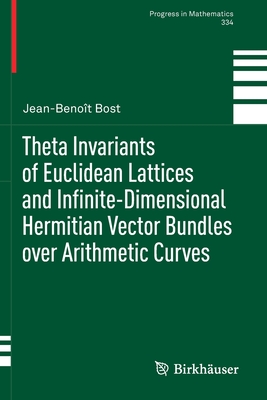
Theta Invariants of Euclidean Lattices and Infinite-Dimensional Hermitian Vector Bundles over Arithmetic Curves
KSh 19,800.00
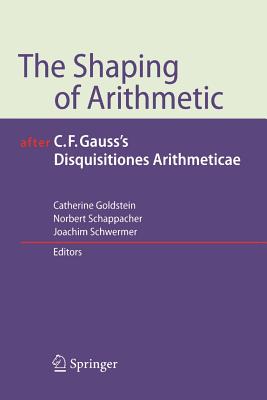
The Shaping of Arithmetic after C.F. Gauss''s Disquisitiones Arithmeticae
KSh 16,200.00

Arithmetic Fundamental Groups and Noncommutative Algebra
KSh 22,350.00
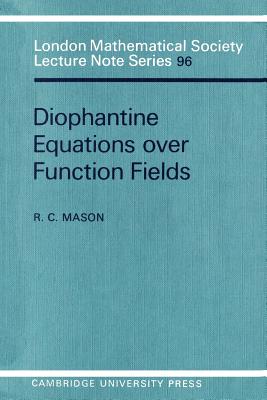
Diophantine Equations Over Function Fields
KSh 9,000.00

The Little Book of Bigger Primes
KSh 8,100.00

Approximate Approximations
KSh 19,800.00
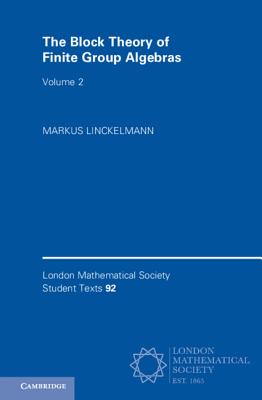
The Block Theory of Finite Group Algebras: Volume 2
KSh 20,900.00
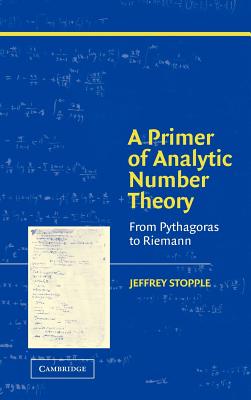
A Primer of Analytic Number Theory
KSh 23,600.00

From Analysis to Visualization
KSh 16,200.00
More by Hans Riesel
More in This Genre
The Random Number Code
KSh 36,000.00
Algebra and Discrete Mathematics for Economics
KSh 13,150.00
Excursions in Number Theory, Algebra, and Analysis
KSh 9,900.00
Theta Invariants of Euclidean Lattices and Infinite-Dimensional Hermitian Vector Bundles over Arithmetic Curves
KSh 19,800.00
The Shaping of Arithmetic after C.F. Gauss''s Disquisitiones Arithmeticae
KSh 16,200.00
Arithmetic Fundamental Groups and Noncommutative Algebra
KSh 22,350.00
