
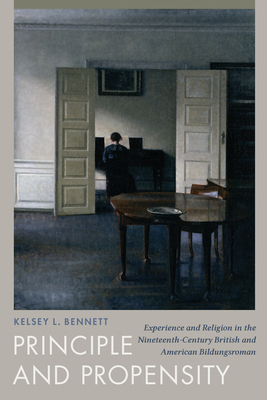
Principle and Propensity : Experience and Religion in the Nineteenth-Century British and American Bildungsroman
Book Details
Format
Hardback
ISBN-10
1611173647
ISBN-13
9781611173642
Publisher
University of South Carolina Press
Imprint
University of South Carolina Press
Country of Manufacture
US
Country of Publication
GB
Publication Date
Sep 25th, 2014
Print length
192 Pages
Weight
460 grams
Dimensions
16.00 x 23.60 x 2.00 cms
Product Classification:
Literary companions, book reviews & guidesLiterary companions, book reviews and guides
KSh 7,900.00
Werezi Extended Catalogue
Delivery in 12 days
1 copies in stock
Delivery Location
Delivery fee: Select location
Delivery in 12 days
Secure
Quality
Fast
Scholars have traditionally relied upon the assumption that the nineteenth-century bildungsroman in the Goethean tradition is an intrinsically secular genre exclusive to Europe, incompatible with the literature of a democratically based culture. By combining intellectual history with genre criticism, Principle and Propensity provides a critical reassessment of the bildungsroman, beginning with its largely overlooked theological premises: bildung as formation of the self in the image of God. Kelsey L. Bennett examines the dynamic differences, tensions, and possibilities that arise as interest in spiritual growth, or self-formation, collides with the democratic and quasi-democratic culture in the nineteenth-century British and American bildungsroman.
Beginning with the idea that interest in an individual's moral and psychological growth, or bildung, originated as a religious exercise in the context of Protestant theological traditions, Bennett shows how these traditions found ways into the bildungsroman, the literary genre most closely concerned with the relationship between individual experience and self-formation.
Part 1 of Principle and Propensity examines the attributes of parallel national traditions of spiritual self-formation as they convened under the auspices of the international revival movements: the Evangelical Revival, the Great Awakening, and the renewal of Pietism in Germany, led respectively by John Wesley, Jonathan Edwards, and Count Nikolaus Ludwig Zinzendorf. Further it reveals the ways in which spiritual self-formation and the international revival movements coalesce in the bildungsroman prototype, Johann Wolfgang von Goethe's Wilhelm Meisters Lehrjahre (Wilhelm Meister's Apprenticeship). Part 2 in turn explores the ways these traditions manifest themselves in the nineteenth-century bildungsroman in England and the United States through Jane Eyre, David Copperfield, Pierre, and Portrait of a Lady.
Though Wilhelm Meisters Lehrjahre was a library staple for most serious writers in nineteenth-century England and in the United States, Bennett shows how writers such as Charlotte Brontë, Charles Dickens, Herman Melville, and Henry James also drew on their own religious traditions of self-formation, adding richness and distinction to the received genre.
Beginning with the idea that interest in an individual's moral and psychological growth, or bildung, originated as a religious exercise in the context of Protestant theological traditions, Bennett shows how these traditions found ways into the bildungsroman, the literary genre most closely concerned with the relationship between individual experience and self-formation.
Part 1 of Principle and Propensity examines the attributes of parallel national traditions of spiritual self-formation as they convened under the auspices of the international revival movements: the Evangelical Revival, the Great Awakening, and the renewal of Pietism in Germany, led respectively by John Wesley, Jonathan Edwards, and Count Nikolaus Ludwig Zinzendorf. Further it reveals the ways in which spiritual self-formation and the international revival movements coalesce in the bildungsroman prototype, Johann Wolfgang von Goethe's Wilhelm Meisters Lehrjahre (Wilhelm Meister's Apprenticeship). Part 2 in turn explores the ways these traditions manifest themselves in the nineteenth-century bildungsroman in England and the United States through Jane Eyre, David Copperfield, Pierre, and Portrait of a Lady.
Though Wilhelm Meisters Lehrjahre was a library staple for most serious writers in nineteenth-century England and in the United States, Bennett shows how writers such as Charlotte Brontë, Charles Dickens, Herman Melville, and Henry James also drew on their own religious traditions of self-formation, adding richness and distinction to the received genre.
Get Principle and Propensity by Kelsey L. Bennett at the best price and quality guaranteed only at Werezi Africa's largest book ecommerce store. The book was published by University of South Carolina Press and it has 192 pages.
Customers Who Bought This Also Bought

Bookish
KSh 3,400.00

Literary Landscap
KSh 3,950.00

The Women Writers' Handbook
KSh 2,350.00

Tolstoy Together
KSh 2,900.00

A Study Guide for Doris Lessing's "Through the Tunnel"
KSh 1,800.00
Approaches to Teaching Dostoevsky's Crime and Punishment
KSh 5,600.00

A Companion to the Works of Elizabeth Strout
KSh 4,150.00
Reader’s Companion to Mikhail Bulgakov’s The Master and Margarita
KSh 16,550.00
Reader’s Companion to Mikhail Bulgakov’s The Master and Margarita
KSh 4,750.00

Possessed
KSh 2,000.00

A Study Guide for Naguib Mahfouz's "Fountain and Tomb"
KSh 1,800.00

The Radical Fiction of Ann Petry
KSh 6,650.00
