
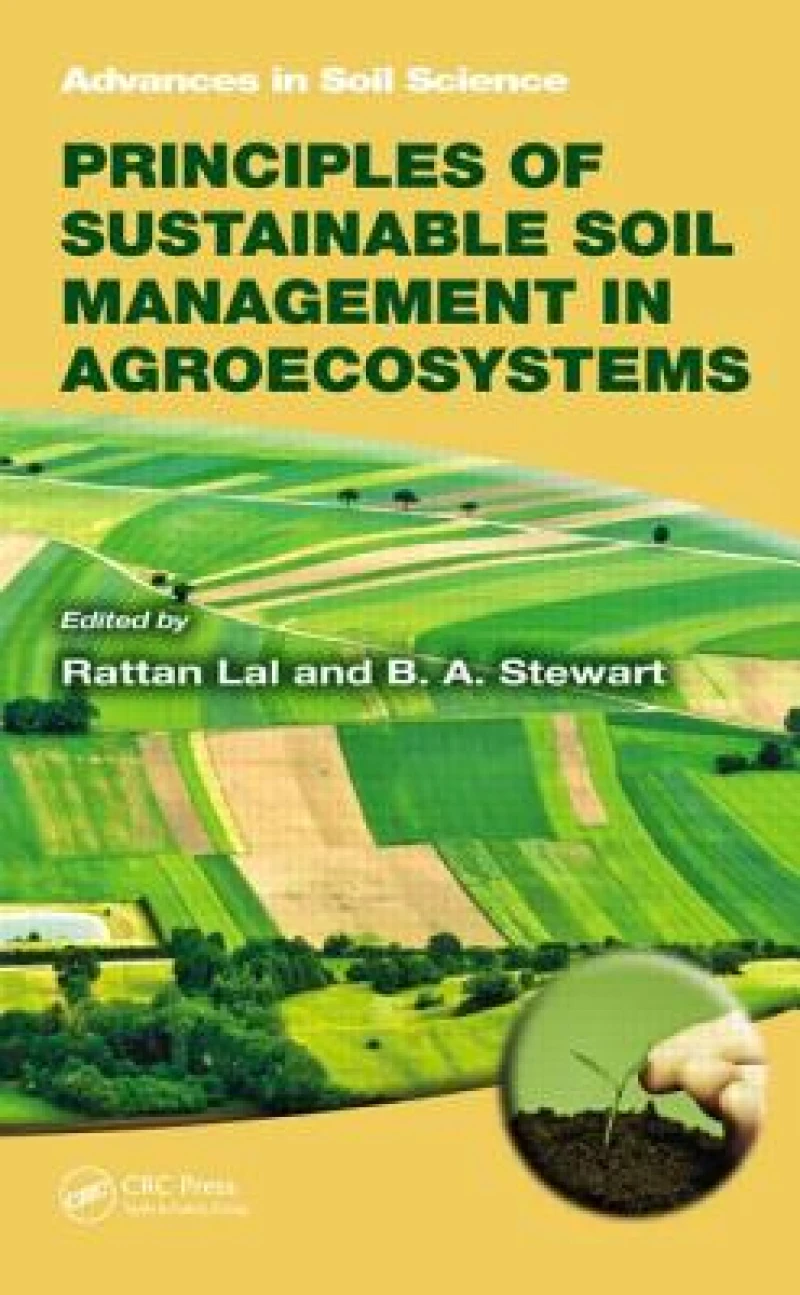
Principles of Sustainable Soil Management in Agroecosystems
Book Details
Delivery Location
Delivery fee: Select location
This book describes the laws of sustainable soil management to enhance ecosystem services while restoring degraded soils and promoting sustainable use. With chapters contributed by world-class soil scientists, ecologists, and social scientists, the book outlines critical changes in management of agricultural soils necessary to address global issues of food security, climate change, water security, and energy needs. Topics covered include organic farming, soil fertility, crop-symbiotic soil microbiota, human-driven soil degradation, soil degradation and restoration, carbon sink capacity of soils, and soil renewal and sustainability.
With the use of high-level soil management technology, Africa could feed several billion people, yet food production has generally stagnated since the 1960s. No matter how powerful the seed technology, the seedling emerging from it can flourish only in a healthy soil. Accordingly, crop yields in Africa, South Asia, and the Caribbean could be doubled or tripled through adoption of technologies based on laws of sustainable soil management. Principles of Sustainable Soil Management in Agroecosystems describes the application of these laws to enhance ecosystem services while restoring degraded soils and promoting sustainable use.
With chapters contributed by world-class soil scientists, ecologists, and social scientists, this book outlines critical changes in management of agricultural soils necessary to achieve food security and meet the food demands of the present and projected future population. These changes include conversion to no-till and conservation agriculture; adoption of strategies of integrated nutrient management, water harvesting, and use of drip sub-irrigation; complex cropping/farming systems such as cover cropping and agroforestry; and use of nano-enhanced fertilizers.
The book is based on the premise that it is not possible to extract more from a soil than what is put into it without degrading its quality. The strategy is to replace what is removed, respond wisely to what is changed, and be pro-active to what may happen because of natural and anthropogenic perturbations. The chapters, which exemplify these ideas, cover a range of topics including organic farming, soil fertility, crop-symbiotic soil microbiota, human-driven soil degradation, soil degradation and restoration, carbon sink capacity of soils, soil renewal and sustainability, and the marginality principle.
Get Principles of Sustainable Soil Management in Agroecosystems by at the best price and quality guaranteed only at Werezi Africa's largest book ecommerce store. The book was published by Taylor & Francis Inc and it has pages.

