
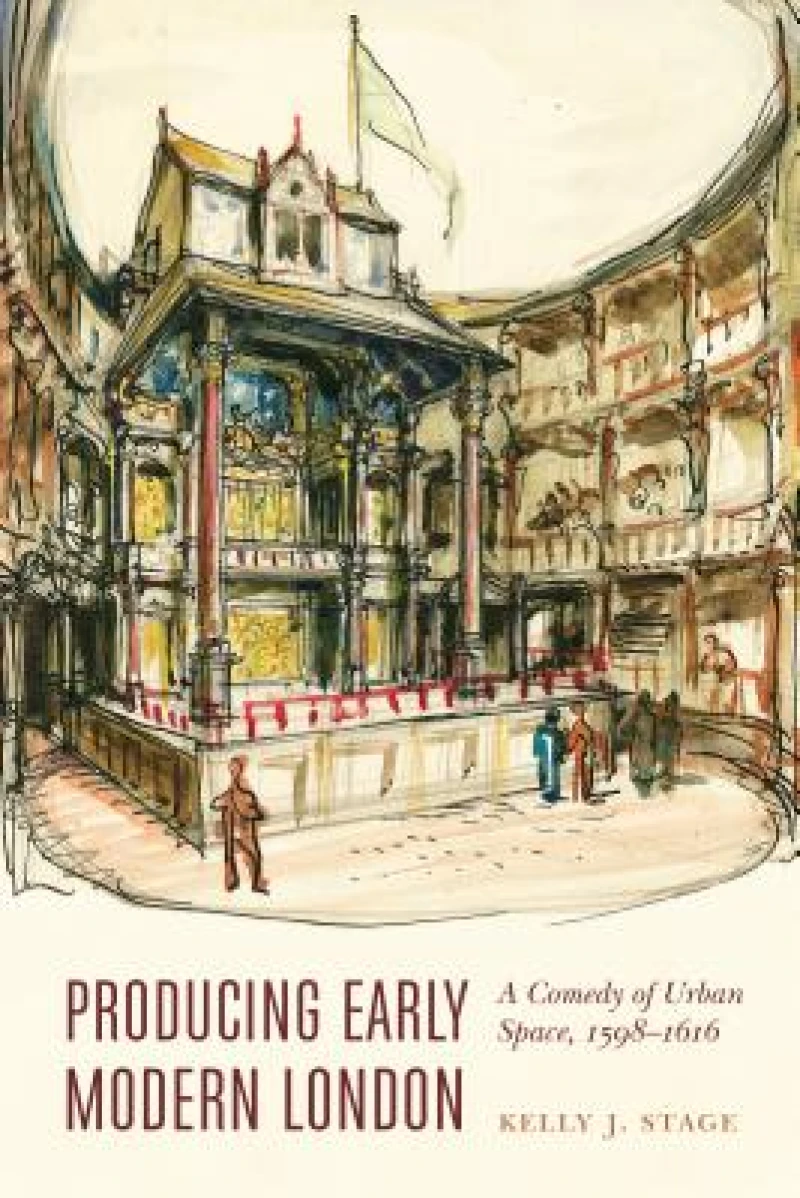
Producing Early Modern London : A Comedy of Urban Space, 1598–1616
Book Details
Format
Hardback or Cased Book
Book Series
Early Modern Cultural Studies
ISBN-10
1496201817
ISBN-13
9781496201812
Publisher
University of Nebraska Press
Imprint
University of Nebraska Press
Country of Manufacture
US
Country of Publication
GB
Publication Date
Jan 1st, 2018
Print length
354 Pages
Weight
704 grams
Dimensions
23.60 x 16.10 x 3.00 cms
Ksh 7,900.00
Werezi Extended Catalogue
Delivery in 14 days
1 copies in stock
Delivery Location
Delivery fee: Select location
Delivery in 14 days
Secure
Quality
Fast
Early seventeenth-century London playwrights used actual locations in their comedies while simultaneously exploring London as an imagined, ephemeral, urban space. Producing Early Modern London examines this tension between representing place and producing urban space. In analyzing the theater’s use of city spaces and places, Kelly J. Stage shows how the satirical comedies of the early seventeenth century came to embody the city as the city embodied the plays.
Stage focuses on city plays by George Chapman, Thomas Dekker, William Haughton, Ben Jonson, John Marston, Thomas Middleton, and John Webster. While the conventional labels of “city comedy” or “citizen comedy” have often been applied to these plays, she argues that London comedies defy these genre categorizations because the ruptures, expansions, conflicts, and imperfections of the expanding city became a part of their form. Rather than defining the “city comedy,” comedy in this period proved to be the genre of London.
As the expansion of London’s social space exceeded the strict confines of the “square mile,” the city burgeoned into a new metropolis. The satiric comedies of this period became, in effect, playgrounds for urban experimentation. Early seventeenth-century playwrights seized the opportunity to explore the myriad ways in which London worked, taking the expected-a romance plot, a typical father-son conflict, a cross-dressing intrigue-and turning it into a multifaceted, complex story of interaction and proximity.
Stage focuses on city plays by George Chapman, Thomas Dekker, William Haughton, Ben Jonson, John Marston, Thomas Middleton, and John Webster. While the conventional labels of “city comedy” or “citizen comedy” have often been applied to these plays, she argues that London comedies defy these genre categorizations because the ruptures, expansions, conflicts, and imperfections of the expanding city became a part of their form. Rather than defining the “city comedy,” comedy in this period proved to be the genre of London.
As the expansion of London’s social space exceeded the strict confines of the “square mile,” the city burgeoned into a new metropolis. The satiric comedies of this period became, in effect, playgrounds for urban experimentation. Early seventeenth-century playwrights seized the opportunity to explore the myriad ways in which London worked, taking the expected-a romance plot, a typical father-son conflict, a cross-dressing intrigue-and turning it into a multifaceted, complex story of interaction and proximity.
Get Producing Early Modern London by at the best price and quality guaranteed only at Werezi Africa's largest book ecommerce store. The book was published by University of Nebraska Press and it has pages.

