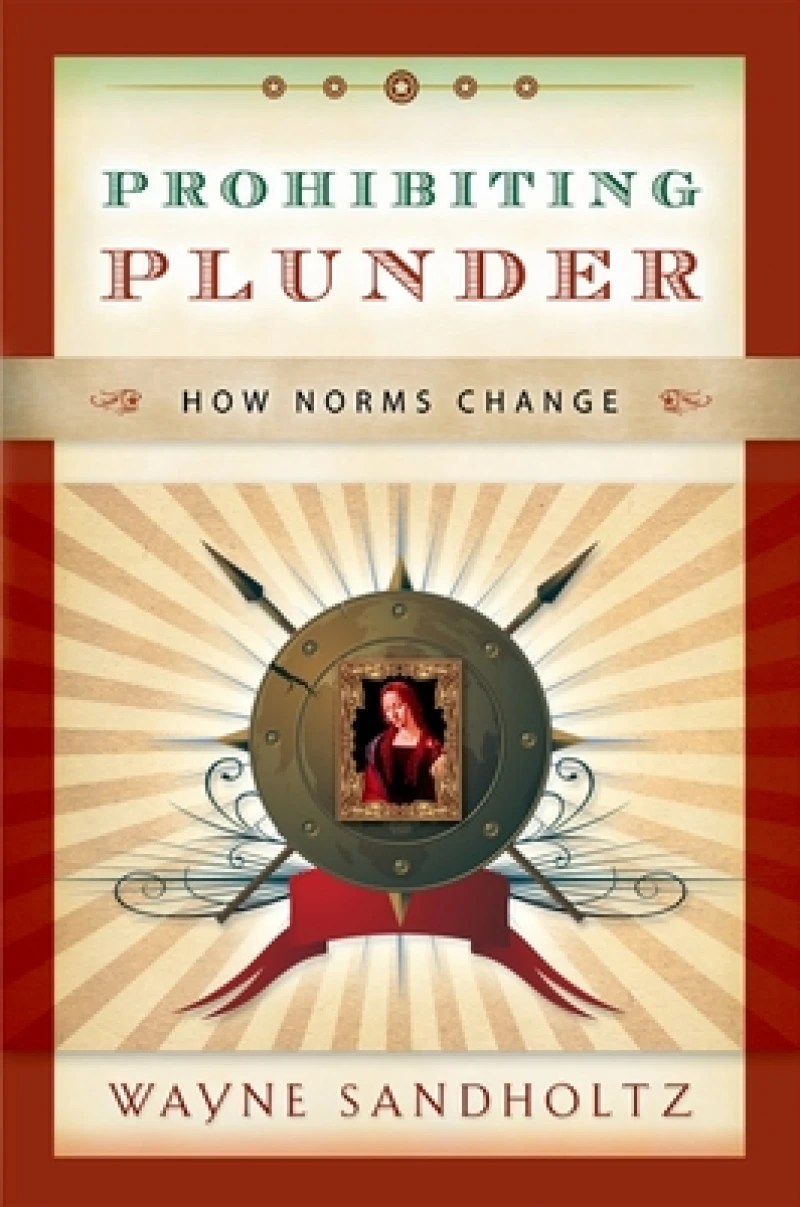
Prohibiting Plunder : How Norms Change
Book Details
Format
Hardback or Cased Book
ISBN-10
0195337239
ISBN-13
9780195337235
Publisher
Oxford University Press Inc
Imprint
Oxford University Press Inc
Country of Manufacture
US
Country of Publication
GB
Publication Date
Nov 29th, 2007
Print length
352 Pages
Weight
666 grams
Dimensions
16.30 x 24.20 x 2.40 cms
Product Classification:
Public international law
Ksh 18,800.00
Temporarily out of stock, due soon
0 in stock
Delivery Location
Delivery fee: Select location
Secure
Quality
Fast
For much of history, the rules of war decreed that "to the victor go the spoils." The winners in warfare routinely seized for themselves the artistic and cultural treasures of the defeated; plunder constituted a marker of triumph. By the twentieth century, international norms declared the opposite, that cultural monuments should be shielded from destruction or seizure. Prohibiting Plunder traces and explains the emergence of international rules against wartime looting of cultural treasures, and explores how anti-plunder norms have developed over the past 200 years. The book covers highly topical events including the looting of thousands of antiquities from the Iraqi National Museum in Baghdad, and the return of "Holocaust Art" by prominent museums, including the highly publicized return of five Klimt paintings from the Austrian Gallery to a Holocaust survivor. The historical narrative includes first-hand reports, official documents, and archival records. Equally important, the book uncovers the debates and negotiations that produced increasingly clear and well-defined anti-plunder norms. The historical accounts in Prohibiting Plunder serve as confirming examples of an important dynamic of international norm change. Rules evolve in cycles; in each cycle, specific actions trigger arguments about the meaning and application of rules, and those arguments in turn modify the rules. International norms evolve through a succession of such cycles, each one drawing on previous developments and each one reshaping the normative context for subsequent actions and disputes. Prohibiting Plunder shows how historical episodes interlinked to produce modern, treaty-based rules against wartime plunder of cultural treasures.
For much of history, the rules of war decreed that "to the victor go the spoils." The winners in warfare routinely seized for themselves the artistic and cultural treasures of the defeated; plunder constituted a marker of triumph. By the twentieth century, international norms declared the opposite, that cultural monuments should be shielded from destruction or seizure. Prohibiting Plunder traces and explains the emergence of international rules against wartime looting of cultural treasures, and explores how anti-plunder norms have developed over the past 200 years. The book covers highly topical events including the looting of thousands of antiquities from the Iraqi National Museum in Baghdad, and the return of "Holocaust Art" by prominent museums, including the highly publicized return of five Klimt paintings from the Austrian Gallery to a Holocaust survivor. The historical narrative includes first-hand reports, official documents, and archival records. Equally important, the book uncovers the debates and negotiations that produced increasingly clear and well-defined anti-plunder norms. The historical accounts in Prohibiting Plunder serve as confirming examples of an important dynamic of international norm change. Rules evolve in cycles; in each cycle, specific actions trigger arguments about the meaning and application of rules, and those arguments in turn modify the rules. International norms evolve through a succession of such cycles, each one drawing on previous developments and each one reshaping the normative context for subsequent actions and disputes. Prohibiting Plunder shows how historical episodes interlinked to produce modern, treaty-based rules against wartime plunder of cultural treasures.
Get Prohibiting Plunder by at the best price and quality guaranteed only at Werezi Africa's largest book ecommerce store. The book was published by Oxford University Press Inc and it has pages.