
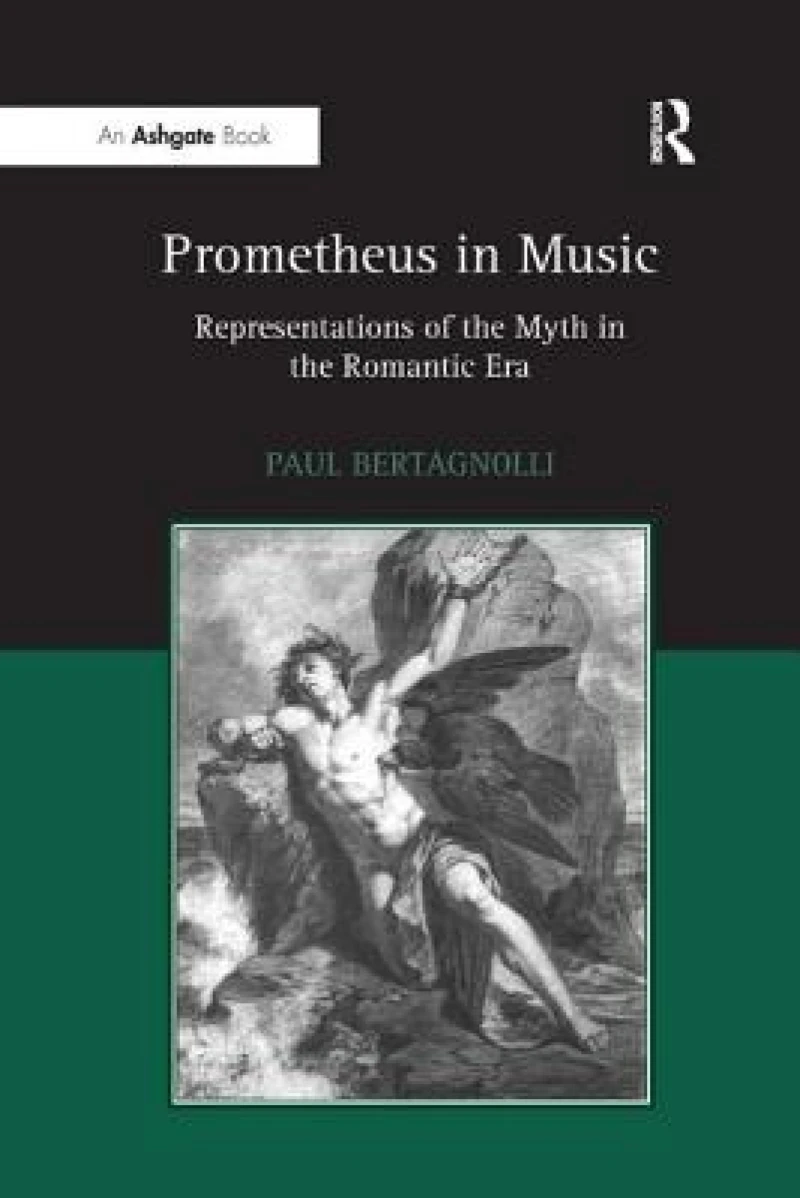
Prometheus in Music : Representations of the Myth in the Romantic Era
Book Details
Format
Paperback / Softback
ISBN-10
1138264970
ISBN-13
9781138264977
Publisher
Taylor & Francis Ltd
Imprint
Routledge
Country of Manufacture
GB
Country of Publication
GB
Publication Date
Nov 15th, 2016
Print length
388 Pages
Weight
620 grams
Dimensions
15.80 x 23.40 x 2.90 cms
Product Classification:
MusicWestern "classical" musicClassical music (c 1750 to c 1830)
Ksh 11,350.00
Werezi Extended Catalogue
0 in stock
Delivery Location
Delivery fee: Select location
Secure
Quality
Fast
The ancient Greek myth of Prometheus enjoyed unprecedented popularity during the Romantic era. An international coterie of writers engaged with the legend, while composers such as Beethoven, Reichardt, Schubert, Wolf, Liszt, Halévy, Saint-Saëns, Fauré, Parry, Goldmark and Bargiel based works of diverse genres on the fable. Paul Bertagnolli charts the progress of the myth during the nineteenth century, as it articulates an extraordinary variety of issues pertaining to culture, society, aesthetics and philosophy. Individual chapters demonstrate that the legend served as a vehicle to express opinions on diverse and remarkable subjects. Composers often resorted to varied and unorthodox musical techniques in order to reflect such subjects. These striking traits of musical compositions, their literary sources and the criticism that they inspired offer compelling testimony to the impact of the Prometheus myth on the Romantic imagination.
The ancient Greek myth of Prometheus, the primordial Titan who defied the Olympian gods by stealing fire from the heavens as a gift for humanity, enjoyed unprecedented popularity during the Romantic era. An international coterie of writers such as Goethe, Monti, Byron, the Shelleys, Sainte-Hélène, Coleridge, Browning, and Bridges engaged with the legend, while composers such as Beethoven, Reichardt, Schubert, Wolf, Liszt, Halévy, Saint-Saëns, Holmès, Fauré, Parry, Goldmark, and Bargiel based works of diverse genres on the fable. Romantic authors and composers developed a unique perspective on the myth, emphasizing its themes of rebellion, punishment for transgression and creative autonomy, in great contrast to artists of the preceding era, who more characteristically ignored the tribulations of Prometheus and depicted him as the animator of a naïve, Arcadian mankind who, when awakened from their spiritual dormancy, expressed astonishment at the wonders of nature and paid homage to the Titan as a new god. Paul Bertagnolli charts the progress of the myth during the nineteenth century, as it articulates an extraordinary variety of issues pertaining to culture, society, aesthetics, and philosophy. Drawing on archival research, dance history, sketch studies, literary theory, linear analysis, topos theory, and reception history, individual chapters demonstrate that the legend served as a vehicle to express opinions on subjects as diverse as aristocratic patronage, movements of the body on the public stage, rebellion against political and religious authority, outright atheism, humanitarianism of the German Enlightenment, interest in the music of Greek antiquity, industrialization, nationalism inflamed by war, populism, and the aesthetics of musical form. Composers often resorted to varied and unorthodox musical techniques in order to reflect such remarkable subjects: Beethoven outraged critics by implying a key other than the tonic at the outset of the overture to
Get Prometheus in Music by at the best price and quality guaranteed only at Werezi Africa's largest book ecommerce store. The book was published by Taylor & Francis Ltd and it has pages.

