
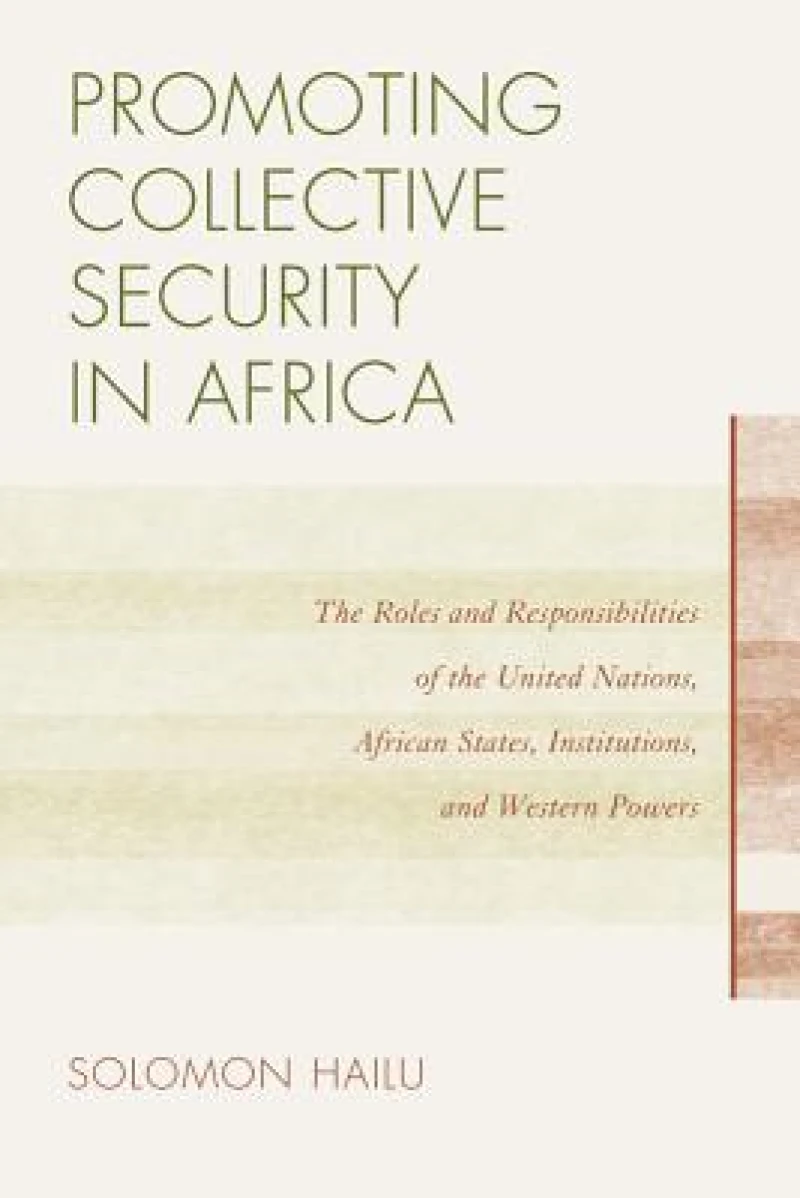
Promoting Collective Security in Africa : The Roles and Responsibilities of the United Nations, African States, and Western Powers
Book Details
Format
Paperback / Softback
ISBN-10
0761857184
ISBN-13
9780761857181
Publisher
University Press of America
Imprint
University Press of America
Country of Manufacture
GB
Country of Publication
GB
Publication Date
Dec 19th, 2011
Print length
276 Pages
Weight
262 grams
Dimensions
22.10 x 15.50 x 1.30 cms
Ksh 8,200.00
Manufactured on Demand
0 in stock
Delivery Location
Delivery fee: Select location
Secure
Quality
Fast
The collective security system has been a problem in developing regions, particularly Africa. Western powers have less interest in sharing responsibility and there seems to be no alternative but that collective security should rely heavily on Africans themselves under the auspices of the newly established African Union (AU).
In principle, collective security is designed on a common understanding that peace and security is indivisible in which the load of order-keeping should be shared among all members of the collective security institution. The League of Nations and its heir, the United Nations, were created to achieve international security through collective measures; however, both institutions suffered from member countries’ lack of necessary political will and resource commitment to make the collective security system work under different circumstances. This problem has been largely evident in addressing security problems in developing regions, particularly in Africa. The western powers (U.S., Britain, France) have less interest in sharing responsibility to enforce collective security system in Africa. Western nations have clearly elevated their national security imperatives to a higher level of importance over their obligation to the indivisibility of peace and collective security. Under such circumstance, there seems to be no alternative but that collective security should rely heavily on Africans themselves under the auspices of the newly established African Union (AU). African Union has undergone structural, doctrinal, and institutional changes to better handle security problems in the continent. Obviously young and weakly developed, AU regional security capacity proved that it is incapable of resolving the diverse and complex nature of conflict by itself. The widespread conflict in Africa has indeed pushed AU to over-commit itself beyond its capacity. Therefore, it will be necessary in the future for the AU to seek more support for collective security form the UN, Western powers, African regional security alliances and so-called African anchor states such as South Africa and Nigeria.
Get Promoting Collective Security in Africa by at the best price and quality guaranteed only at Werezi Africa's largest book ecommerce store. The book was published by University Press of America and it has pages.

