
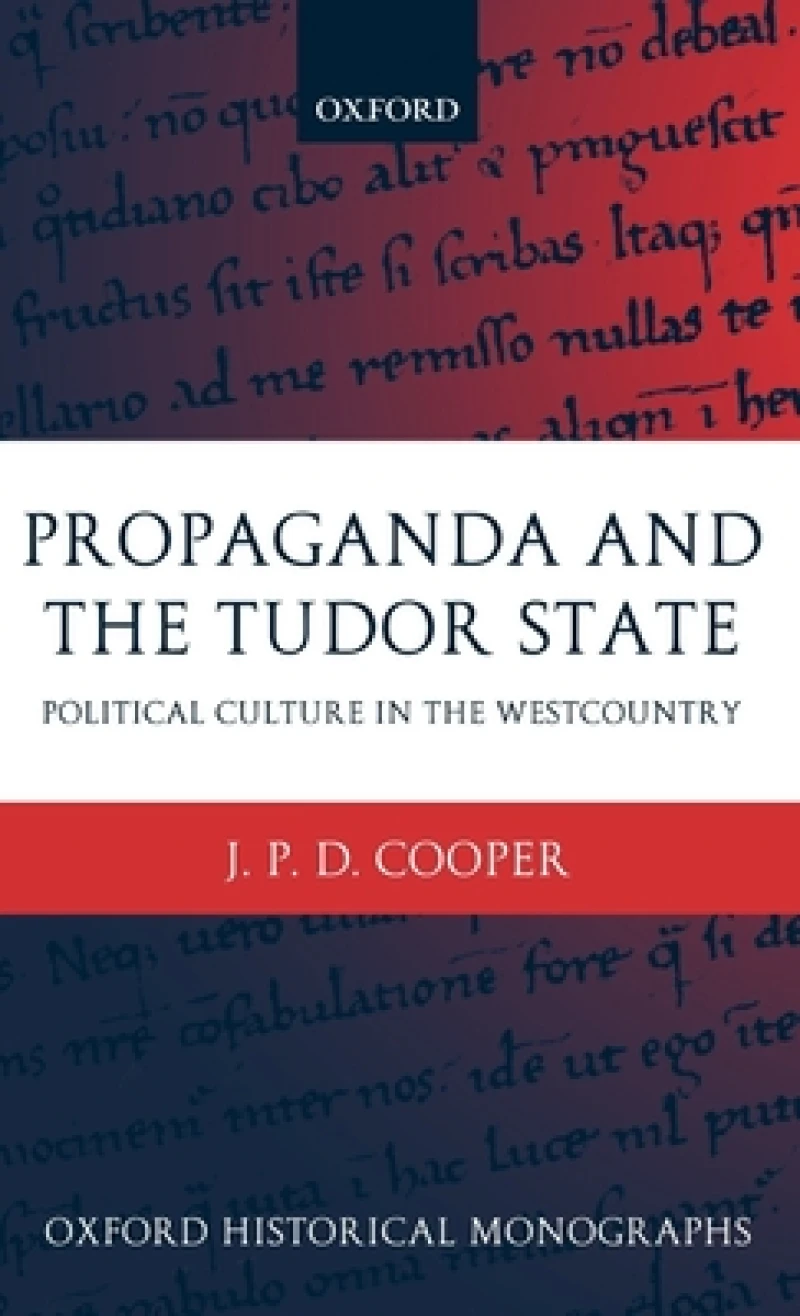
Propaganda and the Tudor State : Political Culture in the Westcountry
Book Details
Format
Hardback or Cased Book
Book Series
Oxford Historical Monographs
ISBN-10
0199263876
ISBN-13
9780199263875
Publisher
Oxford University Press
Imprint
Oxford University Press
Country of Manufacture
GB
Country of Publication
GB
Publication Date
Jul 10th, 2003
Print length
296 Pages
Weight
524 grams
Dimensions
22.00 x 14.60 x 2.80 cms
Ksh 41,000.00
Manufactured on Demand
0 in stock
Delivery Location
Delivery fee: Select location
Secure
Quality
Fast
Explores the strengths and weaknesses of the English state in the sixteenth century. This book examines the relationship between monarchy and people in Cornwall and Devon, and the complex interaction between local and national political culture. It also offers a fresh understanding of government at the allegedly dangerous edges of Tudor England.
This book offers a fresh understanding of the substance behind the rhetoric of English Renaissance monarchy. Propaganda is identified as a key factor in the intensification of the English state. The Tudor royal image is pursued in all its forms: in print and prayer, in iconography and architecture. The monarchy surrounded itself with the trappings of majesty at court, but in the shires it relied on different strategies of persuasion to uphold its authority. The Reformation placed the provincial pulpit at the disposal of the crown, and the church became the main conduit of royal propaganda. Sermons taught the duty of obedience, and parish prayer was redirected from local saints towards the sovereign as the symbolic core of the nation.Dr Cooper examines the relationship between the Tudor monarchy and its subjects in Cornwall and Devon, and the complex interaction between local and national political culture. These were years of social and religious upheaval, during which the western peninsula witnessed three major rebellions, and many more riots and affrays. A vibrant popular religion was devastated by the Protestant Reformation, and foreign invasion was a frequent threat. Cornwall remained recognizably different from England in its ancient language and traditions. Yet in the midst of all this, popular allegiance to monarchy and nation survived and prospered. The Tudors were mourned and celebrated in towns and parish churches. Loyalty was fostered by the Duchy of Cornwall and the stannaries. Regional difference, far from undermining the power of the crown, was fundamental to its success in the westcountry. This is a study of government at the dangerous edges of Tudor England, and a testament to the unifying power of propaganda.
Get Propaganda and the Tudor State by at the best price and quality guaranteed only at Werezi Africa's largest book ecommerce store. The book was published by Oxford University Press and it has pages.

