
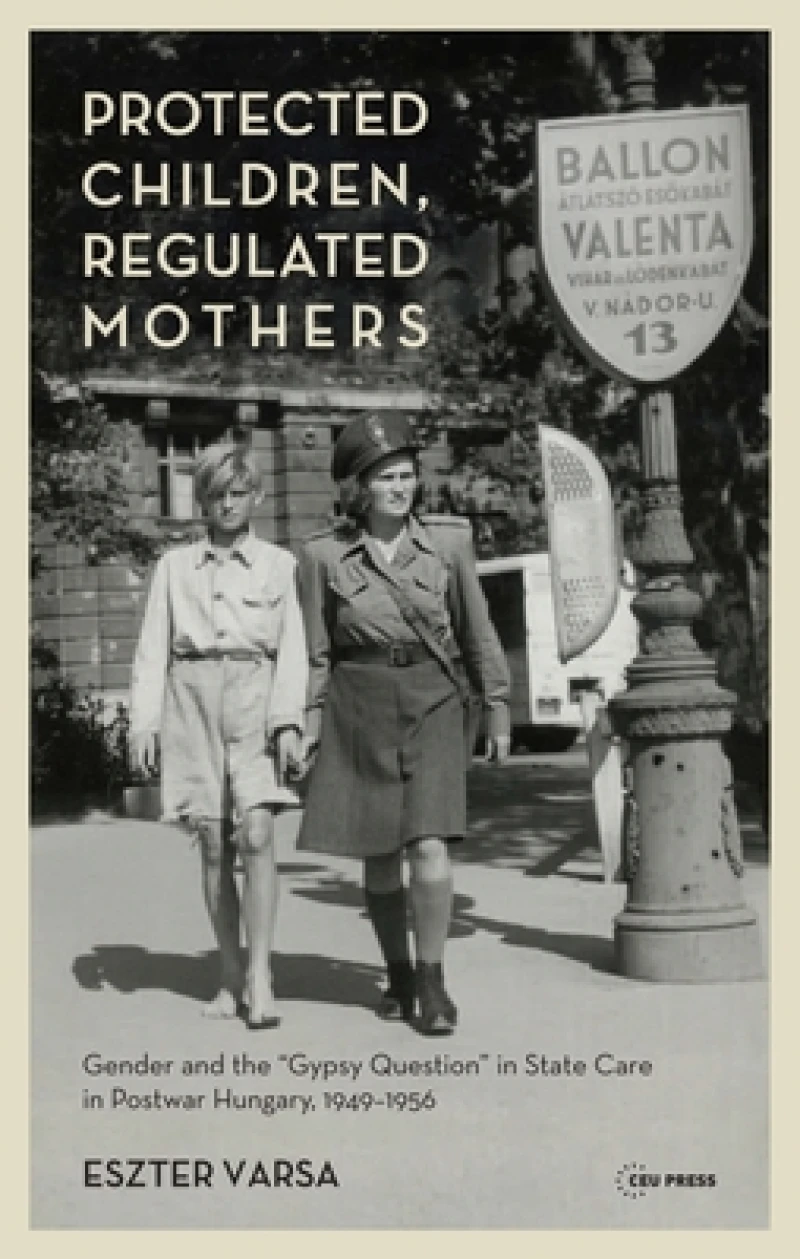
Protected Children, Regulated Mothers – Gender and the "Gypsy Question" in State Care in Postwar Hungary, 1949–1956 : Gender and the "Gypsy Question" in State Care in Postwar Hungary, 1949-1956
by
Eszter Varsa
Book Details
Format
Hardback or Cased Book
ISBN-10
9633863414
ISBN-13
9789633863411
Publisher
Central European University Press
Imprint
Central European University Press
Country of Manufacture
HU
Country of Publication
GB
Publication Date
Apr 20th, 2021
Print length
256 Pages
Weight
488 grams
Dimensions
23.70 x 15.90 x 2.20 cms
Product Classification:
Sociology: family & relationshipsSociology: family, kinship and relationships
Ksh 20,000.00
Werezi Extended Catalogue
0 in stock
Delivery Location
Delivery fee: Select location
Secure
Quality
Fast
Examines child protection in Stalinist Hungary as part of broader East Central, Eastern, and Southeastern European history, showing how the prewar foster care system was increasingly replaced by institutionalization in residential homes after 1945.
Protected Children, Regulated Mothers examines child protection in Stalinist Hungary as a part of twentieth-century East Central, Eastern, and Southeastern European history. Across the communist bloc, the prewar foster care system was increasingly replaced after 1945 by institutionalization in residential homes. This shift was often interpreted as a further attempt to establish totalitarian control. However, this study—based on hundreds of children's case files and interviews with institution leaders, teachers, and people formerly in state care—provides a new perspective. Rather than being merely a tool of political repression, state care in postwar Hungary was often shaped by the efforts of policy actors and educators to address the myriad of problems engendered by the social and economic transformations that emerged after World War II. This response built on, rather than broke with, earlier models of reform and reformatory education. Yet child protection went beyond safeguarding and educating children; it also focused on parents, particularly lone mothers, regulating not only their entrance to paid work but also their sexuality. In so doing, children's homes both reinforced and changed existing cultural and social patterns, whether about gendered division of work or the assimilation of minorities. Indeed, a major finding of the book is that state socialist child protection continued a centuries-long national project of seeking a “solution to the Gypsy question,” rooted in efforts to eliminate the perceived “workshyness” of Roma.
Get Protected Children, Regulated Mothers – Gender and the "Gypsy Question" in State Care in Postwar Hungary, 1949–1956 by at the best price and quality guaranteed only at Werezi Africa's largest book ecommerce store. The book was published by Central European University Press and it has pages.

