
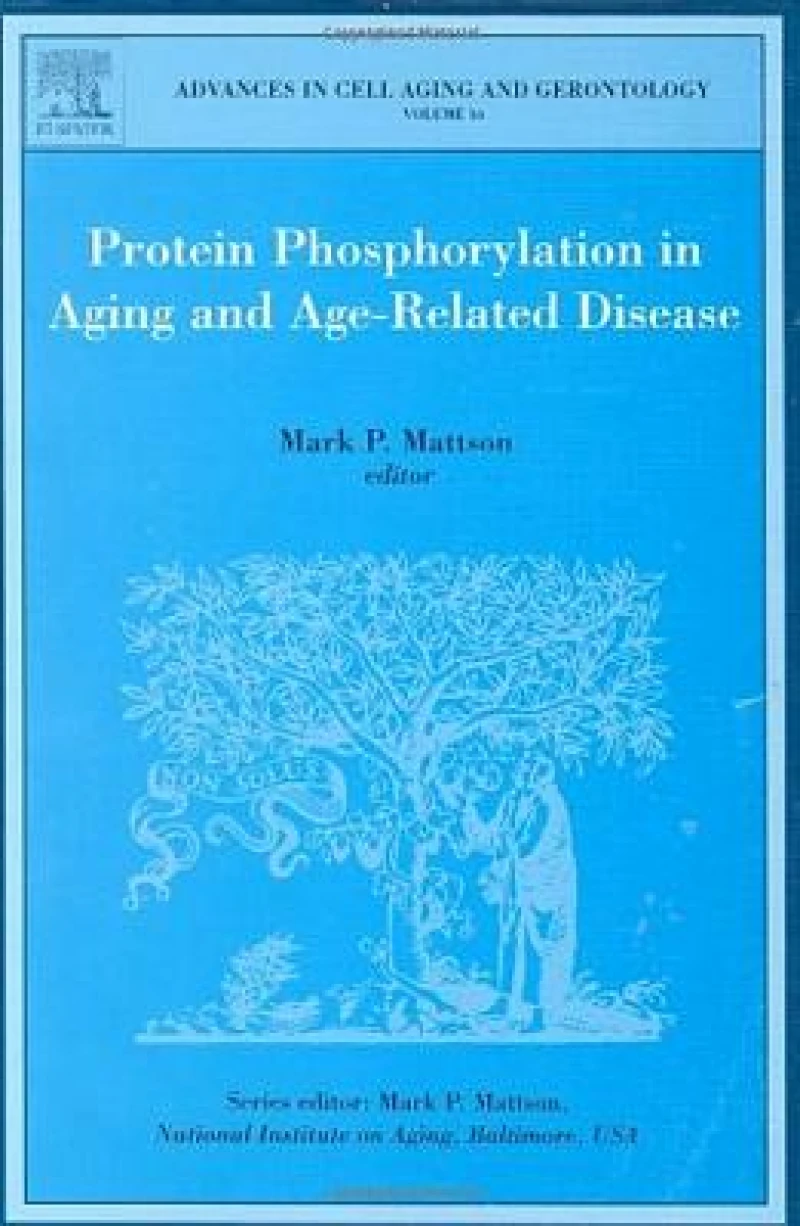
Protein Phosphorylation in Aging and Age-Related Disease
Book Details
Format
Hardback or Cased Book
Book Series
Advances in Cell Aging and Gerontology
ISBN-10
0444515836
ISBN-13
9780444515834
Publisher
Elsevier Science & Technology
Imprint
Elsevier Science Ltd
Country of Manufacture
US
Country of Publication
GB
Publication Date
Feb 17th, 2004
Print length
180 Pages
Weight
342 grams
Ksh 18,900.00
Manufactured on Demand
0 in stock
Delivery Location
Delivery fee: Select location
Secure
Quality
Fast
It can be argued that ATP is the most important molecule in cells. Not only is ATP the key energy source for cells, but it is also the source of phosphate groups that are transferred to a variety of substrate proteins via the action of elaborate families of protein kinases. An equally elaborate array of protein phosphatases can remove phosphate groups from proteins. It is now well established that protein phosphorylation is a widely used mechanism for cells to selectively modulate the function of a variety of proteins including enzymes, ion channels and pumps and structural proteins. In this volume of ACAG leading experts describe the evidence that protein phosphorylation is altered in aging and age-related disease. Protein phosphorylation controls fundamental processes such as transcription and translation, regulation of the cell cycle, signalling within and between cells, cell motility, synaptic function and so on. Recent findings are revealing how phosphorylation dependent signalling cascades may control lifespan with a prime example being the insulin-signalling pathway first described in c-elegans and now emerging as an important regulator of lifespan of mammals also. Many of the functional changes that occur during aging such as impaired learning and memory and altered energy metabolism are controlled by protein phosphorylation and it is, therefore, important to understand how mechanisms of protein phosphorylation may either mediate aging or provide adaptive responses that allow successful disease-free aging. The authors in addition to considering the roles of protein phosphorylation in aging describe the evidence that abnormalities in protein phosphorylation contribute to the pathogenesis of major age-related diseases including diabetes, atherosclerosis and neurodegenerative disorders such as Alzheimer's and Parkinson's diseases.
Get Protein Phosphorylation in Aging and Age-Related Disease by at the best price and quality guaranteed only at Werezi Africa's largest book ecommerce store. The book was published by Elsevier Science & Technology and it has pages.

