
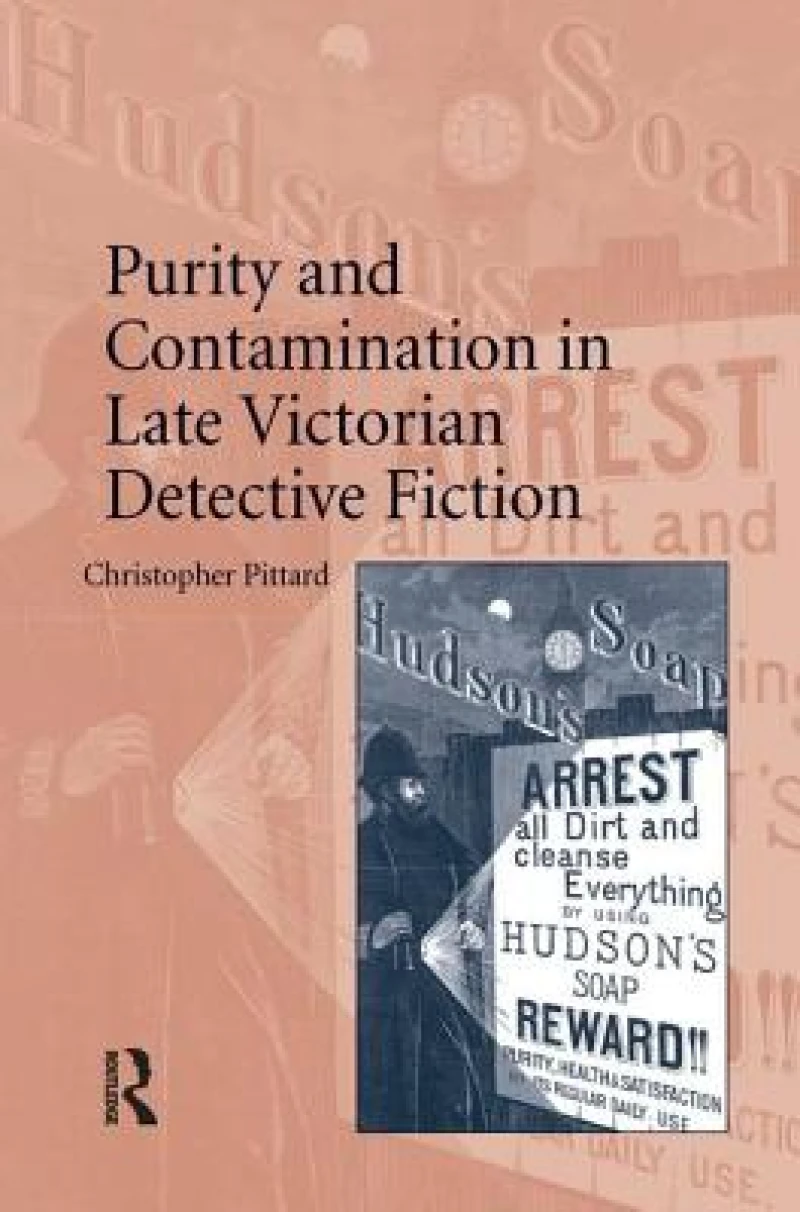
Purity and Contamination in Late Victorian Detective Fiction
Book Details
Format
Paperback / Softback
ISBN-10
113827626X
ISBN-13
9781138276260
Publisher
Taylor & Francis Ltd
Imprint
Routledge
Country of Manufacture
GB
Country of Publication
GB
Publication Date
Nov 16th, 2016
Print length
272 Pages
Weight
500 grams
Product Classification:
Literary studies: generalLiterary studies: c 1800 to c 1900
Ksh 11,000.00
Werezi Extended Catalogue
0 in stock
Delivery Location
Delivery fee: Select location
Secure
Quality
Fast
Concentrating on works by authors such as Fergus Hume, Grant Allen, L.T. Meade and Marie Belloc Lowndes, Pittard explores the complex relation between the emergence of detective fiction in the 1880s and 1890s and the concept of purity. Situating his discussion within the context of Victorian periodicals, advertisements, medical explorations of criminality and social protest movements, Pittard challenges histories of fin-de-siècle detective fiction that have obscured the heterogeneity of this popular form.
Concentrating on works by authors such as Fergus Hume, Arthur Conan Doyle, Grant Allen, L.T. Meade, and Marie Belloc Lowndes, Christopher Pittard explores the complex relation between the emergence of detective fictions in the 1880s and 1890s and the concept of purity. The centrality of material and moral purity as a theme of the genre, Pittard argues, both reflected and satirised a contemporary discourse of degeneration in which criminality was equated with dirt and disease and where national boundaries were guarded against the threat of the criminal foreigner. Situating his discussion within the ideologies underpinning George Newnes''s Strand Magazine as well as a wide range of nonfiction texts, Pittard demonstrates that the genre was a response to the seductive and impure delights associated with sensation and gothic novels. Further, Pittard suggests that criticism of detective fiction has in turn become obsessed with the idea of purity, thus illustrating how a genre concerned with policing the impure itself became subject to the same fear of contamination. Contributing to the richness of Pittard''s project are his discussions of the convergence of medical discourse and detective fiction in the 1890s, including the way social protest movements like the antivivisectionist campaigns and medical explorations of criminality raised questions related to moral purity.
Get Purity and Contamination in Late Victorian Detective Fiction by at the best price and quality guaranteed only at Werezi Africa's largest book ecommerce store. The book was published by Taylor & Francis Ltd and it has pages.

