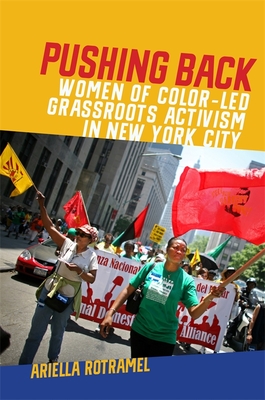
Pushing Back : Women of Color–Led Grassroots Activism in New York City
Book Details
Format
Hardback
Book Series
Since 1970: Histories of Contemporary America
ISBN-10
082035614X
ISBN-13
9780820356143
Publisher
University of Georgia Press
Imprint
University of Georgia Press
Country of Manufacture
US
Country of Publication
GB
Publication Date
Jan 15th, 2020
Print length
164 Pages
KSh 22,600.00
Temporarily out of stock, due soon
0 in stock
Delivery Location
Delivery fee: Select location
Secure
Quality
Fast
Explores women of colour's grassroots leadership in organisations that are not singularly identified with feminism. Centred in New York City, Pushing Back brings an intersectional perspective to communities of colour as it addresses injustices tied to domestic work, housing, and environmental policies and practices.
This book explores women of color’s grassroots leadership in organizations that are not singularly identified with feminism. Centered in New York City, Pushing Back brings an intersectional perspective to communities of color as it addresses injustices tied to domestic work, housing, and environmental policies and practices. Ariella Rotramel shows how activists respond to injustice and marginalization, documenting the ways people of color and the working class in the United States recognize identity as key to the roots of and solutions to injustices such as environmental racism and gentrification. Rotramel further provides an in-depth analysis of the issues that organizations representing transnational communities of color identify as fundamental to their communities and how they frame them. Introducing the theoretical concept of “queer motherwork,” Rotramel explores the forms of advocacy these activists employ and shows how they negotiate internal diversity (gender, race, class, sexuality, etc.) and engage broader communities, particularly as women-led groups. Pushing Back highlights case studies of two New York–based organizations, the pan-Asian/American CAAAV: Organizing Asian Communities (formerly the Committee Against Anti- Asian Violence) and South Bronx’s Mothers on the Move/ Madres en Movimiento (MOM). Both organizations are small, women-led community organizations that have participated in a number of progressive coalitions on issues such as housing rights, workers’ rights, and environmental justice at the local, national, and global levels.
Get Pushing Back by Ariella Rotramel at the best price and quality guaranteed only at Werezi Africa's largest book ecommerce store. The book was published by University of Georgia Press and it has 164 pages.
Customers Who Bought This Also Bought

Killers of the Flower Moon
KSh 2,000.00
Homeland Elegies
KSh 1,800.00

History of Western Philosophy
KSh 5,300.00

Only Plane in the Sky
KSh 2,700.00
Map Of A Nation
KSh 2,350.00

38 Londres Street
KSh 4,500.00

A New World Begins
KSh 3,950.00

On Antisemitism
KSh 4,500.00

Killers of the Flower Moon
KSh 1,800.00

A New World Begins
KSh 6,600.00

Trial and Death of Socrates
KSh 2,000.00

Capital & Ideology
KSh 3,050.00