

Quantifying Research Integrity
Book Details
Format
Paperback / softback
ISBN-10
3031011783
ISBN-13
9783031011788
Publisher
Springer International Publishing AG
Imprint
Springer International Publishing AG
Country of Manufacture
GB
Country of Publication
GB
Publication Date
Dec 22nd, 2016
Print length
121 Pages
Product Classification:
Network hardware
KSh 7,200.00
Currently unavailable
0 in stock
Delivery Location
Delivery fee: Select location
Secure
Quality
Fast
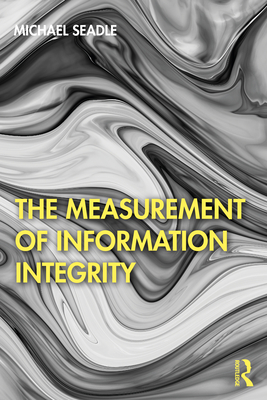
This lecture looks at how to quantify the grayscale range in three kinds of research integrity violations: plagiarism, data falsification, and image manipulation.Quantification works best with plagiarism, because the essential one-to-one matching algorithms are well known and established tools for detecting when matches exist.
Institutions typically treat research integrity violations as black and white, right or wrong. The result is that the wide range of grayscale nuances that separate accident, carelessness, and bad practice from deliberate fraud and malpractice often get lost. This lecture looks at how to quantify the grayscale range in three kinds of research integrity violations: plagiarism, data falsification, and image manipulation. Quantification works best with plagiarism, because the essential one-to-one matching algorithms are well known and established tools for detecting when matches exist. Questions remain, however, of how many matching words of what kind in what location in which discipline constitute reasonable suspicion of fraudulent intent. Different disciplines take different perspectives on quantity and location. Quantification is harder with data falsification, because the original data are often not available, and because experimental replication remains surprisingly difficult. The same is true with image manipulation, where tools exist for detecting certain kinds of manipulations, but where the tools are also easily defeated. This lecture looks at how to prevent violations of research integrity from a pragmatic viewpoint, and at what steps can institutions and publishers take to discourage problems beyond the usual ethical admonitions. There are no simple answers, but two measures can help: the systematic use of detection tools and requiring original data and images. These alone do not suffice, but they represent a start. The scholarly community needs a better awareness of the complexity of research integrity decisions. Only an open and wide-spread international discussion can bring about a consensus on where the boundary lines are and when grayscale problems shade into black. One goal of this work is to move that discussion forward.
Get Quantifying Research Integrity by Michael Seadle at the best price and quality guaranteed only at Werezi Africa's largest book ecommerce store. The book was published by Springer International Publishing AG and it has 121 pages.
Customers Who Bought This Also Bought

Quality, Reliability, Security and Robustness in Heterogeneous Systems
KSh 8,100.00

Formal Description Techniques and Protocol Specification, Testing and Verification
KSh 32,400.00
Electronic Participation
KSh 8,100.00

Intelligent Networks and Intelligence in Networks
KSh 32,400.00
Iterative Learning Stabilization and Fault-Tolerant Control for Batch Processes
KSh 16,200.00

Globalizing Domain-Specific Languages
KSh 6,300.00

Sustainable and Energy Efficient Computing Paradigms for Society
KSh 16,200.00
Digital Coherent Optical Systems
KSh 13,500.00
Analyzing Digital Discourses
KSh 25,200.00
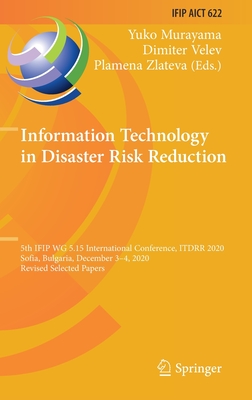
Information Technology in Disaster Risk Reduction
KSh 16,200.00

Sustainable and Energy Efficient Computing Paradigms for Society
KSh 16,200.00

Artificial Intelligence Applications and Innovations
KSh 27,000.00



More in This Genre
Quality, Reliability, Security and Robustness in Heterogeneous Systems
KSh 8,100.00
Formal Description Techniques and Protocol Specification, Testing and Verification
KSh 32,400.00
Electronic Participation
KSh 8,100.00
Intelligent Networks and Intelligence in Networks
KSh 32,400.00
Iterative Learning Stabilization and Fault-Tolerant Control for Batch Processes
KSh 16,200.00
Globalizing Domain-Specific Languages
KSh 6,300.00
