
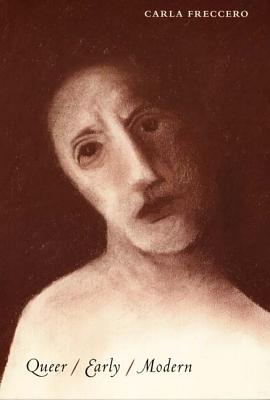
Queer/Early/Modern
Book Details
Format
Paperback / softback
Book Series
Series Q
ISBN-10
0822336901
ISBN-13
9780822336907
Publisher
Duke University Press
Imprint
Duke University Press
Country of Manufacture
US
Country of Publication
GB
Publication Date
Jan 16th, 2006
Print length
192 Pages
Weight
286 grams
Dimensions
15.40 x 23.60 x 1.90 cms
KSh 4,300.00
Werezi Extended Catalogue
Delivery in 12 days
1 copies in stock
Delivery Location
Delivery fee: Select location
Delivery in 12 days
Secure
Quality
Fast
Argues for a reading practice that accounts for the queerness of temporality, for the way past, present, and future time appear out of sequence and in dialogue in our thinking about history and texts. This book urges us to see how the indeterminacies of subjectivity found in literary texts challenge identitarian constructions.
In Queer/Early/Modern, Carla Freccero, a leading scholar of early modern European studies, argues for a reading practice that accounts for the queerness of temporality, for the way past, present, and future time appear out of sequence and in dialogue in our thinking about history and texts. Freccero takes issue with New Historicist accounts of sexual identity that claim to respect historical proprieties and to derive identity categories from the past. She urges us to see how the indeterminacies of subjectivity found in literary texts challenge identitarian constructions and she encourages us to read differently the relation between history and literature. Contending that the term “queer,” in its indeterminacy, points the way toward alternative ethical reading practices that do justice to the aftereffects of the past as they live on in the present, Freccero proposes a model of “fantasmatic historiography” that brings together history and fantasy, past and present, event and affect.Combining feminist theory, queer theory, psychoanalysis, deconstruction, and literary criticism, Freccero takes up a series of theoretical and historical issues related to debates in queer theory, feminist theory, the history of sexuality, and early modern studies. She juxtaposes readings of early and late modern texts, discussing the lyric poetry of Petrarch, Louise Labé, and Melissa Ethridge; David Halperin’s take on Michel Foucault via Apuleius’s The Golden Ass and Boccaccio’s Decameron; and France’s domestic partner legislation in connection with Marguerite de Navarre’s Heptameron. Turning to French cleric Jean de Léry’s account, published in 1578, of having witnessed cannibalism and religious rituals in Brazil some twenty years earlier and to the twentieth-century Brandon Teena case, Freccero draws on Jacques Derrida’s concept of spectrality to propose both an ethics and a mode of interpretation that acknowledges and is inspired by the haunting of the present by the past.
Get Queer/Early/Modern by Carla Freccero at the best price and quality guaranteed only at Werezi Africa's largest book ecommerce store. The book was published by Duke University Press and it has 192 pages.
Customers Who Bought This Also Bought
A Modern History of the Somali
KSh 5,300.00
Sapiens
KSh 2,350.00

Rise Fall Great Powers
KSh 3,050.00

Legacy of Violence
KSh 3,150.00

Chip War
KSh 2,000.00
Covering Islam
KSh 2,350.00
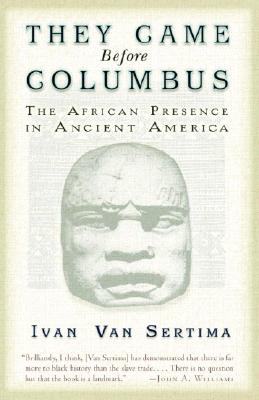
They Came Before Columbus
KSh 3,400.00

Hiroshima
KSh 2,000.00

Guns, Germs and Steel
KSh 2,400.00

Silk Roads
KSh 3,050.00

Empire
KSh 2,700.00

Strategy
KSh 4,350.00
