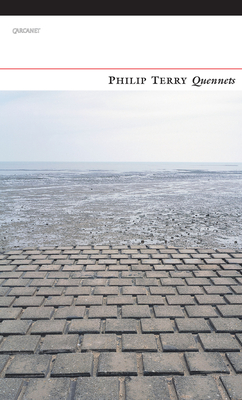
Quennets
by
Philip Terry
Book Details
Format
Paperback / softback
ISBN-10
1784102687
ISBN-13
9781784102685
Publisher
Carcanet Press Ltd
Imprint
Carcanet Poetry
Country of Manufacture
GB
Country of Publication
GB
Publication Date
Jul 28th, 2016
Print length
144 Pages
Weight
206 grams
Dimensions
13.80 x 21.60 x 1.40 cms
Product Classification:
Poetry / poems by individual poetsPoetry by individual poets
KSh 2,350.00
Temporarily out of stock, due soon
0 in stock
Delivery Location
Delivery fee: Select location
Secure
Quality
Fast
Three psychogeographical sequences exploring Queneau’s Oulipian ‘quennets’
In Quennets Philip Terry develops a sonnet-like form invented by the Oulipian poet Raymond Queneau. Across three sequences, the ‘quennet’ is reworked and refigured in response to three perimiter landscapes. The first sequence, ‘Elementary Estuaries’, is inspired by a series of walks along the Essex estuary, the poems’ appearance on the page suggesting the landscape’s expansive esturine vistas, its pink sail lofts and windswept gorse, beach huts and distant steeples. In the second sequence, written after a series of walks around the Berlin Wall Trail, or Mauerweg, the form changes to reflect the physical, almost bodily tension of the wall as an architectural and social obstruction. The final sequence, ‘Waterlog’, retraces the steps of W. G. Sebald through Suffolk, and here the quennet’s newely elongated shape and ragged margin evoke the region’s eroding coastline, its deserted piers and power stations, electric fences and waterlogged fields. Terry’s project is bold in scope, his poems subtle in effect, a mix of sign and song, concerete and lyric, Oulipo and psychogeography. It is a work about boundaries, political, social, and natural, and about the walk as a critical apparatus through which these fields are shown to connect.
Get Quennets by Philip Terry at the best price and quality guaranteed only at Werezi Africa's largest book ecommerce store. The book was published by Carcanet Press Ltd and it has 144 pages.
Customers Who Bought This Also Bought

Perfect Nine
KSh 2,350.00

Collected Poems of Samuel Beckett
KSh 4,500.00

Milk and Honey
KSh 2,350.00
The Divine Comedy
KSh 2,150.00

And Still I Rise
KSh 2,000.00
Paradise Lost
KSh 1,600.00
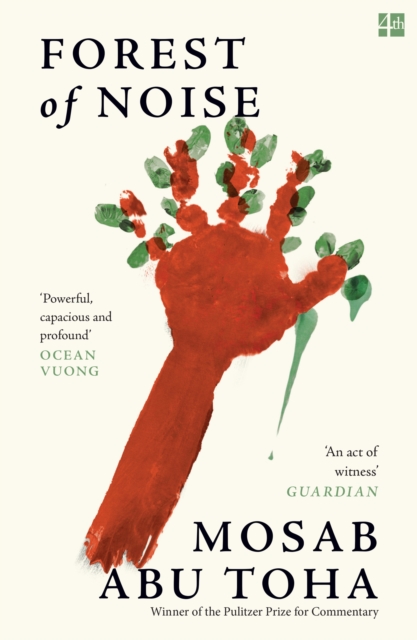
Forest of Noise
KSh 1,800.00
The Odyssey
KSh 1,800.00
The Odyssey
KSh 1,600.00

The Iliad
KSh 1,450.00

Citizen
KSh 2,350.00
Paradise Lost
KSh 2,000.00