
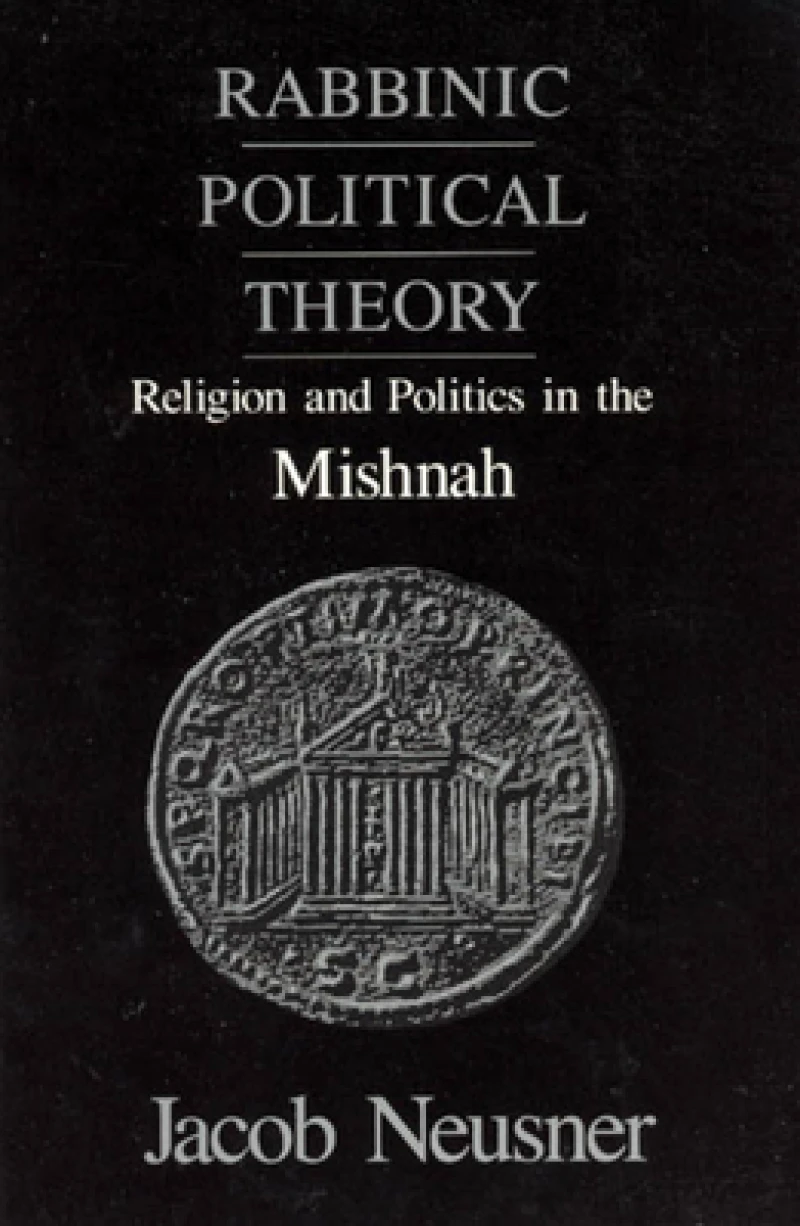
Rabbinic Political Theory : Religion and Politics in the Mishnah
Book Details
Format
Paperback / Softback
Book Series
Chicago Studies in the History of Judaism
ISBN-10
0226576515
ISBN-13
9780226576510
Publisher
The University of Chicago Press
Imprint
University of Chicago Press
Country of Manufacture
GB
Country of Publication
GB
Publication Date
Jun 18th, 1991
Print length
284 Pages
Weight
397 grams
Dimensions
2.30 x 1.60 x 0.20 cms
Product Classification:
JudaismPolitical science & theory
Ksh 7,200.00
Werezi Extended Catalogue
0 in stock
Delivery Location
Delivery fee: Select location
Secure
Quality
Fast
In The Economics of the Mishnah Jacob Neusner showed how economics functioned as an active and generative ingredient in the system of the Mishnah. With this new study, Rabbinic Political Theory, he moves from the economics to the politics of the Mishnah, placing that politics in the broader context of ancient political theory. Neusner begins his study with a modification of Weber's categories for a theory of politics: myth, institutions, administration, passion, responsibility, and proportion. Detailing the Mishnah's conception of politics, Neusner considers what he calls the stable and static structure and system through comparison with Aristotle. Although Aristotle's Politics and the Mishnah share a common economic theory based on the fundamental unit of the householder, they diverge in their conceptions of political structure and order. Aristotle embeds economics within political economy, while, Neusner argues, the Mishnah presents the anomaly of an economics separated from politics. Using modern political terms, this study explicates the complicated politics developed by the philosopher-theologians of the Mishnah. It is a first-rate contribution to our understanding of the intersection of politics, political philosophy, and the Mishnaic system.
Get Rabbinic Political Theory by at the best price and quality guaranteed only at Werezi Africa's largest book ecommerce store. The book was published by The University of Chicago Press and it has pages.

