
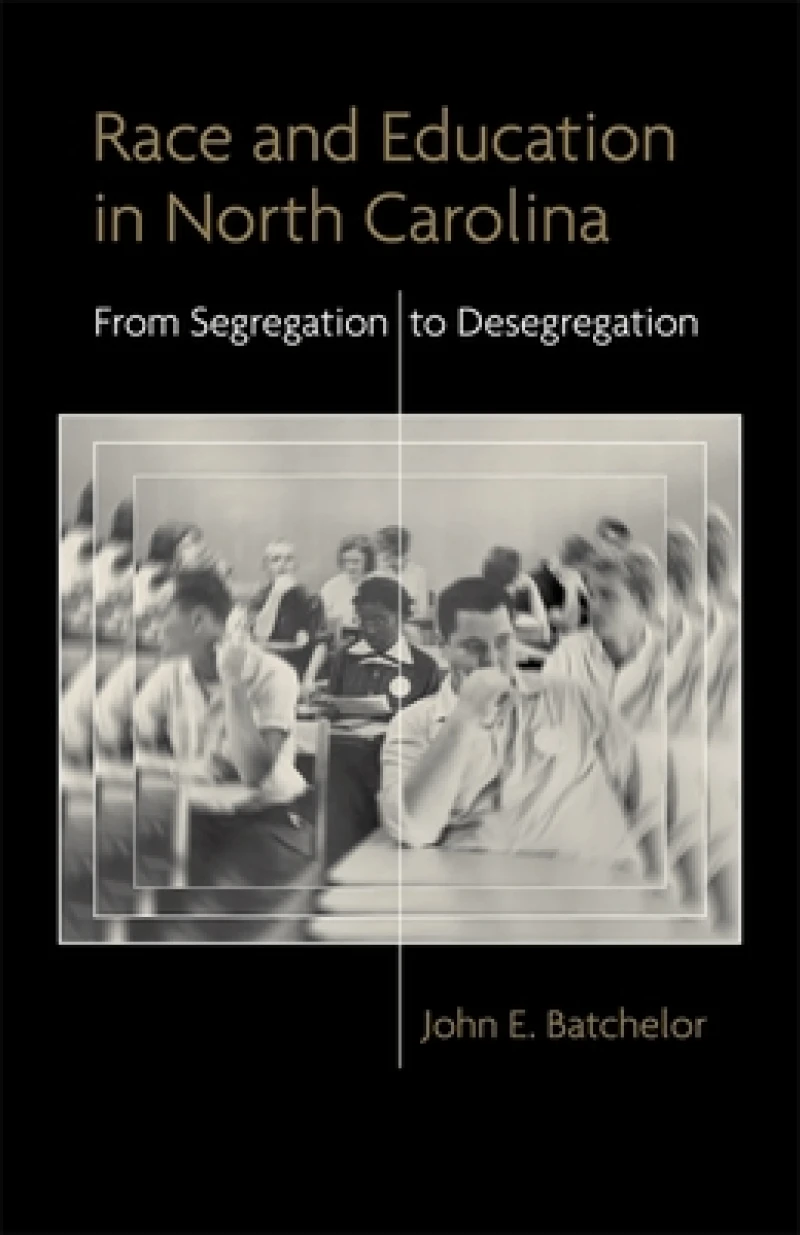
Race and Education in North Carolina : From Segregation to Desegregation
Book Details
Format
Hardback or Cased Book
Book Series
Making the Modern South
ISBN-10
0807161365
ISBN-13
9780807161364
Publisher
Louisiana State University Press
Imprint
Louisiana State University Press
Country of Manufacture
US
Country of Publication
GB
Publication Date
Dec 16th, 2015
Print length
240 Pages
Weight
333 grams
Dimensions
22.40 x 13.80 x 2.30 cms
Product Classification:
Civics and citizenshipCivil rights & citizenship
Ksh 6,500.00
Temporarily out of stock, due soon
0 in stock
Delivery Location
Delivery fee: Select location
Secure
Quality
Fast
By the end of the 1970s, North Carolina operated the most thoroughly desegregated school system in the US. John Batchelor, a former North Carolina school superintendent, offers a robust analysis of this change and the initiatives that comprised the gradual, and often reluctant, desegregation of the state's public schools.
The separation of white and black schools remained largely unquestioned and unchallenged in North Carolina for the first half of the twentieth century, yet by the end of the 1970s, the Tar Heel State operated the most thoroughly desegregated school system in the nation. In Race and Education in North Carolina, John E. Batchelor, a former North Carolina school superintendent, offers a robust analysis of this sea change and the initiatives that comprised the gradual, and often reluctant, desegregation of the state's public schools.
In a state known for relative racial moderation, North Carolina government officials generally steered clear of fiery rhetorical rejections of Brown v. Board of Education, in contrast to the position of leaders in most other parts of the South. Instead, they played for time, staving off influential legislators who wanted to close public schools and provide vouchers to support segregated private schools, instituting policies that would admit a few black students into white schools, and continuing to sanction segregation throughout most of the public education system. Litigation - primarily initiated by the NAACP - and the Civil Rights Act of 1964 created stronger mandates for progress and forced government officials to accelerate the pace of desegregation. Batchelor sheds light on the way local school districts pursued this goal while community leaders, school board members, administrators, and teachers struggled to balance new policy demands with deeply entrenched racial prejudice and widespread support for continued segregation.
Drawing from case law, newspapers, interviews with policy makers, civil rights leaders, and attorneys involved in school desegregation, as well as previously unused archival material, Race and Education in North Carolina presents a richly textured history of the legal and political factors that informed, obstructed, and finally cleared the way for desegregation in the North Carolina public education system.
In a state known for relative racial moderation, North Carolina government officials generally steered clear of fiery rhetorical rejections of Brown v. Board of Education, in contrast to the position of leaders in most other parts of the South. Instead, they played for time, staving off influential legislators who wanted to close public schools and provide vouchers to support segregated private schools, instituting policies that would admit a few black students into white schools, and continuing to sanction segregation throughout most of the public education system. Litigation - primarily initiated by the NAACP - and the Civil Rights Act of 1964 created stronger mandates for progress and forced government officials to accelerate the pace of desegregation. Batchelor sheds light on the way local school districts pursued this goal while community leaders, school board members, administrators, and teachers struggled to balance new policy demands with deeply entrenched racial prejudice and widespread support for continued segregation.
Drawing from case law, newspapers, interviews with policy makers, civil rights leaders, and attorneys involved in school desegregation, as well as previously unused archival material, Race and Education in North Carolina presents a richly textured history of the legal and political factors that informed, obstructed, and finally cleared the way for desegregation in the North Carolina public education system.
Get Race and Education in North Carolina by at the best price and quality guaranteed only at Werezi Africa's largest book ecommerce store. The book was published by Louisiana State University Press and it has pages.

