
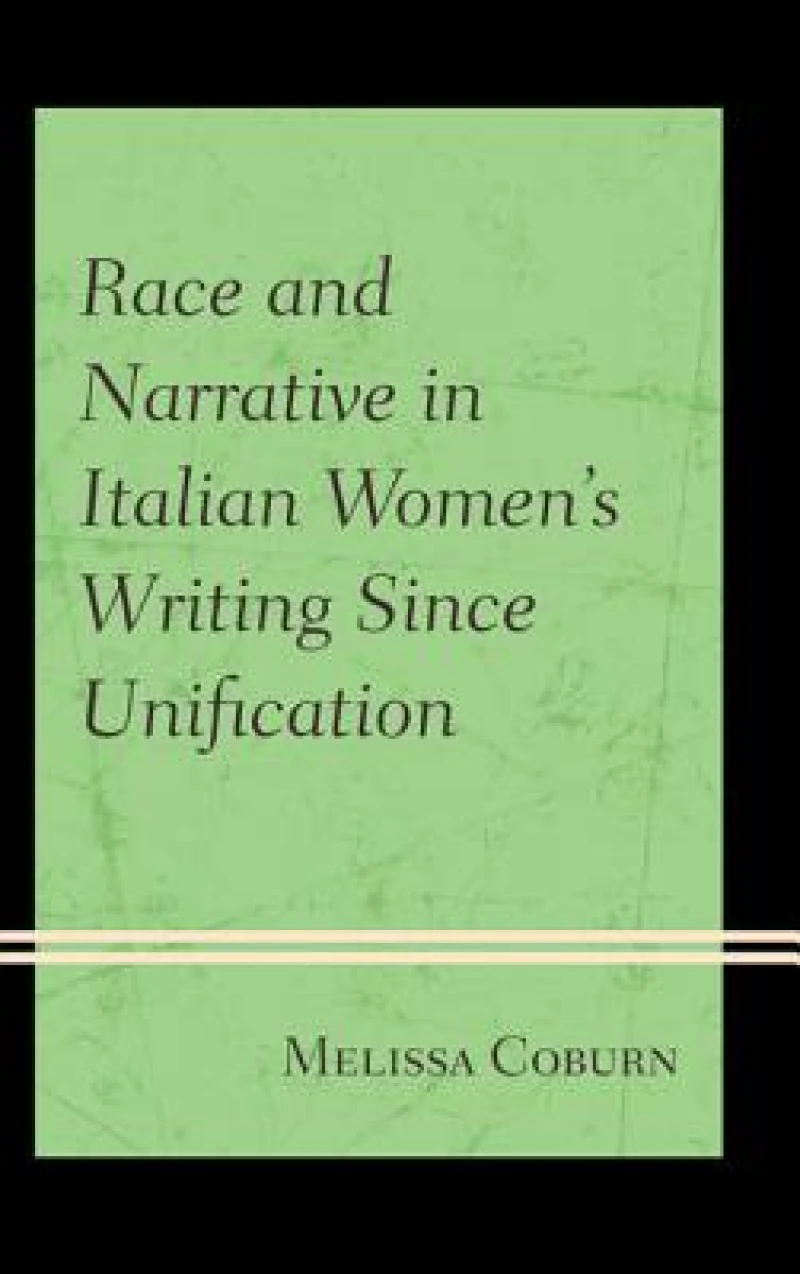
Race and Narrative in Italian Women's Writing Since Unification
Book Details
Format
Hardback or Cased Book
ISBN-10
1611475996
ISBN-13
9781611475999
Publisher
Fairleigh Dickinson University Press
Imprint
Fairleigh Dickinson University Press
Country of Manufacture
GB
Country of Publication
GB
Publication Date
Jul 29th, 2013
Print length
164 Pages
Weight
396 grams
Dimensions
16.10 x 23.70 x 1.80 cms
Ksh 15,500.00
Manufactured on Demand
0 in stock
Delivery Location
Delivery fee: Select location
Secure
Quality
Fast
Race as Narrative in Italian Women's Writing Since Unification explores racist ideas and critiques of racism in four long narratives by female authors Grazia Deledda, Matilde Serao, Natalia Ginzburg, and Gabriella Ghermandi, who wrote in Italy after national unification. Starting from the premise that race is a political and socio-historical construction, Melissa Coburn makes the argument that race is also a narrative construction. This is true in that many narratives have contributed to the historical construction of the idea of race; it is also true in that the concept of race metaphorically reflects certain formal qualities of narration. Coburn demonstrates that at least four sets of qualities are common among narratives and central to the development of race discourse: intertextuality; the processes of characterization, plot, and tropes; the tension between the projections of individual, group, and universal identities; and the processes of identification and otherness. These four sets of qualities become organizing principles of the four sequential chapters, paralleling a sequential focus on the four different narrative authors. The juxtaposition of these close, contextualized readings demonstrates salient continuities and discontinuities within race discourse over the period examined, revealing subtleties in the historical record overlooked by previous studies.
Race as Narrative in Italian Women''s Writing Since Unification explores racist ideas and critiques of racism in four long narratives by female authors Grazia Deledda, Matilde Serao, Natalia Ginzburg, and Gabriella Ghermandi, who wrote in Italy after national unification. Starting from the premise that race is a political and socio-historical construction, Melissa Coburn makes the argument that race is also a narrative construction. This is true in that many narratives have contributed to the historical construction of the idea of race; it is also true in that the concept of race metaphorically reflects certain formal qualities of narration. Coburn demonstrates that at least four sets of qualities are common among narratives and central to the development of race discourse: intertextuality; the processes of characterization, plot, and tropes; the tension between the projections of individual, group, and universal identities; and the processes of identification and otherness. These four sets of qualities become organizing principles of the four sequential chapters, paralleling a sequential focus on the four different narrative authors. The juxtaposition of these close, contextualized readings demonstrates salient continuities and discontinuities within race discourse over the period examined, revealing subtleties in the historical record overlooked by previous studies.
Get Race and Narrative in Italian Women's Writing Since Unification by at the best price and quality guaranteed only at Werezi Africa's largest book ecommerce store. The book was published by Fairleigh Dickinson University Press and it has pages.

