
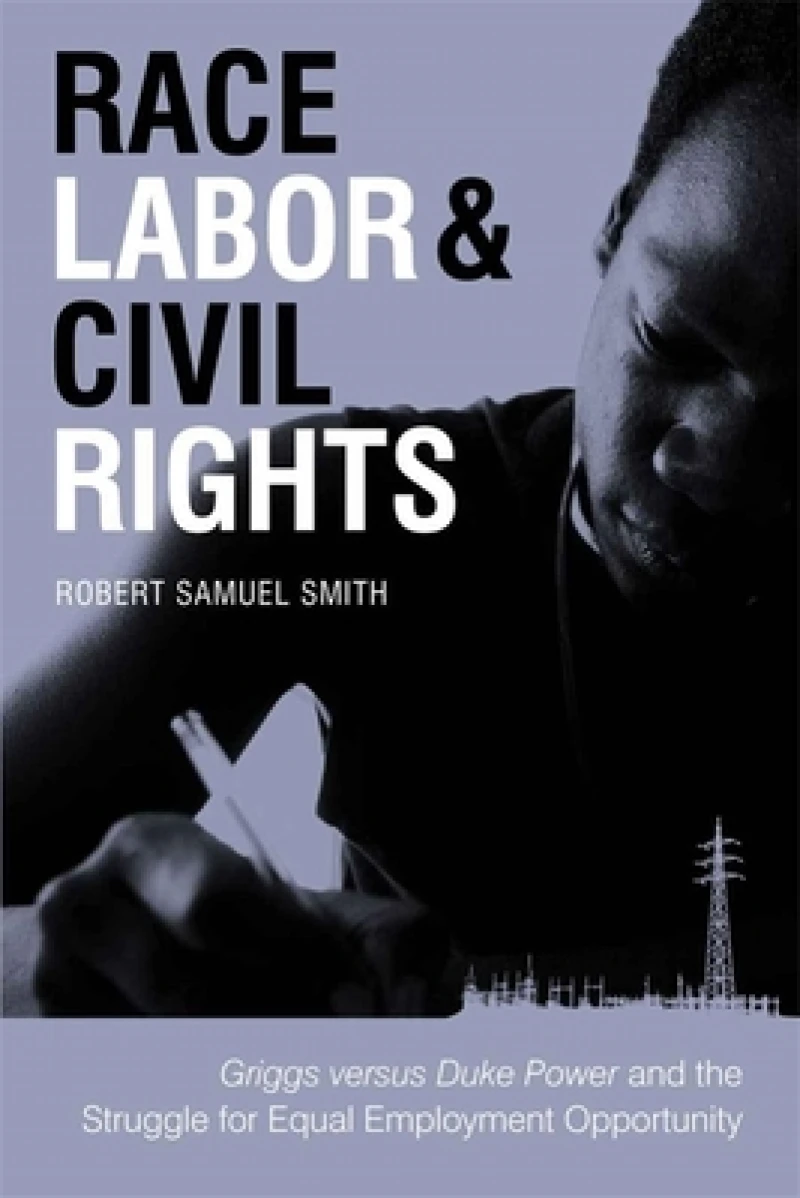
Race, Labor, and Civil Rights : Griggs Versus Duke Power and the Struggle for Equal Employment Opportunity
Book Details
Format
Hardback or Cased Book
Book Series
Making the Modern South
ISBN-10
0807133639
ISBN-13
9780807133637
Publisher
Louisiana State University Press
Imprint
Louisiana State University Press
Country of Manufacture
US
Country of Publication
GB
Publication Date
Dec 1st, 2008
Print length
248 Pages
Weight
333 grams
Dimensions
22.80 x 15.20 x 2.50 cms
Product Classification:
History of the Americas20th century history: c 1900 to c 2000Social & cultural historyEthnic studies / EthnicityEthnic studiesBlack & Asian studiesLegal historyHuman rights & civil liberties lawLaw: Human rights and civil libertiesEmployment & labour lawEmployment and labour law: generalHistoryHistory of the AmericasSocial and cultural historyLocal history
Ksh 6,500.00
Temporarily out of stock, due soon
0 in stock
Delivery Location
Delivery fee: Select location
Secure
Quality
Fast
Legal scholars rank “Griggs v. Duke Power” on par with “Brown v. Board of Education” in terms of its impact on eradicating race discrimination from American institutions. Robert Samuel Smith offers the first full-length historical examination of this important case and its connection to civil rights activism during the second half of the 1960s.
In 1966, thirteen black employees of the Duke Power Company's Dan River Plant in Draper, North Carolina, filed a lawsuit against the company challenging its requirement of a high school diploma or a passing grade on an intelligence test for internal transfer or promotion. In the groundbreaking decision Griggs v. Duke Power (1971), the United States Supreme Court ruled in favour of the plaintiffs, finding such employment practices violated Title 7 of the Civil Rights Act of 1964 when they disparately affected minorities. In doing so, the court delivered a significant anti-employment discrimination verdict. Legal scholars rank Griggs v. Duke Power on par with Brown v. Board of Education (1954) in terms of its impact on eradicating race discrimination from American institutions. In Race, labor, and Civil Rights, Robert Samuel Smith offers the first full-length historical examination of this important case and its connection to civil rights activism during the second half of the 1960s.
Smith explores all aspects of Griggs, highlighting the sustained energy of the grassroots civil rights community and the critical importance of courtroom activism. Smith shows that after years of nonviolent, direct action protests, African Americans remained vigilant in the 1960s, heading back to the courts to reinvigorate the civil rights acts in an effort to remove the lingering institutional bias left from decades of overt racism. He asserts that alongside the more boisterous expressions of black radicalism of the late sixties, foot soldiers and local leaders of the civil rights community -- many of whom were working-class black southerners -- mustered ongoing legal efforts to mold Title 7 into meaningful law. Smith also highlights the persistent judicial activism of the NAACP-Legal Defense and Education Fund and the ascension of the second generation of civil rights attorneys.
By exploring the virtually untold story of Griggs v. Duke Power, Smith's enlightening study connects the case and the campaign for equal employment opportunity to the broader civil rights movement and reveals the civil rights community's continued spirit of legal activism well into the 1970s.
Smith explores all aspects of Griggs, highlighting the sustained energy of the grassroots civil rights community and the critical importance of courtroom activism. Smith shows that after years of nonviolent, direct action protests, African Americans remained vigilant in the 1960s, heading back to the courts to reinvigorate the civil rights acts in an effort to remove the lingering institutional bias left from decades of overt racism. He asserts that alongside the more boisterous expressions of black radicalism of the late sixties, foot soldiers and local leaders of the civil rights community -- many of whom were working-class black southerners -- mustered ongoing legal efforts to mold Title 7 into meaningful law. Smith also highlights the persistent judicial activism of the NAACP-Legal Defense and Education Fund and the ascension of the second generation of civil rights attorneys.
By exploring the virtually untold story of Griggs v. Duke Power, Smith's enlightening study connects the case and the campaign for equal employment opportunity to the broader civil rights movement and reveals the civil rights community's continued spirit of legal activism well into the 1970s.
Get Race, Labor, and Civil Rights by at the best price and quality guaranteed only at Werezi Africa's largest book ecommerce store. The book was published by Louisiana State University Press and it has pages.

