
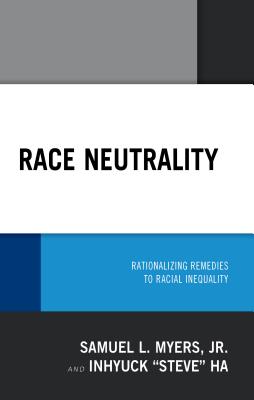
Race Neutrality : Rationalizing Remedies to Racial Inequality
Book Details
Format
Paperback / softback
ISBN-10
1498588980
ISBN-13
9781498588980
Publisher
Bloomsbury Publishing Plc
Imprint
Lexington Books
Country of Manufacture
GB
Country of Publication
GB
Publication Date
Oct 28th, 2019
Print length
214 Pages
Weight
328 grams
Dimensions
22.90 x 15.30 x 1.70 cms
KSh 7,950.00
Currently unavailable
0 in stock
Delivery Location
Delivery fee: Select location
Secure
Quality
Fast
Using illustrations from research on racial inequality in varied domains from public procurement and contracting to mortgage lending to child maltreatment to competitive swimming, Race Neutrality: Rationalizing Remedies to Racial Inequality argues that race neutrality—while desirable on its face—often fails to do what it is intended to do.
Using illustrations from research on racial inequality in varied domains from public procurement and contracting to mortgage lending to child maltreatment to competitive swimming, Race Neutrality: Rationalizing Remedies to Racial Inequality argues that race neutrality—while desirable on its face—often fails to do what it is intended to do.
Get Race Neutrality by Inhyuck Ha, Samuel L. Myers Jr. at the best price and quality guaranteed only at Werezi Africa's largest book ecommerce store. The book was published by Bloomsbury Publishing Plc and it has 214 pages.
Customers Who Bought This Also Bought

Nexus
KSh 2,350.00

World According to Colour
KSh 2,700.00
Sapiens
KSh 2,350.00

Guns, Germs and Steel
KSh 2,400.00

Shifting Sands
KSh 4,500.00
21 Lessons for the 21st Century
KSh 2,350.00

Profits, Prophets, Coaches and Kings
KSh 4,500.00

Africa Is Not A Country
KSh 2,350.00
Myth and Meaning
KSh 2,150.00

Three Women
KSh 2,000.00
Half of It
KSh 2,000.00

Death and Life of Great American Cities
KSh 3,600.00
