
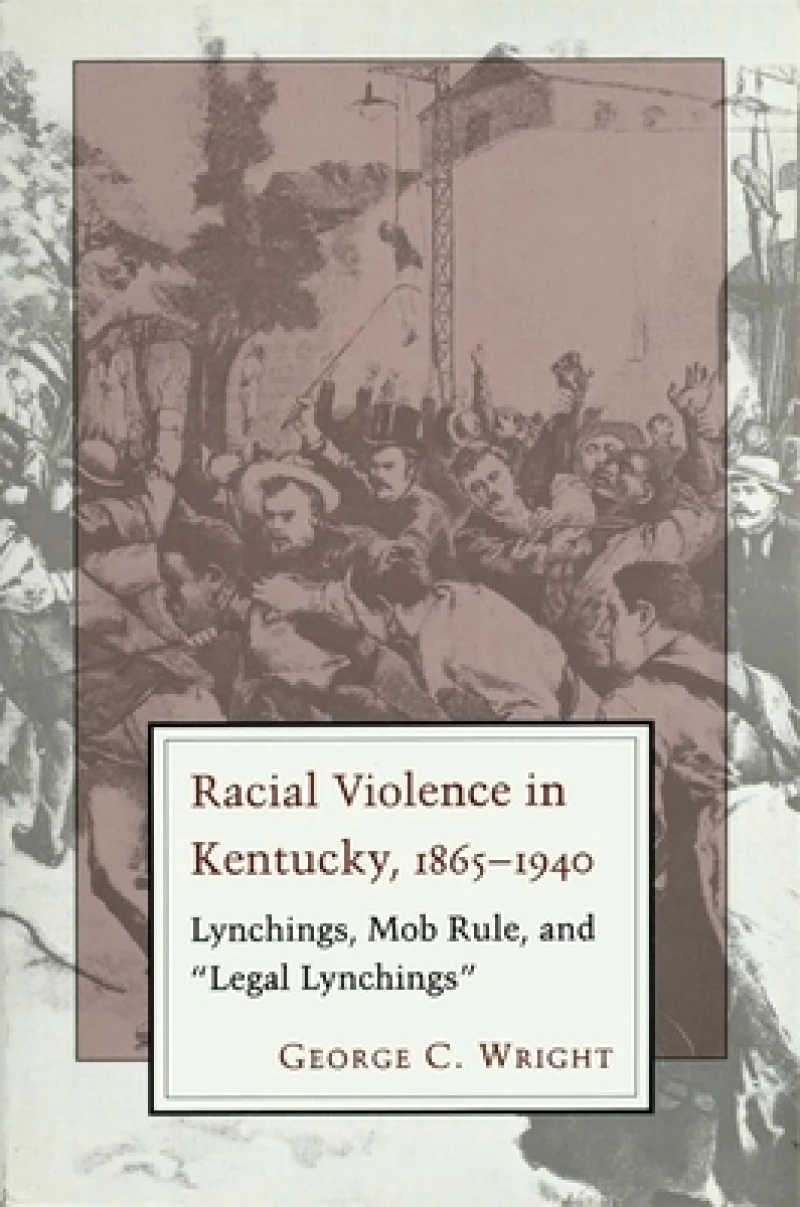
Racial Violence in Kentucky : Lynchings, Mob Rule, and ""Legal Lynchings
Book Details
Format
Paperback / Softback
ISBN-10
0807120731
ISBN-13
9780807120736
Publisher
Louisiana State University Press
Imprint
Louisiana State University Press
Country of Manufacture
US
Country of Publication
GB
Publication Date
Feb 1st, 1996
Print length
368 Pages
Weight
499 grams
Dimensions
22.70 x 15.20 x 1.90 cms
Ksh 5,700.00
Werezi Extended Catalogue
0 in stock
Delivery Location
Delivery fee: Select location
Secure
Quality
Fast
In this investigative look into Kentucky's race relations from the end of the Civil War to 1940, George Wright brings to light a consistent pattern of legally sanctioned and extralegal violence employed to ensure that blacks knew their “place” after the war.
Wright vividly portrays the clash between racist militants and blacks who would not submit to terror. The book makes clear the brutality concealed beneath the surface veneer of moderation. - Journal of Southern History
In this investigative look into Kentucky's race relations from the end of the Civil War to 1940, George C. Wright brings to light a consistent pattern of legally sanctioned and extralegal violence employed to ensure that blacks knew their ""place"" after the war.
In the first study of its kind to target the racial patterns of a specific state, Wright demonstrates that despite Kentucky's proximity to the North, its black population was subjected to racial oppression every bit as severe and prolonged as that found farther south. His examination of the causes and extent of racial violence, and of the steps taken by blacks and concerned whites to end the brutality, has implications for race relations throughout the United States.
In this investigative look into Kentucky's race relations from the end of the Civil War to 1940, George C. Wright brings to light a consistent pattern of legally sanctioned and extralegal violence employed to ensure that blacks knew their ""place"" after the war.
In the first study of its kind to target the racial patterns of a specific state, Wright demonstrates that despite Kentucky's proximity to the North, its black population was subjected to racial oppression every bit as severe and prolonged as that found farther south. His examination of the causes and extent of racial violence, and of the steps taken by blacks and concerned whites to end the brutality, has implications for race relations throughout the United States.
Get Racial Violence in Kentucky by at the best price and quality guaranteed only at Werezi Africa's largest book ecommerce store. The book was published by Louisiana State University Press and it has pages.

