
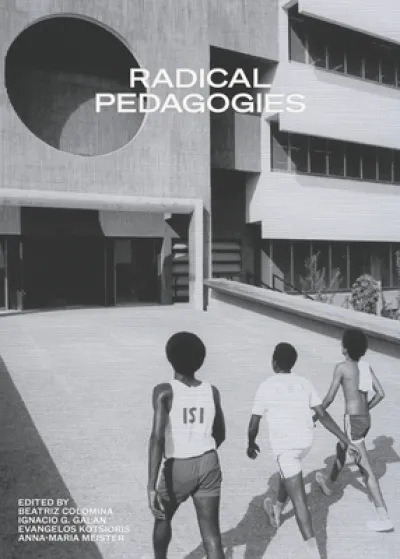
Radical Pedagogies
Book Details
Format
Paperback / Softback
ISBN-10
0262543389
ISBN-13
9780262543385
Publisher
MIT Press Ltd
Imprint
MIT Press
Country of Manufacture
GB
Country of Publication
GB
Publication Date
May 31st, 2022
Print length
472 Pages
Weight
1,134 grams
Dimensions
17.80 x 25.50 x 5.10 cms
Product Classification:
Architecture
Ksh 9,900.00
Werezi Extended Catalogue
Delivery in 14 days
1 copies in stock
Delivery Location
Delivery fee: Select location
Delivery in 14 days
Secure
Quality
Fast
Experiments in architectural education in the post–World War II era that challenged and transformed architectural discourse and practice. In the decades after World War II, new forms of learning transformed architectural education. These radical experiments sought to upend disciplinary foundations and conventional assumptions about the nature of architecture as much as they challenged modernist and colonial norms, decentered building, imagined new roles for the architect, and envisioned participatory forms of practice. Although many of the experimental programs were subsequently abandoned, terminated, or assimilated, they nevertheless helped shape and in some sense define architectural discourse and practice. This book explores and documents these radical pedagogies and efforts to defy architecture’s status quo. The experiments include the adaptation of Bauhaus pedagogy as a means of “unlearning” under the conditions of decolonization in Africa; a movement to design for “every body,” including the disabled, by architecture students and faculty at the University of California, Berkeley; the founding of a support network for women interested in the built environment, regardless of their academic backgrounds; and a design studio in the USSR that offered an alternative to the widespread functionalist approach in Soviet design. Viewed through their dissolution and afterlife as well as through their founding stories, these projects from the last century raise provocative questions about architecture’s role in the new century.
Experiments in architectural education in the postWorld War II era that challenged and transformed architectural discourse and practice.
In the decades after World War II, new forms of learning transformed architectural education. These radical experiments sought to upend disciplinary foundations and conventional assumptions about the nature of architecture as much as they challenged modernist and colonial norms, decentered building, imagined new roles for the architect, and envisioned participatory forms of practice. Although many of the experimental programs were subsequently abandoned, terminated, or assimilated, they nevertheless helped shape and in some sense define architectural discourse and practice. This book explores and documents these radical pedagogies and efforts to defy architectures status quo.
The experiments include the adaptation of Bauhaus pedagogy as a means of unlearning under the conditions of decolonization in Africa; a movement to design for every body, including the disabled, by architecture students and faculty at the University of California, Berkeley; the founding of a support network for women interested in the built environment, regardless of their academic backgrounds; and a design studio in the USSR that offered an alternative to the widespread functionalist approach in Soviet design. Viewed through their dissolution and afterlife as well as through their founding stories, these projects from the last century raise provocative questions about architectures role in the new century.
In the decades after World War II, new forms of learning transformed architectural education. These radical experiments sought to upend disciplinary foundations and conventional assumptions about the nature of architecture as much as they challenged modernist and colonial norms, decentered building, imagined new roles for the architect, and envisioned participatory forms of practice. Although many of the experimental programs were subsequently abandoned, terminated, or assimilated, they nevertheless helped shape and in some sense define architectural discourse and practice. This book explores and documents these radical pedagogies and efforts to defy architectures status quo.
The experiments include the adaptation of Bauhaus pedagogy as a means of unlearning under the conditions of decolonization in Africa; a movement to design for every body, including the disabled, by architecture students and faculty at the University of California, Berkeley; the founding of a support network for women interested in the built environment, regardless of their academic backgrounds; and a design studio in the USSR that offered an alternative to the widespread functionalist approach in Soviet design. Viewed through their dissolution and afterlife as well as through their founding stories, these projects from the last century raise provocative questions about architectures role in the new century.
Get Radical Pedagogies by at the best price and quality guaranteed only at Werezi Africa's largest book ecommerce store. The book was published by MIT Press Ltd and it has pages.

