
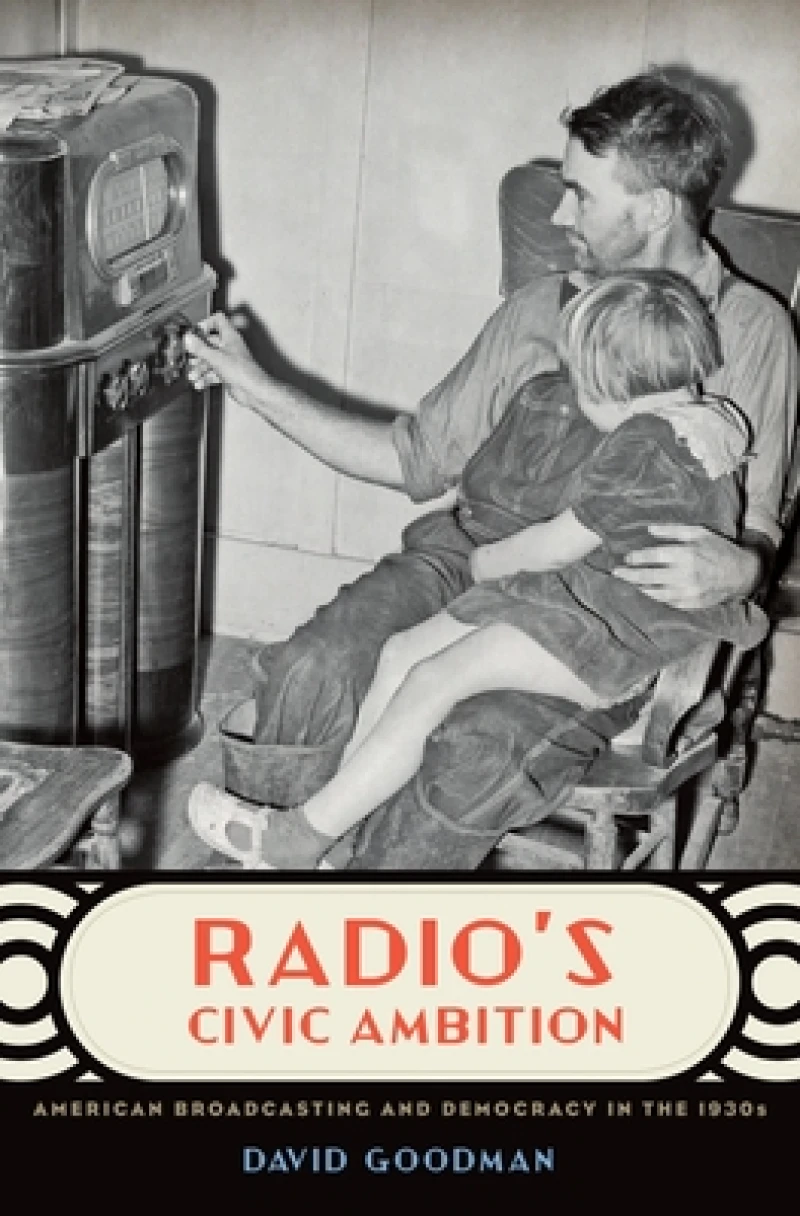
Radio's Civic Ambition : American Broadcasting and Democracy in the 1930s
Book Details
Format
Hardback or Cased Book
ISBN-10
0195394089
ISBN-13
9780195394085
Publisher
Oxford University Press Inc
Imprint
Oxford University Press Inc
Country of Manufacture
GB
Country of Publication
GB
Publication Date
May 5th, 2011
Print length
368 Pages
Weight
576 grams
Dimensions
16.30 x 23.60 x 3.10 cms
Product Classification:
RadioHistory of the AmericasMedia studiesRadio & television industry
Ksh 16,300.00
Manufactured on Demand
0 in stock
Delivery Location
Delivery fee: Select location
Secure
Quality
Fast
In its golden age, American radio both entertained and also fostered programs meant to produce self-governing and opinion-forming individuals, promoting openness to change and tolerance of diversity, familiarity with classical music, and knowledge of world affairs. As author David Goodman argues, the ambitions of radio''s golden age have strong significance today as evidence that media regulation in the public interest can have significant and often positive effects.
The history of American radio broadcasting has often been written as a lament for lost possibilities, a tale of what might have been. One now familiar landmark in that account is the story of how American commercial broadcasters, in the passage of the 1934 Communications Act, won a great victory over reformers who wanted frequencies set aside for non-commercial use. It is generally agreed that the defeat of the radio reformers was decisive and permanent, and that the best hopes for a public radio in the United States had been thwarted by 1934. In Radio''s Civic Ambition, however, author David Goodman focuses not on the lost possibilities and defeated reformers, but on what did happen as the beginning of another chapter in the story of the struggle over the meaning and purpose of American broadcasting. Commercial broadcasters paid a considerable price for their victory: in the years after 1934, American broadcasters always had to be seen to be providing public service as well as entertainment. An impressive range of programs, from imaginatively conceived classical music broadcasts to lively multi-opinion radio forums, was designed to promote civic engagement and individualization. By the later 1930s, political leaders, key social science and communications intellectuals, the Federal Communications Commission, and many articulate and educated ordinary Americans, increasingly expected commercial broadcasters in the US to perform a range of ambitious civic functions, including encouraging local community, strengthening democracy, fostering talent, and producing tolerance for other points of view. A new look at the history of commercial radio broadcasting in America, Radio''s Civic Ambition will appeal to students and scholars in communications and radio studies, music history, media studies, and American history.
Get Radio's Civic Ambition by at the best price and quality guaranteed only at Werezi Africa's largest book ecommerce store. The book was published by Oxford University Press Inc and it has pages.

