

railway.com : Parallels Between the Early British Railways and the ICT Revolution
Book Details
Format
Hardback
ISBN-10
0255365349
ISBN-13
9780255365345
Publisher
Institute of Economic Affairs
Imprint
Institute of Economic Affairs
Country of Manufacture
GB
Country of Publication
GB
Publication Date
Jul 20th, 2003
Print length
96 Pages
Weight
222 grams
Dimensions
19.70 x 13.20 x 0.80 cms
Product Classification:
Economics
KSh 2,250.00
Currently unavailable
0 in stock
Delivery Location
Delivery fee: Select location
Secure
Quality
Fast
The teaching of economic history is in decline in our schools and universities. This work combines analysis with an explanation of the technological developments in order to draw parallels between the early British railways and the ICT revolution. It shows how stock market bubbles do not necessarily lead to economic losses.
The teaching of economic history is in decline in our schools and universities. Yet much can be learned from the analysis of historical economic events. In railway.com Robert Miller combines such analysis with an explanation of the technological developments in order to draw parallels between the early British railways and the ICT revolution. Study of the former enables us to understand likely trends in the latter. Furthermore, a number of important policy implications can be drawn from the study of the economic history of both events. Robert Miller shows too how stock market bubbles do not necessarily lead to economic losses. The use of central planning for allocating capital in network development has simply led to technological networks being under-provided. The author also considers the issues of technology 'lock in' and examines how markets, even in apparently unsophisticated economies, can solve complex resource allocation problems.
Get railway.com by Robert C. B. Miller at the best price and quality guaranteed only at Werezi Africa's largest book ecommerce store. The book was published by Institute of Economic Affairs and it has 96 pages.
Customers Who Bought This Also Bought

Development as Freedom
KSh 2,900.00

Breakneck
KSh 4,500.00
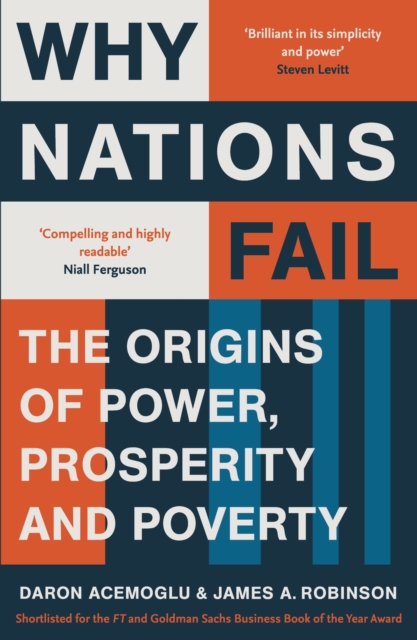
Why Nations Fail
KSh 2,350.00

Anti-Politics Machine
KSh 3,750.00

End of Poverty
KSh 2,350.00
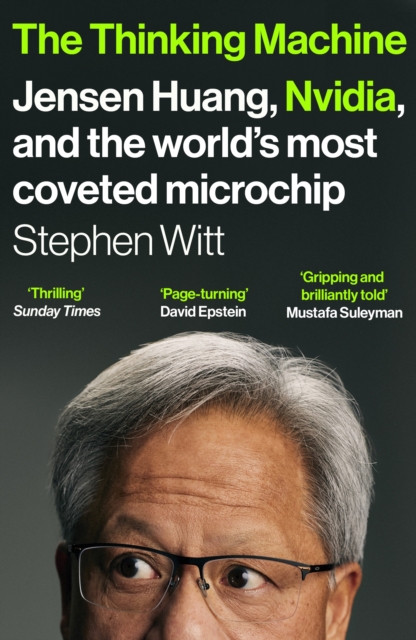
The Thinking Machine
KSh 2,350.00
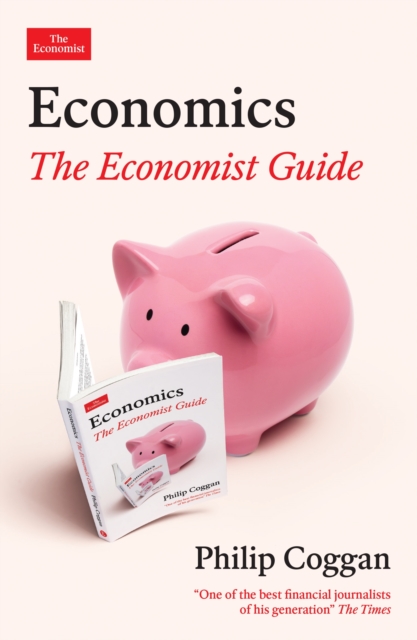
Economics: The Economist Guide
KSh 2,150.00
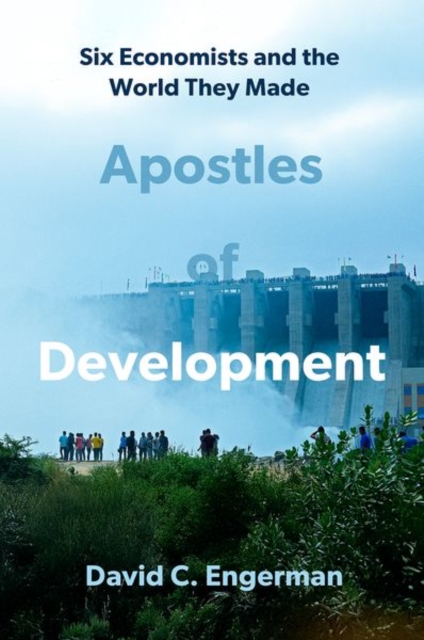
Apostles of Development
KSh 5,600.00
How Boards Work
KSh 2,350.00
Economic Facts and Fallacies
KSh 3,050.00

Eat That Frog!, Fourth Edition
KSh 3,250.00
Capitalism and Freedom
KSh 3,350.00
