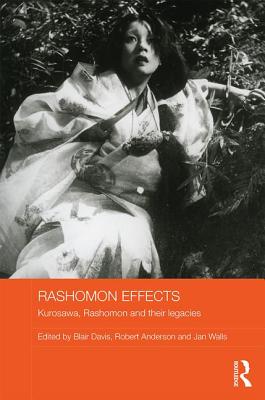
Rashomon Effects : Kurosawa, Rashomon and their legacies
Book Details
Delivery Location
Delivery fee: Select location
Delivery in 28 days
Akira Kurosawas 1950 film Rashomon has arguably become the best known Japanese film of all time. This book addresses issues beyond the realm of Rashomon within film studies, and the Rashomon effect, which itself has become a widely recognized English term referring to significantly different perspectives of different eyewitnesses to the same dramatic event. The chapters address both the continuing and vibrant influence of Rashomon effects into the twenty-first century, as well as the directors manifold legacies to cinema, its global audiences and beyond, and will be welcomed by those interested in Japanese studies, film studies and world cinema.
Akira Kurosawa is widely known as the director who opened up Japanese film to Western audiences, and following his death in 1998, a process of reflection has begun about his lifes work as a whole and its legacy to cinema. Kurosawas 1950 film Rashomon has become one of the best-known Japanese films ever made, and continues to be discussed and imitated more than 60 years after its first screening.
This book examines the cultural and aesthetic impacts of Akira Kurosawas Rashomon, as well as the directors larger legacies to cinema, its global audiences and beyond. It demonstrates that these legacies are manifold: not only cinematic and artistic, but also cultural and cognitive. The book moves from an examination of one filmmaker and his immediate social context in Japan, and goes on to explore how an artists ideas might transcend their cultural origins to ultimately provide global influences. Discussing how Rashomons effects began to multiply with the film being re-imagined and repurposed in numerous media forms in the decades that followed its initial release, the book also shows that the film and its ideas have been applied to a wider range of social and cultural phenomena in a variety of institutional contexts. It addresses issues beyond the realm of Rashomon within film studies, extending to the Rashomon effect, which itself has become a widely recognized English term referring to the significantly different interpretations of different eyewitnesses to the same dramatic event.
As the first book on Rashomon since Donald Richie''s 1987 anthology, it will be invaluable to students and scholars of film studies, film history, Japanese cinema and communication studies. It will also resonate more broadly with those interested in Japanese culture and society, anthropology and philosophy.
Get Rashomon Effects by at the best price and quality guaranteed only at Werezi Africa's largest book ecommerce store. The book was published by Taylor & Francis Ltd and it has pages.