
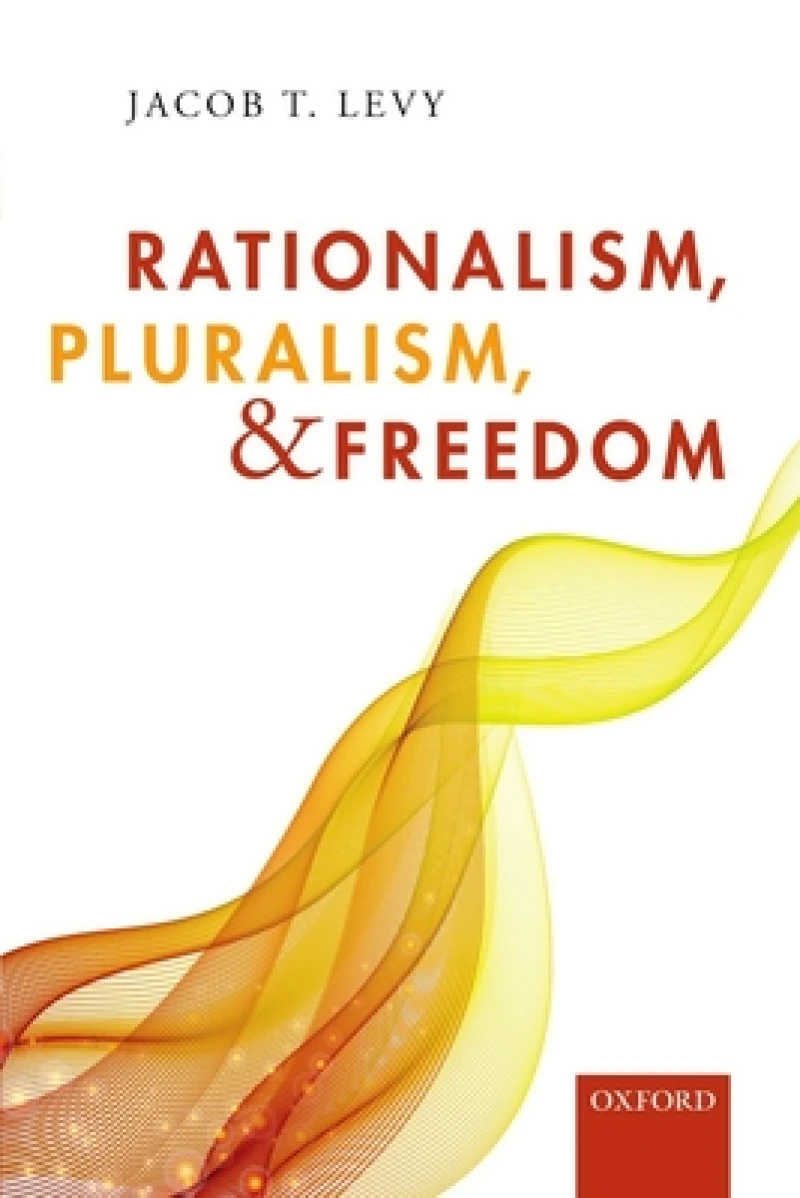
Rationalism, Pluralism, and Freedom
Book Details
Format
Paperback / Softback
ISBN-10
0198808917
ISBN-13
9780198808916
Publisher
Oxford University Press
Imprint
Oxford University Press
Country of Manufacture
GB
Country of Publication
GB
Publication Date
Jul 13th, 2017
Print length
336 Pages
Weight
528 grams
Dimensions
23.40 x 15.70 x 2.10 cms
Product Classification:
Social & political philosophyHistory of ideasPolitical science & theory
Ksh 7,300.00
Manufactured on Demand
0 in stock
Delivery Location
Delivery fee: Select location
Secure
Quality
Fast
This book offers an original account of the history of liberal thought, one grounded in an institutional history of medieval pluralism and the early modern rationalizing state, and explores the deep tensions that liberal political thought rests upon.
Intermediate groups— voluntary associations, churches, ethnocultural groups, universities, and more-can both protect threaten individual liberty. The same is true for centralized state action against such groups. This wide-ranging book argues that, both normatively and historically, liberal political thought rests on a deep tension between a rationalist suspicion of intermediate and local group power, and a pluralism favorable toward intermediate group life, and preserving the bulk of its suspicion for the centralizing state. The book studies this tension using tools from the history of political thought, normative political philosophy, law, and social theory. In the process, it retells the history of liberal thought and practice in a way that moves from the birth of intermediacy in the High Middle Ages to the British Pluralists of the twentieth century. In particular it restores centrality to the tradition of ancient constitutionalism and to Montesquieu, arguing that social contract theory''s contributions to the development of liberal thought have been mistaken for the whole tradition. It discusses the real threats to freedom posed both by local group life and by state centralization, the ways in which those threats aggravate each other. Though the state and intermediate groups can check and balance each other in ways that protect freedom, they may also aggravate each other''s worst tendencies. Likewise, the elements of liberal thought concerned with the threats from each cannot necessarily be combined into a single satisfactory theory of freedom. While the book frequently reconstructs and defends pluralism, it ultimately argues that the tension is irreconcilable and not susceptible of harmonization or synthesis; it must be lived with, not overcome.
Get Rationalism, Pluralism, and Freedom by at the best price and quality guaranteed only at Werezi Africa's largest book ecommerce store. The book was published by Oxford University Press and it has pages.

