
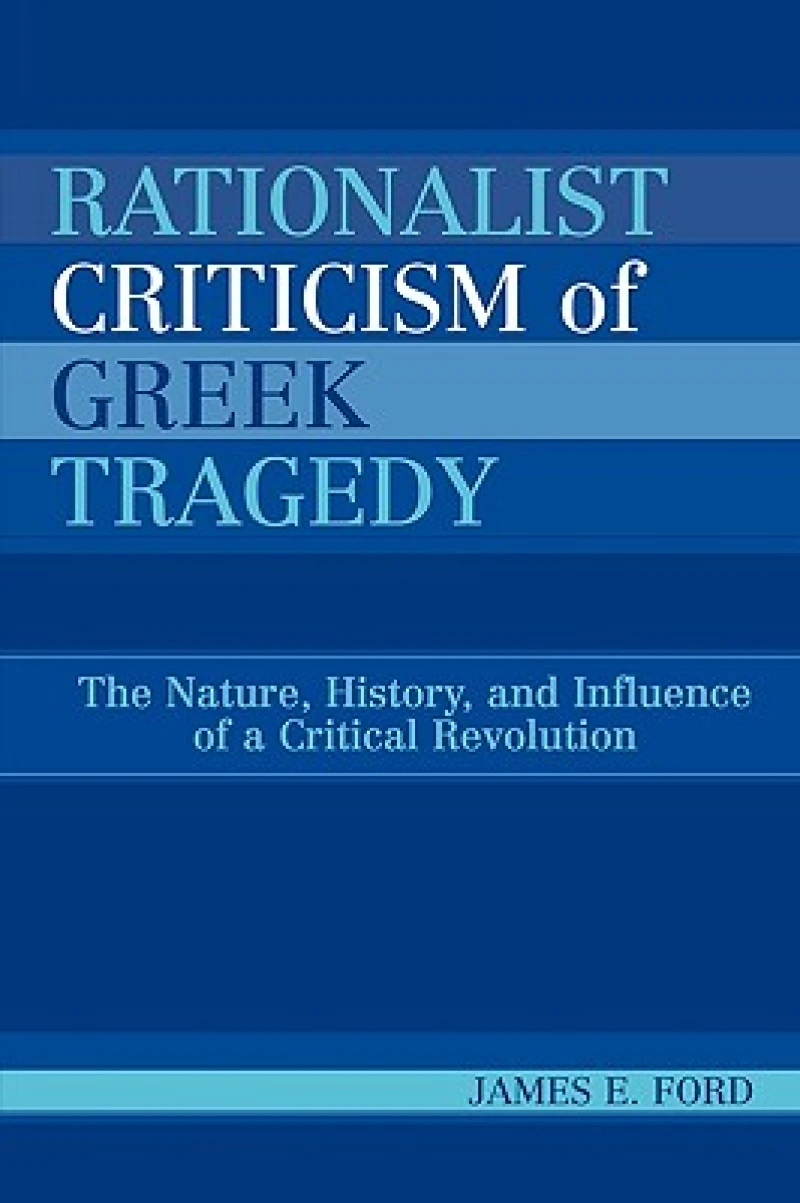
Rationalist Criticism of Greek Tragedy : The Nature, History, and Influence of a Critical Revolution
Book Details
Format
Paperback / Softback
ISBN-10
0739112198
ISBN-13
9780739112199
Publisher
Bloomsbury Publishing Plc
Imprint
Lexington Books
Country of Manufacture
GB
Country of Publication
GB
Publication Date
Dec 14th, 2005
Print length
128 Pages
Weight
259 grams
Dimensions
22.80 x 16.10 x 1.50 cms
Product Classification:
Literary studies: classical, early & medievalLiterary studies: plays & playwrights
Ksh 7,850.00
Manufactured on Demand
0 in stock
Delivery Location
Delivery fee: Select location
Secure
Quality
Fast
Examines one of the most radical and precipitous instances in the shift in interpretation and evolution of literary works and their authors. Specifically, this book focuses on the rehabilitation of Euripides in the late nineteenth-century, including the crucial role played by the classicist and English scholar. AW Verrall.
Literary critical revolutions-radical shifts in interpretation and evaluation of literary works and their authors-are among the most interesting of cultural phenomena. In order to gain greater understanding of the mechanisms of all critical revolutions, Rationalist Criticism in Greek Tragedy examines the late nineteenth-century ''rehabilitation'' of Euripides. Some of the factors which contributed to the Euripidean revolution are well known, but one which is not-one which has been generally forgotten, when it has not actually been denied-is the role of Rationalist Criticism. Rationalist Criticism, founded and dominated by infamous Cambridge University Classicist and English scholar A. W. Verrall, was generally deprecated by mainstream classicists when it first appeared, and those who happen to come upon it today tend to treat it dismissively-a tendency the great classicist Eduard Fraenkel thought ''should be strongly resisted.'' The influence of Rationalist Criticism-inside and outside of classical studies-has been much greater than has been generally supposed. James E. Ford makes the case for the larger significance of what Verrall and the Rationalist Critics were doing within the history not just of Euripidean criticism but of literary studies generally. Ford reads the rationalists on their own terms, drawing on the disciplines of the history of scholarship and the history and theory of literary criticism making this study unique. It should appeal to anyone interested in intellectual history, especially instances of significant intellectual changes (a la Kuhnian revolutions), and, especially, changes in the interpretation and evaluation of authors and their works. The work should be of specific interest to classicists, academic historians, and critical theorists.
Get Rationalist Criticism of Greek Tragedy by at the best price and quality guaranteed only at Werezi Africa's largest book ecommerce store. The book was published by Bloomsbury Publishing Plc and it has pages.

