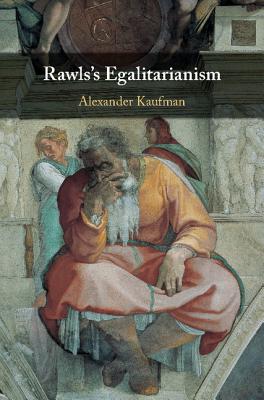
Rawls''s Egalitarianism
Book Details
Format
Paperback / softback
ISBN-10
1108453031
ISBN-13
9781108453035
Publisher
Cambridge University Press
Imprint
Cambridge University Press
Country of Manufacture
GB
Country of Publication
GB
Publication Date
Jan 23rd, 2020
Print length
284 Pages
Weight
38 grams
Dimensions
21.50 x 23.10 x 1.40 cms
KSh 6,100.00
Currently unavailable
0 in stock
Delivery Location
Delivery fee: Select location
Secure
Quality
Fast
This is a new interpretation and analysis of John Rawls's leading theory of distributive justice, focusing on the ways in which his ideas have both influenced and been misinterpreted by the current egalitarian literature. It will interest scholars and advanced students of political theory and political philosophy.
This is a new interpretation and analysis of John Rawls''s leading theory of distributive justice, which also considers the responding egalitarian theories of scholars such as Richard Arneson, G. A. Cohen, Ronald Dworkin, Martha Nussbaum, John Roemer, and Amartya Sen. Rawls''s theory, Kaufman argues, sets out a normative ideal of justice that incorporates an account of the structure and character of relations that are appropriate for members of society viewed as free and equal moral beings. Forging an approach distinct amongst contemporary theories of equality, Rawls offers an alternative to egalitarian justice methodologies that aim primarily to compensate victims for undeserved bad luck. For Rawls, the values that ground the most plausible account of egalitarianism are real equality of economic opportunity combined with the guarantee of a fair distribution of social goods. Kaufman''s analysis will be of interest to scholars and advanced students of political theory and political philosophy, particularly those working on justice, and on the work of John Rawls.
Get Rawls''s Egalitarianism by Alexander Kaufman at the best price and quality guaranteed only at Werezi Africa's largest book ecommerce store. The book was published by Cambridge University Press and it has 284 pages.
Customers Who Bought This Also Bought

Great Ideas Myth of Sisyphus
KSh 1,450.00

Trouble With Being Born
KSh 2,000.00
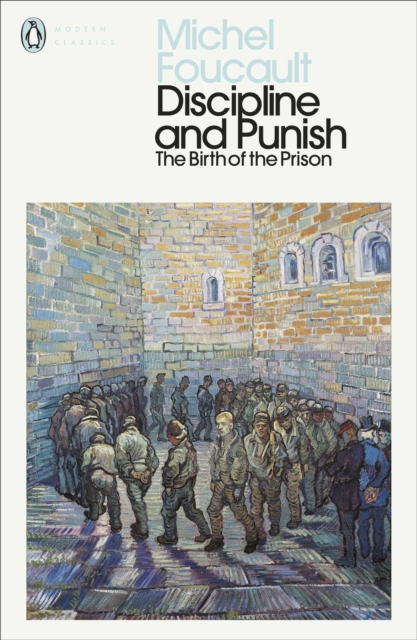
Discipline and Punish
KSh 2,350.00

Human, All Too Human
KSh 2,000.00

The Life Of The Mind
KSh 3,950.00

The Problems of Philosophy
KSh 2,150.00

Marriage and Morals
KSh 3,250.00

The Storyteller
KSh 2,150.00

Difference and Repetition
KSh 4,500.00

Words
KSh 2,000.00

Collected Papers
KSh 7,350.00
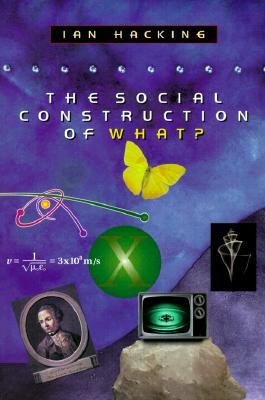
The Social Construction of What?
KSh 5,200.00