
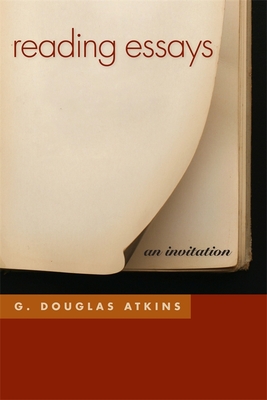
Reading Essays : An Invitation
Book Details
Format
Paperback / softback
ISBN-10
0820330302
ISBN-13
9780820330303
Publisher
University of Georgia Press
Imprint
University of Georgia Press
Country of Manufacture
US
Country of Publication
GB
Publication Date
Jan 15th, 2008
Print length
296 Pages
Weight
399 grams
Dimensions
22.90 x 15.20 x 1.80 cms
KSh 7,450.00
Temporarily out of stock, due soon
0 in stock
Delivery Location
Delivery fee: Select location
Secure
Quality
Fast
Atkins performs sustained readings of more than twenty-five major essays, explaining how we can appreciate and understand what this currently resurgent literary form reveals about the “art of living.” His readings cover a wide spectrum of writers in the English language.
Approaches abound to help us beneficially, enjoyably read fiction, poetry, and drama. Here, for the first time, is a book that aims to do the same for the essay. G. Douglas Atkins performs sustained readings of more than twenty-five major essays, explaining how we can appreciate and understand what this currently resurgent literary form reveals about the “art of living.”Atkins’s readings cover a wide spectrum of writers in the English language—and his readings are themselves essays, gracefully written, engaged, and engaging. Atkins starts with the earliest British practitioners of the form, including Francis Bacon, John Dryden, Alexander Pope, and Samuel Johnson. Transcendentalist writers Henry David Thoreau and Ralph Waldo Emerson are included, as are works by Americans James Baldwin, Zora Neale Hurston, and E. B. White. Atkins also provides readings of a number of contemporary essayists, among them Annie Dillard, Scott Russell Sanders, and Cynthia Ozick. Many of the readings are of essays that Atkins has used successfully in the classroom, with undergraduate and graduate students, for many years. In his introduction Atkins offers practical advice on the specific demands essays make and the unique opportunities they offer, especially for college courses. The book ends with a note on the writing of essays, furthering the author’s contention that reading should not be separated from writing. Reading Essays continues in the tradition of such definitive texts as Understanding Poetry and Understanding Fiction. Throughout, Atkins reveals the joy, delight, grace, freedom, and wisdom of “the glorious essay.”
Get Reading Essays by G. Douglas Atkins at the best price and quality guaranteed only at Werezi Africa's largest book ecommerce store. The book was published by University of Georgia Press and it has 296 pages.
Customers Who Bought This Also Bought

Dreams in a Time of War
KSh 3,050.00

The Picture of Dorian Gray
KSh 1,250.00

Pride and Prejudice
KSh 1,150.00

Fire Next Time
KSh 1,800.00

Letters of J R R Tolkien
KSh 2,350.00

Arabian Nights'' Entertainments
KSh 2,950.00

Emma
KSh 1,350.00

The Karamazov Brothers
KSh 2,100.00
On Writing
KSh 2,000.00

Persuasion
KSh 1,100.00

Bleak House
KSh 2,150.00

To the Lighthouse
KSh 1,450.00
More by G. Douglas Atkins
Estranging the Familiar
KSh 5,250.00
Tracing the Essay
KSh 4,650.00

Contemporary Literary Theory
KSh 3,950.00
The Representation of Old Truths in T.S. Eliot's New Verse
KSh 8,100.00
On Keats''s Practice and Poetics of Responsibility
KSh 9,000.00
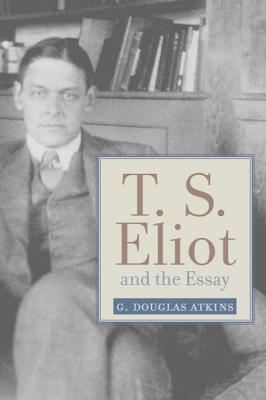
T.S. Eliot and the Essay
KSh 7,900.00
The Representation of Old Truths in T.S. Eliot's New Verse
KSh 8,100.00
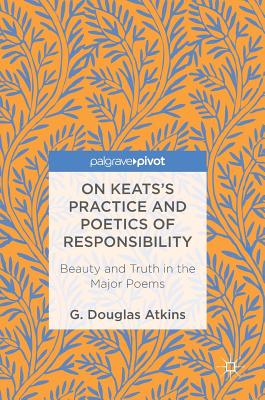
On Keats''s Practice and Poetics of Responsibility
KSh 9,000.00
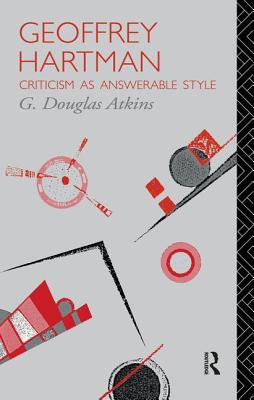
Geoffrey Hartman
KSh 10,450.00
Geoffrey Hartman
KSh 30,950.00