
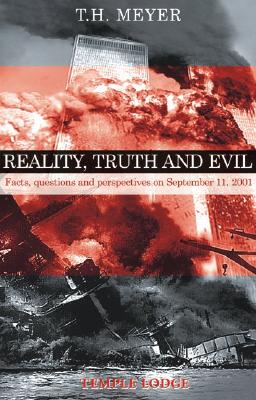
Reality, Truth and Evil : Facts, Questions and Perspectives on September 11, 2001
Annotated
by
T. H. Meyer
Book Details
Format
Paperback / softback
ISBN-10
190263666X
ISBN-13
9781902636665
Edition
Annotated
Publisher
Temple Lodge Publishing
Imprint
Temple Lodge Publishing
Country of Manufacture
GB
Country of Publication
GB
Publication Date
Apr 22nd, 2005
Print length
160 Pages
Weight
234 grams
Dimensions
21.90 x 13.80 x 1.50 cms
KSh 2,350.00
Currently unavailable
0 in stock
Delivery Location
Delivery fee: Select location
Secure
Quality
Fast
Using the events of 9/11 and Pearl Harbor as his backdrop, T.H. Meyer studies questions of reality, truth and evil, offering important new perspectives. He shows that Anglo-American political practice (influenced by secret societies such as Skull and Bones) is based on an ideology of polarity and conflict. Meyer offers instances of this tendency, encouraging what Huntington famously referred to as a 'clash of civilizations'. For example, a week before George Bush senior spoke in Congress about the need for a 'new world order', a 'humorous' cartoon map in the Economist divided the world's continents into religious and philosophical blocks, creating a new region called 'Islamistan'. In 1997, Brzezinski wrote openly of US geostrategic plans, stating that it would be hard to achieve such goals 'except in the circumstances of a truly massive and widely perceived direct external threat'. This, apparently, was granted with the events of 9/11, and the subsequent launch of a 'war on terror'. The immediate comparisons, led by George W. Bush, with Pearl Harbor demand a reassessment of the events of 1941. Meyer points to conclusive evidence which suggests that Roosevelt deliberately provoked the attacks and failed to pass on intelligence to US Navy chiefs. Could it be possible that certain members of the US elite likewise deliberately remained passive before 9/11? Why, only two weeks after the attacks, were celebrations held at CIA headquarters in which Bush profusely thanked the secret services '...on behalf of the American people'? In contrast to the divisive thinking and 'conflict-management' of leading representatives of the Anglo-American elite (inspired by a contorted reading of some basic insights of the philosopher Hegel), the author shows how the holistic approach of Rudolf Steiner and Mabel Collins offers a radical, alternative way to deal with polarities, leading to the overcoming of conflict.
Get Reality, Truth and Evil by T. H. Meyer at the best price and quality guaranteed only at Werezi Africa's largest book ecommerce store. The book was published by Temple Lodge Publishing and it has 160 pages.
Customers Who Bought This Also Bought

Crusade for Justice – The Autobiography of Ida B. Wells, Second Edition
KSh 4,050.00

Killers of the Flower Moon
KSh 2,000.00

Warmth of Other Suns
KSh 3,050.00

Frederick Douglass
KSh 3,350.00
107 Days
KSh 4,500.00

Second Treatise of Government – Norton Library
KSh 1,600.00

Tuesdays With Morrie
KSh 2,000.00
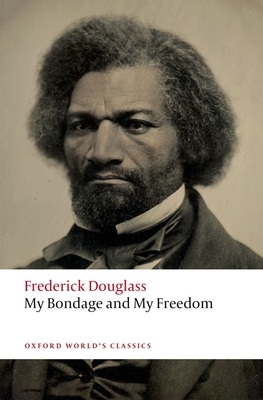
My Bondage and My Freedom
KSh 1,600.00

Hidden Figures
KSh 2,000.00

America, América
KSh 3,650.00

Holding the Line
KSh 2,000.00
Nuclear Folly
KSh 3,050.00
More by T. H. Meyer
Barefoot Through Burning Lava
KSh 1,800.00
In the Sign of Five: 1879-1899-1933-1998 -Today
KSh 2,150.00
Milestones
KSh 2,900.00

Rudolf Steiner's Core Mission
KSh 2,350.00
Ludwig Polzer-Hoditz, a European
KSh 7,200.00
Clairvoyance and Consciousness
KSh 2,000.00
D. N. Dunlop, a Man of Our Time
KSh 5,400.00
The Bodhisattva Question
KSh 2,700.00
Development of Anthroposophy since Rudolf Steiner''s Death
KSh 3,400.00
