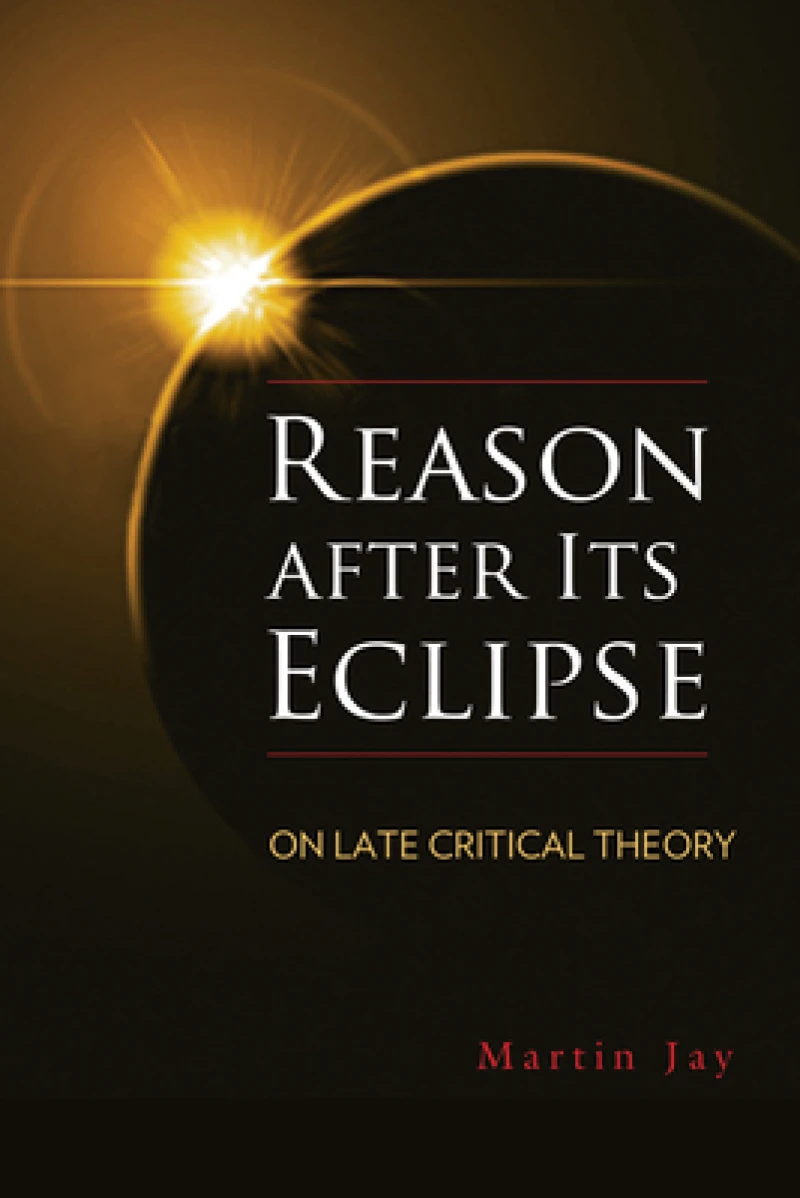
Reason After Its Eclipse : On Late Critical Theory
by
Martin Jay
Book Details
Format
Hardback or Cased Book
ISBN-10
029930650X
ISBN-13
9780299306502
Publisher
University of Wisconsin Press
Imprint
University of Wisconsin Press
Country of Manufacture
US
Country of Publication
GB
Publication Date
Apr 21st, 2016
Print length
256 Pages
Weight
524 grams
Dimensions
23.10 x 15.20 x 2.50 cms
Product Classification:
Social & political philosophyHistory of ideasHistory of ideasSocial and political philosophy
Ksh 6,750.00
Temporarily out of stock, due soon
0 in stock
Delivery Location
Delivery fee: Select location
Secure
Quality
Fast
Tackles a question as old as Plato and still pressing today: what is reason, and what roles does and should it have in human endeavour? Applying the tools of intellectual history, Martin Jay examines the overlapping, but not fully compatible, meanings that have accrued to the term “reason” over two millennia, homing in on moments of crisis, critique, and defense of reason.
Martin Jay tackles a question as old as Plato and still pressing today: what is reason, and what roles does and should it have in human endeavor? Applying the tools of intellectual history, he examines the overlapping, but not fully compatible, meanings that have accrued to the term “reason” over two millennia, homing in on moments of crisis, critique, and defense of reason.
After surveying Western ideas of reason from the ancient Greeks through Kant, Hegel, and Marx, Jay engages at length with the ways leading theorists of the Frankfurt School—Horkheimer, Marcuse, Adorno, and most extensively Habermas—sought to salvage a viable concept of reason after its apparent eclipse. They despaired, in particular, over the decay in the modern world of reason into mere instrumental rationality. When reason becomes a technical tool of calculation separated from the values and norms central to daily life, then choices become grounded not in careful thought but in emotion and will—a mode of thinking embraced by fascist movements in the twentieth century.
Is there a more robust idea of reason that can be defended as at once a philosophical concept, a ground of critique, and a norm for human emancipation? Jay explores at length the communicative rationality advocated by Habermas and considers the range of arguments, both pro and con, that have greeted his work.
After surveying Western ideas of reason from the ancient Greeks through Kant, Hegel, and Marx, Jay engages at length with the ways leading theorists of the Frankfurt School—Horkheimer, Marcuse, Adorno, and most extensively Habermas—sought to salvage a viable concept of reason after its apparent eclipse. They despaired, in particular, over the decay in the modern world of reason into mere instrumental rationality. When reason becomes a technical tool of calculation separated from the values and norms central to daily life, then choices become grounded not in careful thought but in emotion and will—a mode of thinking embraced by fascist movements in the twentieth century.
Is there a more robust idea of reason that can be defended as at once a philosophical concept, a ground of critique, and a norm for human emancipation? Jay explores at length the communicative rationality advocated by Habermas and considers the range of arguments, both pro and con, that have greeted his work.
Get Reason After Its Eclipse by at the best price and quality guaranteed only at Werezi Africa's largest book ecommerce store. The book was published by University of Wisconsin Press and it has pages.