
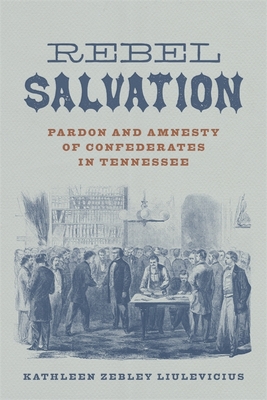
Rebel Salvation : Pardon and Amnesty of Confederates in Tennessee
Book Details
Format
Hardback
ISBN-10
0807174904
ISBN-13
9780807174906
Publisher
Louisiana State University Press
Imprint
Louisiana State University Press
Country of Manufacture
US
Country of Publication
GB
Publication Date
Jun 9th, 2021
Print length
366 Pages
Weight
667 grams
Dimensions
22.80 x 15.20 x 2.30 cms
KSh 7,200.00
Currently unavailable
0 in stock
Delivery Location
Delivery fee: Select location
Secure
Quality
Fast
Examines pardon petitions from former Confederate soldiers and sympathizers in Tennessee to craft a unique and comprehensive analysis of the process of Reconstruction in the Volunteer State after the Civil War. These under utilized petitions contain a wealth of information about Tennesseans from an array of social and economic backgrounds.
In Rebel Salvation, Kathleen Zebley Liulevicius examines pardon petitions from former Confederate soldiers and sympathizers in Tennessee to craft a unique and comprehensive analysis of the process of Reconstruction in the Volunteer State after the Civil War. These underutilized petitions contain a wealth of information about Tennesseans from an array of social and economic backgrounds, and include details about many residents who would otherwise not appear in the historical record. They reveal the dynamics at work between multiple factions in the state: former Rebels, Unionists, Governor William G. Brownlow, and the U.S. Army officers responsible for ushering Tennessee back into the Union. The pardons also illuminate the reality of the politically and emotionally charged post-Civil War environment, where everyone-from wealthy elites to impoverished sharecroppers-who had fought, supported, or expressed sympathy for the Confederacy was required by law to sue for pardon to reclaim certain privileges. All such requests arrived at the desk of President Andrew Johnson, who ultimately determined which petitioners regained the right to vote, hold office, practice law, operate a business, and buy and sell land.
Those individuals filing petitions experienced Reconstruction in personal and profound ways. Supplicants wrote and circulated their exoneration documents among loyalist neighbors, friends, and Union officers to obtain favorable endorsements that might persuade Brownlow and Johnson to grant pardon. Former Rebels relayed narratives about the motivating factors compelling them to side with the Confederacy, chronicled their actions during the war, expressed repentance, and pledged allegiance to the United States government and the Constitution. Although not required, many petitioners even sought recommendations from their former wartime foes.
The pardoning of former Confederates proved a collaborative process in which neighbors, acquaintances, and erstwhile enemies lodged formal pleas to grant or deny clemency from state and federal officials. Indeed, as Rebel Salvation reveals, the long road to peace began here in the newly reunited communities of postwar Tennessee.
Those individuals filing petitions experienced Reconstruction in personal and profound ways. Supplicants wrote and circulated their exoneration documents among loyalist neighbors, friends, and Union officers to obtain favorable endorsements that might persuade Brownlow and Johnson to grant pardon. Former Rebels relayed narratives about the motivating factors compelling them to side with the Confederacy, chronicled their actions during the war, expressed repentance, and pledged allegiance to the United States government and the Constitution. Although not required, many petitioners even sought recommendations from their former wartime foes.
The pardoning of former Confederates proved a collaborative process in which neighbors, acquaintances, and erstwhile enemies lodged formal pleas to grant or deny clemency from state and federal officials. Indeed, as Rebel Salvation reveals, the long road to peace began here in the newly reunited communities of postwar Tennessee.
Get Rebel Salvation by Kathleen Zebley Liulevicius at the best price and quality guaranteed only at Werezi Africa's largest book ecommerce store. The book was published by Louisiana State University Press and it has 366 pages.
Customers Who Bought This Also Bought
A Modern History of the Somali
KSh 5,300.00

Sapiens
KSh 2,350.00

Rise Fall Great Powers
KSh 3,050.00

Legacy of Violence
KSh 3,150.00

Chip War
KSh 2,000.00
Covering Islam
KSh 2,350.00

They Came Before Columbus
KSh 3,400.00

Hiroshima
KSh 2,000.00

Guns, Germs and Steel
KSh 2,400.00

Silk Roads
KSh 3,050.00

Empire
KSh 2,700.00

Strategy
KSh 4,350.00
