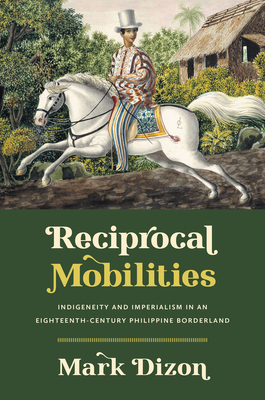
Reciprocal Mobilities : Indigeneity and Imperialism in an Eighteenth-Century Philippine Borderland
by
Mark Dizon
Book Details
Format
Hardback
ISBN-10
1469676435
ISBN-13
9781469676432
Publisher
The University of North Carolina Press
Imprint
The University of North Carolina Press
Country of Manufacture
GB
Country of Publication
GB
Publication Date
Sep 12th, 2023
Print length
274 Pages
Weight
584 grams
Dimensions
24.10 x 16.30 x 2.30 cms
Product Classification:
Asian historyComparative politicsAsian history
KSh 15,100.00
Currently unavailable
0 in stock
Delivery Location
Delivery fee: Select location
Secure
Quality
Fast
Views the colonial interactions in Philippine borderlands through the lens of reciprocal mobilities. Spanish mobilities of conquests and conversions had their counterpart in Indigenous visits and ambushes. Colonial encounters were not isolated individual events, but rather a connected web of approaches, rebuffs, rapprochements, and dispersals.
Throughout the eighteenth century, independent Indigenous people from the borderlands of the Philippines visited the centers of Spanish colonial rule in the archipelago. Their travels are the counternarratives to one-dimensional stories of Spanish conquest of, and Indigenous resistance in, interior frontiers. Indigenous inhabitants on the island of Luzon constantly moved about—visiting allies and launching raids—and thus shaped history in the process. Their mobility allows us to glimpse their agency in colonial interactions in the early modern period. The landscape contains the traces of how they moved as well as how they channeled and impeded mobility in the borderlands.
Mark Dizon views the colonial interactions in Philippine borderlands through the lens of reciprocal mobilities. Spanish mobilities of conquests and conversions had their counterpart in Indigenous visits and ambushes. Colonial encounters were not isolated individual events, but rather a connected web of approaches, rebuffs, rapprochements, and dispersals. They took place not only in the exploration of remote forests and mountains but also in conjunction with Indigenous travels to colonial cities like Manila. Indigenous people of the borderlands were not immobile, timeless actors; they created history in their wake as they journeyed through the borderlands and beyond.
Mark Dizon views the colonial interactions in Philippine borderlands through the lens of reciprocal mobilities. Spanish mobilities of conquests and conversions had their counterpart in Indigenous visits and ambushes. Colonial encounters were not isolated individual events, but rather a connected web of approaches, rebuffs, rapprochements, and dispersals. They took place not only in the exploration of remote forests and mountains but also in conjunction with Indigenous travels to colonial cities like Manila. Indigenous people of the borderlands were not immobile, timeless actors; they created history in their wake as they journeyed through the borderlands and beyond.
Get Reciprocal Mobilities by Mark Dizon at the best price and quality guaranteed only at Werezi Africa's largest book ecommerce store. The book was published by The University of North Carolina Press and it has 274 pages.
Customers Who Bought This Also Bought

From Third World to First
KSh 3,200.00

Breakneck
KSh 4,500.00

India After Gandhi
KSh 4,850.00

Anarchy
KSh 2,700.00

On China
KSh 3,400.00
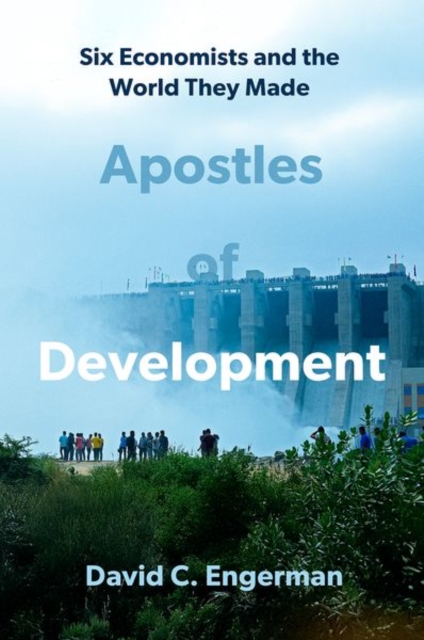
Apostles of Development
KSh 5,600.00
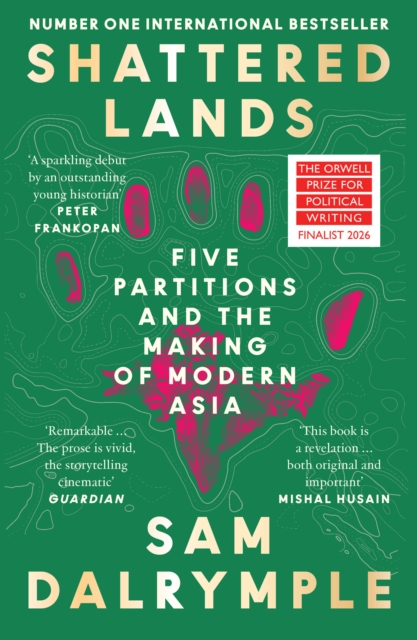
Shattered Lands
KSh 2,000.00
Indira Gandhi and the Years that Transformed India
KSh 5,050.00
India: A Wounded Civilization
KSh 2,000.00
Shattered Lands
KSh 3,200.00
Games without Rules
KSh 2,900.00

Ghost Nation
KSh 3,950.00