
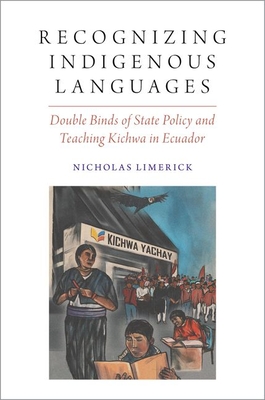
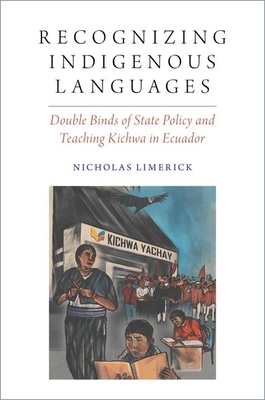
Recognizing Indigenous Languages : Double Binds of State Policy and Teaching Kichwa in Ecuador
Book Details
Format
Hardback
Book Series
Oxford Studies in the Anthropology of Language
ISBN-10
0197559174
ISBN-13
9780197559178
Publisher
Oxford University Press Inc
Imprint
Oxford University Press Inc
Country of Manufacture
GB
Country of Publication
GB
Publication Date
Dec 21st, 2023
Print length
270 Pages
Weight
513 grams
Dimensions
15.60 x 23.50 x 2.00 cms
Product Classification:
LinguisticsHistorical & comparative linguisticsHistorical and comparative linguistics
KSh 16,600.00
Not Yet Published
0 in stock
Delivery Location
Delivery fee: Select location
Secure
Quality
Fast
What follows when state institutions name historically oppressed languages as official? What happens when bilingual education activists gain the right to coordinate schooling from upper-level state offices? The intercultural bilingual school system in Ecuador has been one of the most prominent referents of Indigenous education in the Americas. Since its establishment in 1988, members of Ecuador''s pueblos and nationalities have coordinated a second national school system that includes the teaching of Indigenous languages. Based on more than two years of ethnographic research in Ecuador''s Ministry of Education, at international and national conferences, in workshops, in schools, and with families, Recognizing Indigenous Languages considers how state agents carry out linguistic and educational politics and policies in eras of greater inclusivity and multiculturalism. This book shows how institutional advances for bilingual education and Indigenous languages have been premised on affirming the equality-and the equivalency-of the linguistic and cultural practices of members of Indigenous pueblos and nationalities with other Ecuadorians. Major responsibilities like serving as national state agents, crafting a standardized variety of the Kichwa language family, translating legal documents to Kichwa, and teaching Indigenous languages in schools have provided vast authority, representation, and visibility for those languages and their speakers. However, the everyday work of directing a school system and making Kichwa a language of the state includes double binds that work against the very goals of autonomous schooling and getting people to speak and write Kichwa.
Get Recognizing Indigenous Languages by Nicholas Limerick at the best price and quality guaranteed only at Werezi Africa's largest book ecommerce store. The book was published by Oxford University Press Inc and it has 270 pages.
Customers Who Bought This Also Bought

Creativity in the English Curriculum
KSh 5,650.00

Du contrat social, ou principes du droit politique.
KSh 4,850.00

Réflexions sur L''étude des Langues Asiatiques, Adressées à Sir James Mackintosh, Suivies D''une Lettr
KSh 2,550.00
Readings in Linguistics I & II
KSh 7,700.00
Analysing Sentences
KSh 7,400.00

For Whom Do I Toil?
KSh 21,350.00

Lazarillo De Tormes
KSh 1,800.00
Las versiones sefardíes de Robinson Crusoe
KSh 6,850.00
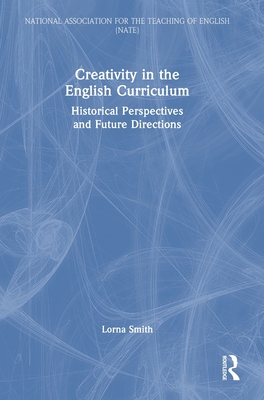
Creativity in the English Curriculum
KSh 30,950.00

English Language Teaching
KSh 30,950.00

Katzen und Kinder: Koprasente Phanomene in virtuellen Meetings
KSh 16,400.00
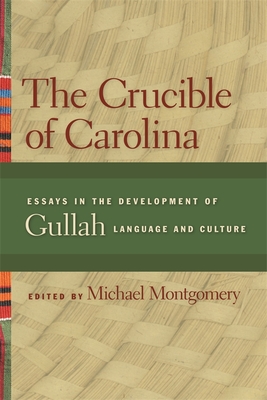
The Crucible of Carolina
KSh 17,000.00
More by Nicholas Limerick
More in This Genre
Creativity in the English Curriculum
KSh 5,650.00
Du contrat social, ou principes du droit politique.
KSh 4,850.00
Réflexions sur L''étude des Langues Asiatiques, Adressées à Sir James Mackintosh, Suivies D''une Lettr
KSh 2,550.00
Readings in Linguistics I & II
KSh 7,700.00
Analysing Sentences
KSh 7,400.00
For Whom Do I Toil?
KSh 21,350.00
