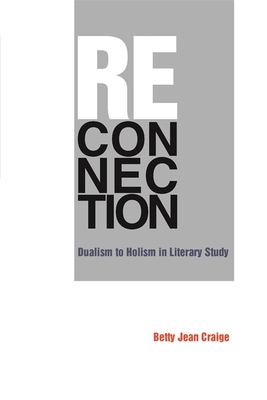
Reconnection : Dualism to Holism in Literary Study
Book Details
Format
Paperback / softback
ISBN-10
0820338060
ISBN-13
9780820338064
Publisher
University of Georgia Press
Imprint
University of Georgia Press
Country of Manufacture
US
Country of Publication
GB
Publication Date
Nov 1st, 2010
Print length
168 Pages
Weight
363 grams
Dimensions
22.90 x 15.20 x 1.00 cms
KSh 4,700.00
Currently unavailable
0 in stock
Delivery Location
Delivery fee: Select location
Secure
Quality
Fast
Craige calls for the creation of a holistic system of learning that will emphasize interdisciplinary and nondisciplinary research, reconnecting literary studies with history and philosophy, with science and politics, restoring literature itself to a central place in our intellectual discourse and social debate.
An openly polemical work, Reconnection seeks a way of returning the humanities to their place at the center of human life. For the past three hundred years, to study the humanities has implied an isolation from politics, science, and society. Literary studies, in particular, have often fallen prey to this isolation by viewing novels, plays, and poems as impassive verbal icons, as texts to be explicated without reference to political context or social significance. Seeking a way of ending this self-imposed exile of the humanities from the turmoil of social issues and concerns, Betty Jean Craige looks to the contextual, nondisciplinary thought that began to take hold in academia during the 1960s—a development that echoed the rising political awareness brought to the universities by the Vietnam War, the civil rights movement, and women’s liberation. Recently, this emergent openness in the university has come under attack by conservative critics who have sought to roll back the movement for nontraditional inquiry in academia and to reassert the dominance of hierarchical, canonical thought. By tracing the ideological history of literary studies, Craige shows that this reactionary goal of reimposing canonical thought is, in time, doomed to failure—the age of the discipline is over. In its place, Craige calls for the creation of a holistic system of learning that will emphasize interdisciplinary and nondisciplinary research, reconnecting literary studies with history and philosophy, with science and politics, restoring literature itself to a central place in our intellectual discourse and social debate.
Get Reconnection by Betty Jean Craige at the best price and quality guaranteed only at Werezi Africa's largest book ecommerce store. The book was published by University of Georgia Press and it has 168 pages.
Customers Who Bought This Also Bought

How to Read a Book
KSh 2,000.00
Decolonising the Mind
KSh 4,700.00

How to Read & Why
KSh 2,350.00

Arabian Nights'' Entertainments
KSh 2,950.00
In the Wake
KSh 3,600.00
The Birth of Tragedy
KSh 1,800.00

Against Nature
KSh 1,800.00

The White Album
KSh 3,250.00
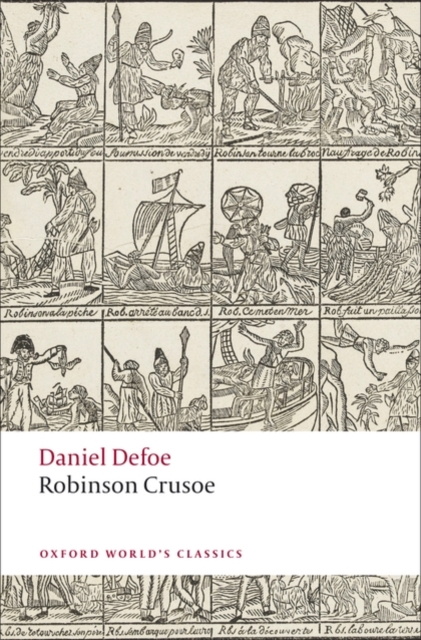
Robinson Crusoe
KSh 1,450.00

Metaphysical Poetry
KSh 2,350.00
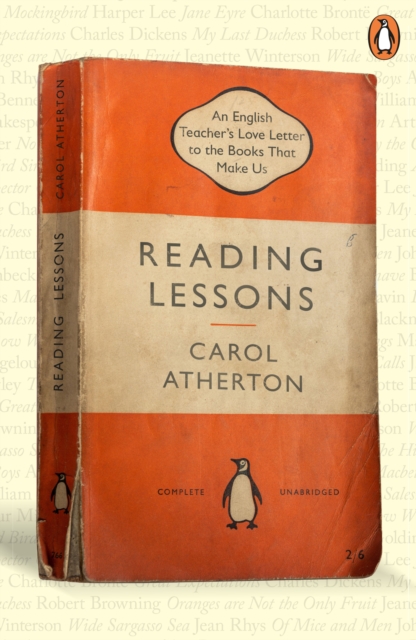
Reading Lessons
KSh 2,350.00

Literature Book
KSh 4,250.00