
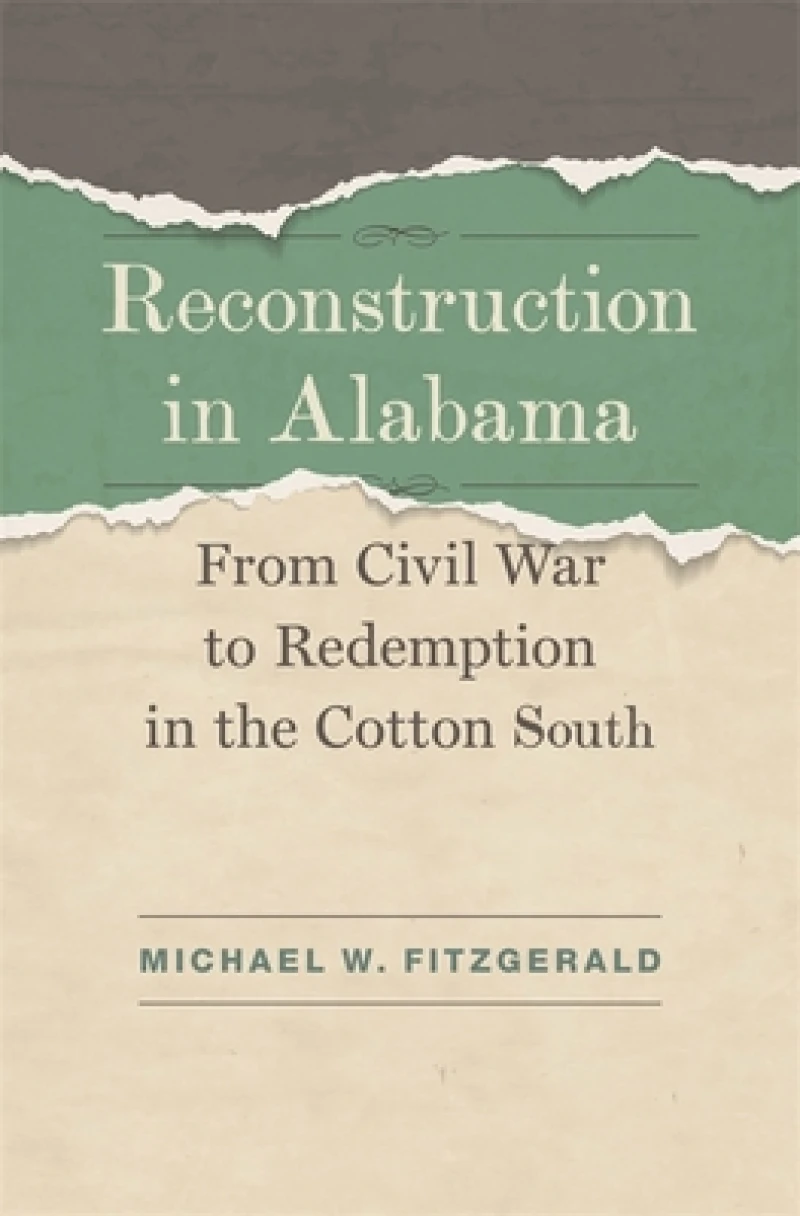
Reconstruction in Alabama : From Civil War to Redemption in the Cotton South
Book Details
Format
Hardback or Cased Book
ISBN-10
0807166065
ISBN-13
9780807166062
Publisher
Louisiana State University Press
Imprint
Louisiana State University Press
Country of Manufacture
US
Country of Publication
GB
Publication Date
Mar 13th, 2017
Print length
464 Pages
Weight
771 grams
Dimensions
22.80 x 15.40 x 3.30 cms
Ksh 7,750.00
Temporarily out of stock, due soon
0 in stock
Delivery Location
Delivery fee: Select location
Secure
Quality
Fast
While there have been modern scholarly revisions of individual states, most are decades old, and Michael Fitzgerald's Reconstruction in Alabama is the first comprehensive reinterpretation of that state's history in over a century.
The civil rights revolutions of the 1950s and 1960s transformed the literature on Reconstruction in America by emphasizing the social history of emancipation and the hopefulness that reunification would bring equality. Much of this revisionist work served to counter and correct the racist and pro-Confederate accounts of Reconstruction written in the early twentieth century. While there have been modern scholarly revisions of individual states, most are decades old, and Michael W. Fitzgerald's Reconstruction in Alabama is the first comprehensive reinterpretation of that state's history in over a century.
Fitzgerald's work not only revises the existing troubling histories of the era, it also offers a compelling and innovative new look at the process of rebuilding Alabama following the war. Attending to an array of issues largely ignored until now, Fitzgerald's history begins by analyzing the differences over slavery, secession, and war that divided Alabama's whites, mostly along the lines of region and class. He examines the economic and political implications of defeat, focusing particularly on how freed slaves and their former masters mediated the postwar landscape. For a time, he suggests, whites and freedpeople coexisted mostly peaceably in some parts of the state under the Reconstruction government, as a recovering cotton economy bathed the plantation belt in profit. Later, when charting the rise and fall of the Republican Party, Fitzgerald shows that Alabama's new Republican government implemented an ambitious program of railroad subsidy, characterized by substantial corruption that eventually bankrupted the state and helped end Republican rule. He shows, however, that the state's freedpeople and their preferred leaders were not the major players in this arena: they had other issues that mattered to them far more, like public education, civil rights, voting rights, and resisting the Klan's terrorist violence.
After Reconstruction ended, Fitzgerald suggests that white collective memory of the era fixated on black voting, big government, high taxes, and corruption, all of which buttressed the Jim Crow order in the state. This misguided understanding of the past encouraged Alabama's intransigence during the later civil rights era. Despite the power of faulty interpretations that united segregationists, Fitzgerald demonstrates that it was class and regional divisions over economic policy, as much as racial tension, that shaped the complex reality of Reconstruction in Alabama.
Fitzgerald's work not only revises the existing troubling histories of the era, it also offers a compelling and innovative new look at the process of rebuilding Alabama following the war. Attending to an array of issues largely ignored until now, Fitzgerald's history begins by analyzing the differences over slavery, secession, and war that divided Alabama's whites, mostly along the lines of region and class. He examines the economic and political implications of defeat, focusing particularly on how freed slaves and their former masters mediated the postwar landscape. For a time, he suggests, whites and freedpeople coexisted mostly peaceably in some parts of the state under the Reconstruction government, as a recovering cotton economy bathed the plantation belt in profit. Later, when charting the rise and fall of the Republican Party, Fitzgerald shows that Alabama's new Republican government implemented an ambitious program of railroad subsidy, characterized by substantial corruption that eventually bankrupted the state and helped end Republican rule. He shows, however, that the state's freedpeople and their preferred leaders were not the major players in this arena: they had other issues that mattered to them far more, like public education, civil rights, voting rights, and resisting the Klan's terrorist violence.
After Reconstruction ended, Fitzgerald suggests that white collective memory of the era fixated on black voting, big government, high taxes, and corruption, all of which buttressed the Jim Crow order in the state. This misguided understanding of the past encouraged Alabama's intransigence during the later civil rights era. Despite the power of faulty interpretations that united segregationists, Fitzgerald demonstrates that it was class and regional divisions over economic policy, as much as racial tension, that shaped the complex reality of Reconstruction in Alabama.
Get Reconstruction in Alabama by at the best price and quality guaranteed only at Werezi Africa's largest book ecommerce store. The book was published by Louisiana State University Press and it has pages.

