
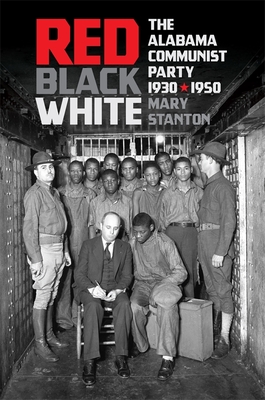
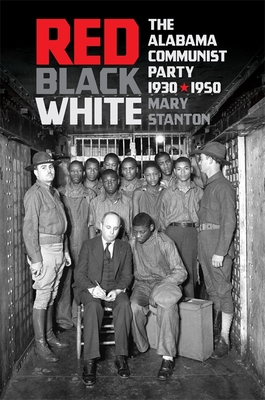
Red, Black, White : The Alabama Communist Party, 1930–1950
by
Mary Stanton
Book Details
Format
Hardback
ISBN-10
0820356166
ISBN-13
9780820356167
Publisher
University of Georgia Press
Imprint
University of Georgia Press
Country of Manufacture
US
Country of Publication
GB
Publication Date
Nov 15th, 2019
Print length
248 Pages
KSh 22,600.00
Temporarily out of stock, due soon
0 in stock
Delivery Location
Delivery fee: Select location
Secure
Quality
Fast
Offers the first narrative history of the American communist movement in the South during the 1930s. Written from the perspective of the district 17 (CPUSA) Reds who worked primarily in Alabama, the book acquaints a new generation with the impact of the Great Depression on postwar black and white, young and old, urban and rural Americans.
Red, Black, White is the first narrative history of the American communist movement in the South since Robin D. G. Kelley's groundbreaking Hammer and Hoe and the first to explore its key figures and actions beyond the 1930s. Written from the perspective of the district 17 (CPUSA) Reds who worked primarily in Alabama, it acquaints a new generation with the impact of the Great Depression on postwar black and white, young and old, urban and rural Americans. After the Scottsboro story broke on March 25, 1931, it was open season for old-fashioned lynchings, legal (courtroom) lynchings, and mob murder. In Alabama alone, twenty black men were known to have been murdered, and countless others, women included, were beaten, disabled, jailed, “disappeared,” or had their lives otherwise ruined between March 1931 and September 1935. In this collective biography, Mary Stanton—a noted chronicler of the left and of social justice movements in the South—explores the resources available to Depression-era Reds before the advent of the New Deal or the modern civil rights movement. What emerges from this narrative is a meaningful criterion by which to evaluate the Reds’ accomplishments. Through seven cases of the CPUSA (district 17) activity in the South, Stanton covers tortured notions of loyalty and betrayal, the cult of white southern womanhood, Christianity in all its iterations, and the scapegoating of African Americans, Jews, and communists. Yet this still is a story of how these groups fought back, and fought together, for social justice and change in a fractured region.
Get Red, Black, White by Mary Stanton at the best price and quality guaranteed only at Werezi Africa's largest book ecommerce store. The book was published by University of Georgia Press and it has 248 pages.
Customers Who Bought This Also Bought

Crusade for Justice – The Autobiography of Ida B. Wells, Second Edition
KSh 4,050.00

Killers of the Flower Moon
KSh 2,000.00

Warmth of Other Suns
KSh 3,050.00

Frederick Douglass
KSh 3,350.00

107 Days
KSh 4,500.00

Second Treatise of Government – Norton Library
KSh 1,600.00

Tuesdays With Morrie
KSh 2,000.00
My Bondage and My Freedom
KSh 1,600.00

Hidden Figures
KSh 2,000.00

America, América
KSh 3,650.00

Holding the Line
KSh 2,000.00

Nuclear Folly
KSh 3,050.00
More by Mary Stanton
Journey toward Justice
KSh 8,850.00
From Selma to Sorrow – The Life and Death of Viola Liuzzo
KSh 5,450.00

Journey toward Justice
KSh 6,300.00
Red, Black, White
KSh 6,750.00

Recreation without Humiliation – Black Leisure in the Twentieth–Century South
KSh 5,550.00

Recreation without Humiliation – Black Leisure in the Twentieth–Century South
KSh 26,700.00
