
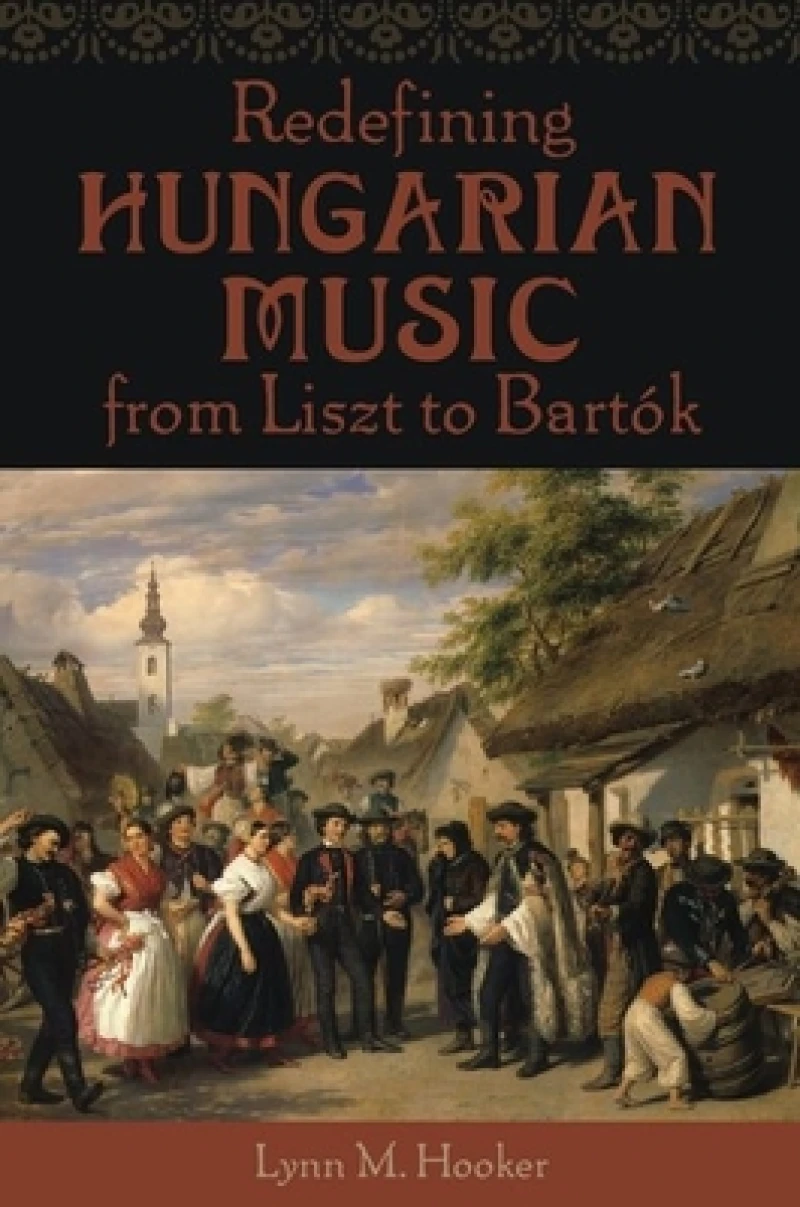
Redefining Hungarian Music from Liszt to Bartok
Book Details
Format
Hardback or Cased Book
ISBN-10
0199739595
ISBN-13
9780199739592
Publisher
Oxford University Press Inc
Imprint
Oxford University Press Inc
Country of Manufacture
US
Country of Publication
GB
Publication Date
Dec 12th, 2013
Print length
320 Pages
Weight
596 grams
Dimensions
16.40 x 24.20 x 2.80 cms
Product Classification:
Romantic music (c 1830 to c 1900)20th century & contemporary classical music
Ksh 14,750.00
Manufactured on Demand
0 in stock
Delivery Location
Delivery fee: Select location
Secure
Quality
Fast
In the early twentieth century, Bela Bartók and his circle argued for a new definition of "Hungarianness," one which centered around folksong rather than the "Hungarian-Gypsy" style relied upon by Franz Liszt and his contemporaries. This book traces the historical process that defined the conventions of Hungarian-Gypsy style, and reveals through this decades-long debate what it meant to be Hungarian, European, and modern.
Some of the most popular works of nineteenth-century music were labeled either "Hungarian" or "Gypsy" in style, including many of the best-known and least-respected of Liszt''s compositions. In the early twentieth century, Béla Bartók and his colleagues questioned not only the Hungarianness but also the good taste of that style. Bartók argued that it should be discarded in favor of a national style based in the "genuine" folk music of the rural peasantry. Between the heyday of the nineteenth-century Hungarian-Gypsy style and its replacement by a new paradigm of "authentic" national style was a vigorous decades-long debate-one little known inside or outside Hungary-over what it meant to be Hungarian, European, and modern. Redefining Hungarian Music from Liszt to Bartók traces the historical process that defined the conventions of Hungarian-Gypsy style. Author Lynn M. Hooker frames her study around the 1911 celebration of Liszt''s centennial. In so doing, she analyzes Liszt''s problematic role as a Hungarian-born composer and leader of Hungarian art music who spent most of his life outside of Hungary and questioned whether Hungary''s national music was more the creation of Hungarians or Roma (Gypsies). The themes of race and nation that emerge in the discussion of Liszt are further developed in an analysis of discourse on Hungarian national music throughout the Hungarian press in the late nineteenth and early twentieth centuries. Showing how the "discovery" of "genuine" folk music by Bartók and Kodály, often depicted as a purely "scientific" matter, responds directly to concerns raised by earlier writers about the "problem of Hungarian music," Hooker argues that the innovations of Bartók and Kodály and their circle are not so much in correcting a flawed concept of the national as in using the idea of national authenticity to open up freedom for composers to explore more stylistic options, including the exploration of modernist musical language. Meticulously researched and elegantly written, Redefining Hungarian Music from Liszt to Bartók is essential reading for musicologists, musicians, and concertgoers alike.
Get Redefining Hungarian Music from Liszt to Bartok by at the best price and quality guaranteed only at Werezi Africa's largest book ecommerce store. The book was published by Oxford University Press Inc and it has pages.

