
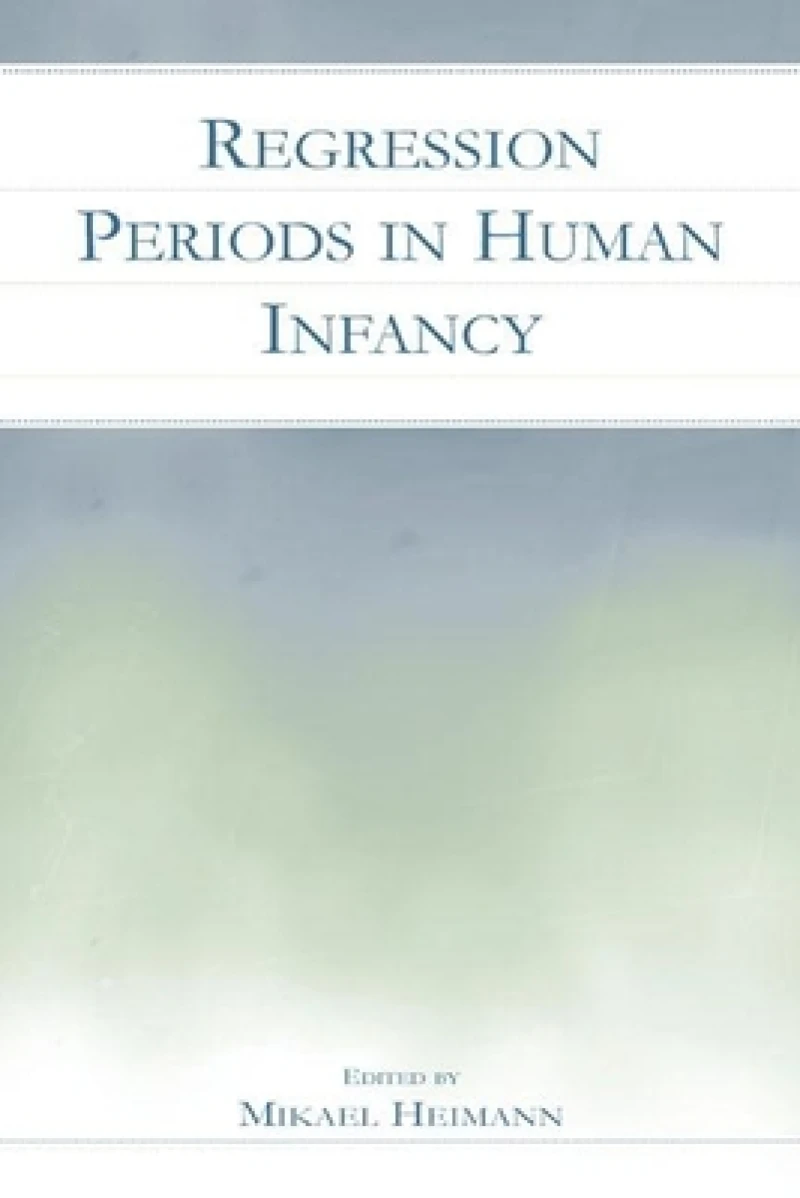
Regression Periods in Human infancy
Book Details
Format
Hardback or Cased Book
ISBN-10
0805840982
ISBN-13
9780805840988
Publisher
Taylor & Francis Inc
Imprint
Psychology Press
Country of Manufacture
US
Country of Publication
GB
Publication Date
May 1st, 2003
Print length
240 Pages
Weight
430 grams
Product Classification:
Child & developmental psychologyCognition & cognitive psychology
Ksh 26,100.00
Re-Printing
0 in stock
Delivery Location
Delivery fee: Select location
Secure
Quality
Fast
The authors are leaders in infant regression and have discovered the uniformity regarding regression periods in early development.Interest in infant regression has been limited to Europe, but publication of this material will generate interest in the US.
Regression periods play a central role in the psychological development of the human baby. Studies of infants have identified 10 periods of regression, or a return to a high frequency of mother-infant contact, within the first 20 months of life. These periods of emotional insecurity in the child signal forthcoming periods of developmental advance and the emergence of an array of new skills as a consequence of parent-infant conflict over body contact and the renegotiation of old privileges.
Although the basic idea in this book is an old one, the authors believe that regression periods deserve further study and have identified four questions of central importance today:
*Can the phenomenon of regression periods as found by Dutch researchers in 1992 be replicated in other countries and cultures?
*What environmental conditions have an effect on these regression periods and how?
*Are there physical conditions in infants that show a non-linear distribution over age similar to regression periods?
*Have brain changes been detected since the review of Fischer & Rose (1994) at other ages than the six reported by them, and, if yes, how do these relate to the ages at which regression periods are found?
Forming the core of this book, the replication studies performed in Sweden, Spain, and England provide support that regression periods are a rreliable phenomenon and should be dealt with accordingly whenever developmental processes in infancy are discussed.
Although the basic idea in this book is an old one, the authors believe that regression periods deserve further study and have identified four questions of central importance today:
*Can the phenomenon of regression periods as found by Dutch researchers in 1992 be replicated in other countries and cultures?
*What environmental conditions have an effect on these regression periods and how?
*Are there physical conditions in infants that show a non-linear distribution over age similar to regression periods?
*Have brain changes been detected since the review of Fischer & Rose (1994) at other ages than the six reported by them, and, if yes, how do these relate to the ages at which regression periods are found?
Forming the core of this book, the replication studies performed in Sweden, Spain, and England provide support that regression periods are a rreliable phenomenon and should be dealt with accordingly whenever developmental processes in infancy are discussed.
Get Regression Periods in Human infancy by at the best price and quality guaranteed only at Werezi Africa's largest book ecommerce store. The book was published by Taylor & Francis Inc and it has pages.

