
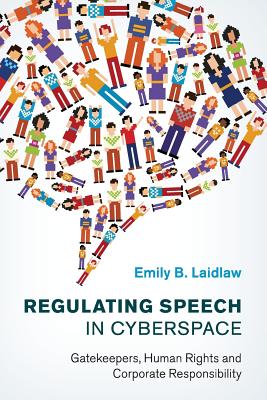
Regulating Speech in Cyberspace : Gatekeepers, Human Rights and Corporate Responsibility
Book Details
Format
Paperback / softback
ISBN-10
1107626994
ISBN-13
9781107626997
Publisher
Cambridge University Press
Imprint
Cambridge University Press
Country of Manufacture
GB
Country of Publication
GB
Publication Date
Feb 2nd, 2017
Print length
356 Pages
Weight
516 grams
Dimensions
15.50 x 23.10 x 2.30 cms
KSh 7,700.00
Currently unavailable
0 in stock
Delivery Location
Delivery fee: Select location
Secure
Quality
Fast
When a social networking provider deletes a group it deems offensive or an ISP blocks access to content online, it takes on a powerful role in regulating speech on the internet. Regulating Speech in Cyberspace examines the legal and social challenges of the impact of businesses on free speech online.
Private companies exert considerable control over the flow of information on the internet. Whether users are finding information with a search engine, communicating on a social networking site or accessing the internet through an ISP, access to participation can be blocked, channelled, edited or personalised. Such gatekeepers are powerful forces in facilitating or hindering freedom of expression online. This is problematic for a human rights system which has historically treated human rights as a government responsibility, and this is compounded by the largely light-touch regulatory approach to the internet in the West. Regulating Speech in Cyberspace explores how these gatekeepers operate at the intersection of three fields of study: regulation (more broadly, law), corporate social responsibility and human rights. It proposes an alternative corporate governance model for speech regulation, one that acts as a template for the increasingly common use of non-state-based models of governance for human rights.
Get Regulating Speech in Cyberspace by Emily B. Laidlaw at the best price and quality guaranteed only at Werezi Africa's largest book ecommerce store. The book was published by Cambridge University Press and it has 356 pages.
Customers Who Bought This Also Bought

East West Street
KSh 2,350.00

Human Trafficking, Corruption and Corporate Complicity
KSh 30,950.00
Access to Justice as a Human Right
KSh 19,050.00

Britain’s Manufactured Migrant Crisis
KSh 30,950.00

Minority Women and Agency in Iran
KSh 12,250.00

Online Freedom of Speech and the Law
KSh 30,950.00

Britain’s Manufactured Migrant Crisis
KSh 7,950.00

Foster Children, Rights and the Law
KSh 8,650.00

Transnational Social Mobilisation and Minority Rights
KSh 8,450.00
Guantanamo Bay and the Judicial-moral Treatment of the Other
KSh 3,050.00
Beyond Human Rights
KSh 26,450.00
The Right to Inclusive Education in International Human Rights Law
KSh 26,450.00
