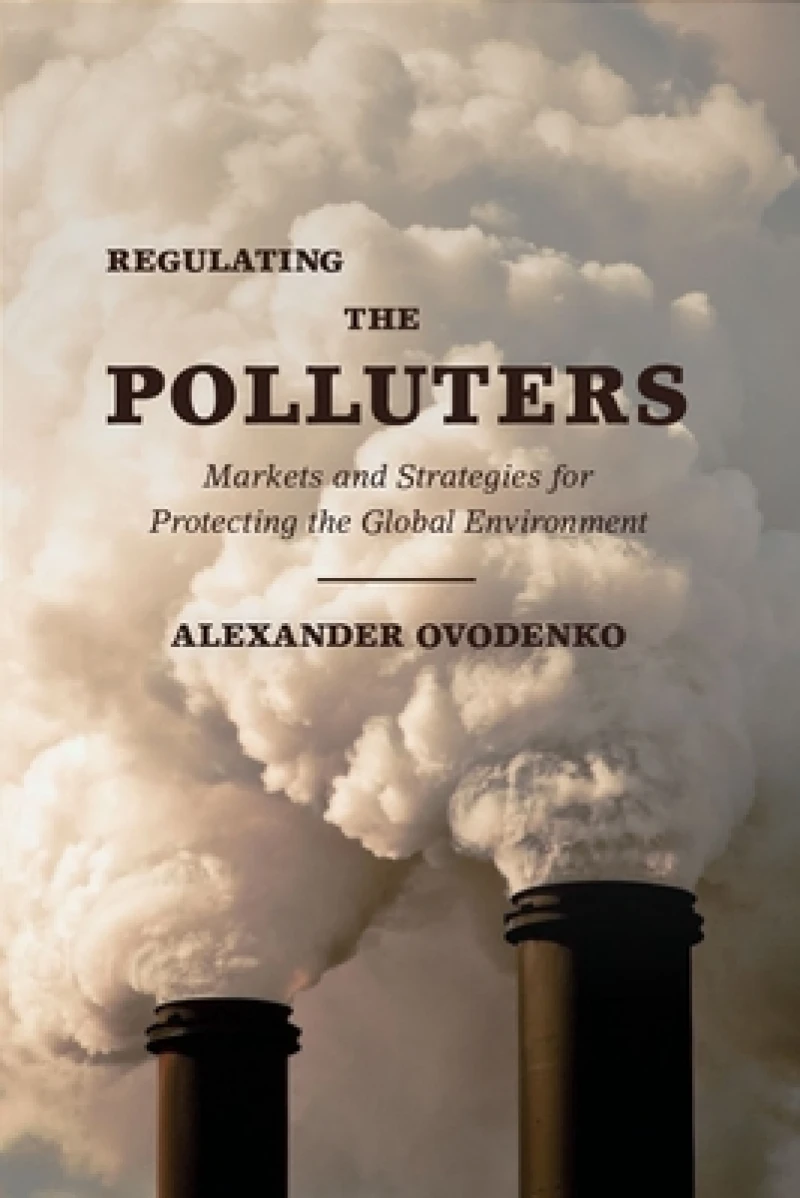
Regulating the Polluters : Markets and Strategies for Protecting the Global Environment
Book Details
Format
Hardback or Cased Book
ISBN-10
0190677724
ISBN-13
9780190677725
Publisher
Oxford University Press Inc
Imprint
Oxford University Press Inc
Country of Manufacture
US
Country of Publication
GB
Publication Date
Oct 12th, 2017
Print length
256 Pages
Weight
492 grams
Dimensions
16.60 x 24.20 x 2.50 cms
Ksh 17,650.00
Temporarily out of stock, due soon
0 in stock
Delivery Location
Delivery fee: Select location
Secure
Quality
Fast
Why have national governments created different international rules and institutions to address global environmental issues? Alexander Ovodenko argues that this variation can be explained by looking to a dynamic that has been thus far downplayed by the literature on global environmental governance: the structures of industries regulated by environmental rules. Regulating the Polluters inverts the literature on regulatory capture and collective action by presenting empirical evidence of the irony of market power in global environmental politics.
National governments and private stakeholders have long recognized that protecting the global environment requires international cooperation. Climate change, tropical deforestation, biodiversity loss, ozone depletion, hazardous wastes, and ocean pollution are among several issues that have brought national governments together to alleviate the consequences of environmental degradation. As they have worked to mitigate these global problems, national governments have developed a wide variety of environmental regime designs. But why have national governments created different international rules and institutions to address global environmental issues? Some national environmental regimes are more institutionally integrated, some have relatively narrow mandates, some have legally binding obligations while others do not, and some obligations are determined through multilateral negotiations while others are nationally determined. In other words, what explains the pattern of regime designs in global environmental governance?Alexander Ovodenko argues that this variation can be explained by looking to a dynamic that has been thus far downplayed by the literature on global environmental governance: the structures of industries regulated by environmental rules. Specifically, it argues (contra the dominant literature) that it is far easier to attach binding international agreements to oligopolistic industries than those that are fragmented. While concentrated global producers are likely to be more politically influential and thus in a position to shape environmental governance, they are also in a much better position to comply with such agreements as they have both sufficient capital resources and the technological capacity to innovate by adopting "greener" technologies. In other words, the sources of their political influence make them the best and most efficient options for mitigating global pollution. By contrast, it is much more difficult for governments to regulate small-scale producers since such firms and their consumers are much more price sensitive, and these firms have limited resources to devote to compliance. Regulating the Polluters inverts the literature on regulatory capture and collective action by presenting empirical evidence of the irony of market power in global environmental politics.
Get Regulating the Polluters by at the best price and quality guaranteed only at Werezi Africa's largest book ecommerce store. The book was published by Oxford University Press Inc and it has pages.