
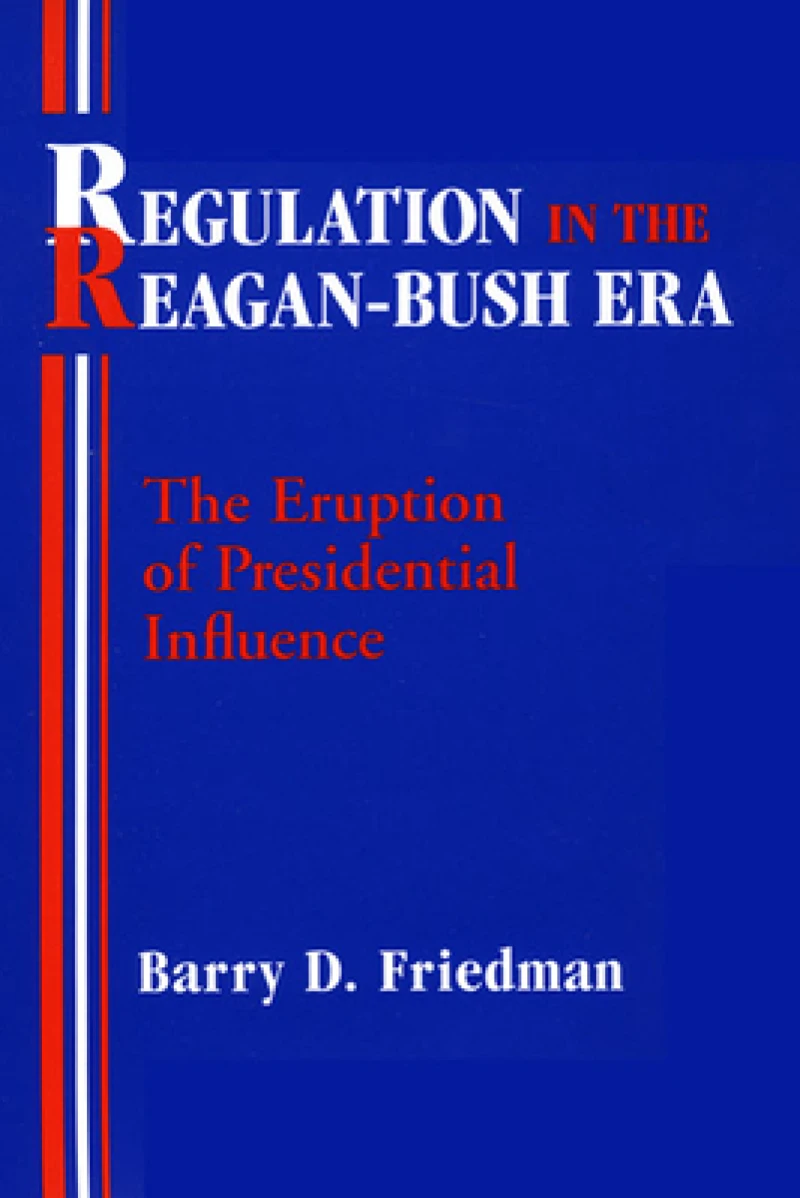
Regulation in the Reagan-Bush Era : The Eruption of Presidential Influence
Book Details
Format
Paperback / Softback
ISBN-10
0822960524
ISBN-13
9780822960522
Publisher
University of Pittsburgh Press
Imprint
University of Pittsburgh Press
Country of Manufacture
US
Country of Publication
GB
Publication Date
May 15th, 1995
Print length
272 Pages
Product Classification:
Constitution: government & the stateConstitution: government and the state
Ksh 8,100.00
Temporarily out of stock, due soon
0 in stock
Delivery Location
Delivery fee: Select location
Secure
Quality
Fast
This timely and well-researched study describes for the first time the astonishing acquiecence of executive agency officials, members of Congress, and federal judges to Ronald Regan's assertion of extraordinary new presidential power over the federal regulatory process. Barry D. friedman describes how the executive agencies and Congress responded with skepticism, yet allowed the changes to remain.
This timely and well-researched study describes for the first tim ethe astonishing acquiecence of executive agency officials, members of Congress, and federal judges to Ronald Regan's assertion of extraordinary new presidential power over the federal regulatory process--the controversial Executive Order 12291. From Harry Truman through Jimy Carter, chief executives complained that federal bureaucrats disregarded their policy preferences. presidential influence over regulatory rule making was limited: congressional committees and interest groups commanded more attention. Then in February 1981 Ronal regan abruptly departed from tradition by ordering that regulatory agencies must submit proposed guidelines for Office of Management and Budget approval. Barry D. friedman describes how the executive agencies and Congress responded warily and with skepticism, yet allowed the changes to remain; the judiciary was also willing to retreat from time-honored precedents that had preserved agency prerogative and now accorded due respect to the revolutionary Regan reform initiatives. Institutions that competed for leverage in the system continued to exercise restraint in their mutual relations because they recognized taht all benefitted from the others' viability. This book shows that conventional political science theories and models are now obsolete because of the eruption of presidential control into bureaucratic affairs. new review procedures have restructured relations between the president and the agencies and among the government's three branches. because of Regan's radical initiative, President Bill Clinton and his successors will sit at the bargaining table when regulation policy is developed in Washington, and political theorists will have to work from a new conception of presidential prerogative.
Get Regulation in the Reagan-Bush Era by at the best price and quality guaranteed only at Werezi Africa's largest book ecommerce store. The book was published by University of Pittsburgh Press and it has pages.

