
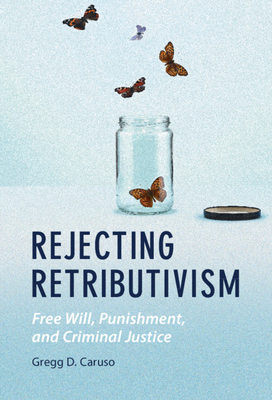
Rejecting Retributivism : Free Will, Punishment, and Criminal Justice
Book Details
Format
Hardback
Book Series
Law and the Cognitive Sciences
ISBN-10
1108484700
ISBN-13
9781108484701
Publisher
Cambridge University Press
Imprint
Cambridge University Press
Country of Manufacture
GB
Country of Publication
GB
Publication Date
Apr 29th, 2021
Print length
400 Pages
Weight
726 grams
Dimensions
15.90 x 23.60 x 3.00 cms
Product Classification:
Cognition & cognitive psychologyCognition and cognitive psychologyJurisprudence & general issuesJurisprudence and general issuesJurisprudence & philosophy of lawMethods, theory and philosophy of lawCriminal law & procedureCriminal law: procedure and offencesCriminal justice law
KSh 19,600.00
Currently unavailable
0 in stock
Delivery Location
Delivery fee: Select location
Secure
Quality
Fast
Within the criminal justice system, one of the most prominent justifications for legal punishment is retributivism. This book argues against retributivism and develops an alternative for addressing criminal behavior that is ethically defensible and practical. It will interest philosophers, criminologists, forensic psychologists, and legal scholars.
Within the criminal justice system, one of the most prominent justifications for legal punishment is retributivism. The retributive justification of legal punishment maintains that wrongdoers are morally responsible for their actions and deserve to be punished in proportion to their wrongdoing. This book argues against retributivism and develops a viable alternative that is both ethically defensible and practical. Introducing six distinct reasons for rejecting retributivism, Gregg D. Caruso contends that it is unclear that agents possess the kind of free will and moral responsibility needed to justify this view of punishment. While a number of alternatives to retributivism exist - including consequentialist deterrence, educational, and communicative theories - they have ethical problems of their own. Moving beyond existing theories, Caruso presents a new non-retributive approach called the public health-quarantine model. In stark contrast to retributivism, the public health-quarantine model provides a more human, holistic, and effective approach to dealing with criminal behavior.
Get Rejecting Retributivism by Gregg D. Caruso at the best price and quality guaranteed only at Werezi Africa's largest book ecommerce store. The book was published by Cambridge University Press and it has 400 pages.
Customers Who Bought This Also Bought

How Emotions Are Made
KSh 2,350.00

Gödel, Escher, Bach
KSh 4,200.00

Thinking, Fast and Slow
KSh 3,050.00

The Art of Seduction
KSh 5,050.00
Noise
KSh 2,000.00
Thinking, Fast and Slow
KSh 2,700.00

Seven and a Half Lessons About the Brain
KSh 2,000.00
Influence: Science and Practice
KSh 12,850.00

Do the Work
KSh 1,450.00

Thinking in Bets
KSh 5,050.00

Art Of Listening
KSh 3,050.00

Mind''s Eye
KSh 2,000.00
More by Gregg D. Caruso

How to Live Well without Free Will
KSh 7,200.00

How to Live Well without Free Will
KSh 19,800.00

Free Will and Consciousness
KSh 10,950.00

Neurolaw
KSh 3,250.00

Just Deserts
KSh 9,000.00

Moral Responsibility Reconsidered
KSh 3,250.00

Rejecting Retributivism
KSh 7,500.00

Just Deserts – Debating Free Will
KSh 2,350.00

Neurolaw
KSh 10,100.00
