
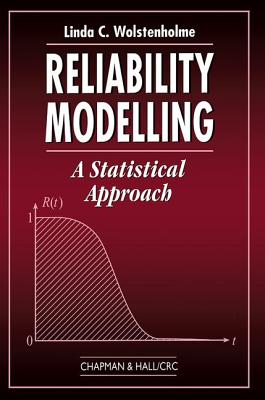
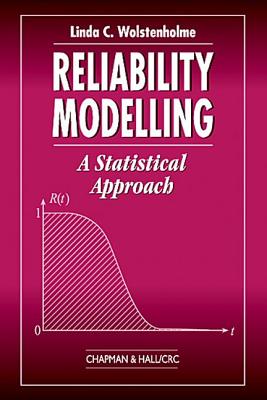
Reliability Modelling : A Statistical Approach
Book Details
Format
Hardback
ISBN-10
1138469149
ISBN-13
9781138469143
Publisher
Taylor & Francis Ltd
Imprint
CRC Press
Country of Manufacture
GB
Country of Publication
GB
Publication Date
Dec 18th, 2017
Print length
272 Pages
Weight
544 grams
Dimensions
16.30 x 24.10 x 2.20 cms
Product Classification:
Probability & statisticsProbability and statisticsMathematical modellingReliability engineering
KSh 37,800.00
Currently unavailable
0 in stock
Delivery Location
Delivery fee: Select location
Secure
Quality
Fast
Reliability is a concept in mathematics, computing, research, and all disciplines of engineering, and reliability as a characteristic is, in fact, a probability. This book uses the statistical approach to reliability modelling along with the Minitab software package to cover modelling, from the basics through advanced modelling techniques.
Reliability is an essential concept in mathematics, computing, research, and all disciplines of engineering, and reliability as a characteristic is, in fact, a probability. Therefore, in this book, the author uses the statistical approach to reliability modelling along with the MINITAB software package to provide a comprehensive treatment of modelling, from the basics through advanced modelling techniques.
The book begins by presenting a thorough grounding in the elements of modelling the lifetime of a single, non-repairable unit. Assuming no prior knowledge of the subject, the author includes a guide to all the fundamentals of probability theory, defines the various measures associated with reliability, then describes and discusses the more common lifetime models: the exponential, Weibull, normal, lognormal and gamma distributions. She concludes the groundwork by looking at ways of choosing and fitting the most appropriate model to a given data set, paying particular attention to two critical points: the effect of censored data and estimating lifetimes in the tail of the distribution.
The focus then shifts to topics somewhat more difficult:
the difference in the analysis of lifetimes for repairable versus non-repairable systems and whether repair truly "renews" the system
methods for dealing with system with reliability characteristic specified for more than one component or subsystem
the effect of different types of maintenance strategies
the analysis of life test data
The final chapter provides snapshot introductions to a range of advanced models and presents two case studies that illustrate various ideas from throughout the book.
The book begins by presenting a thorough grounding in the elements of modelling the lifetime of a single, non-repairable unit. Assuming no prior knowledge of the subject, the author includes a guide to all the fundamentals of probability theory, defines the various measures associated with reliability, then describes and discusses the more common lifetime models: the exponential, Weibull, normal, lognormal and gamma distributions. She concludes the groundwork by looking at ways of choosing and fitting the most appropriate model to a given data set, paying particular attention to two critical points: the effect of censored data and estimating lifetimes in the tail of the distribution.
The focus then shifts to topics somewhat more difficult:
The final chapter provides snapshot introductions to a range of advanced models and presents two case studies that illustrate various ideas from throughout the book.
Get Reliability Modelling by Linda C. Wolstenholme at the best price and quality guaranteed only at Werezi Africa's largest book ecommerce store. The book was published by Taylor & Francis Ltd and it has 272 pages.
Customers Who Bought This Also Bought

Pearson Edexcel International A Level Mathematics Statistics 1 Student Book
KSh 5,900.00
White Noise Distribution Theory
KSh 9,750.00
Pearson Edexcel International A Level Mathematics Statistics 3 Student Book
KSh 5,700.00

Pearson Edexcel International A Level Mathematics Statistics 2 Student Book
KSh 5,700.00
Caie Al Maths - Prob 1
KSh 4,500.00
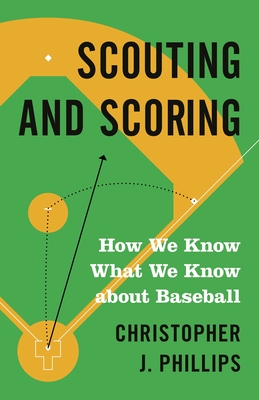
Scouting and Scoring – How We Know What We Know about Baseball
KSh 3,050.00
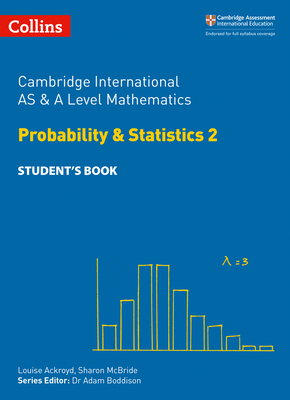
Caie Al Maths - Prob 2
KSh 4,450.00

Modeling Cancer Progression and the Effects of Treatment
KSh 21,950.00

Introduction to Data Science
KSh 9,900.00

Stochastic Differential Equations
KSh 13,150.00

The Evidential Foundations of Probalistic Reasoning
KSh 6,850.00

Mathematical Algorithms for Educational Data Classification
KSh 18,700.00
More by Linda C. Wolstenholme
More in This Genre
Pearson Edexcel International A Level Mathematics Statistics 1 Student Book
KSh 5,900.00
White Noise Distribution Theory
KSh 9,750.00
Pearson Edexcel International A Level Mathematics Statistics 3 Student Book
KSh 5,700.00
Pearson Edexcel International A Level Mathematics Statistics 2 Student Book
KSh 5,700.00
Caie Al Maths - Prob 1
KSh 4,500.00
Scouting and Scoring – How We Know What We Know about Baseball
KSh 3,050.00
