
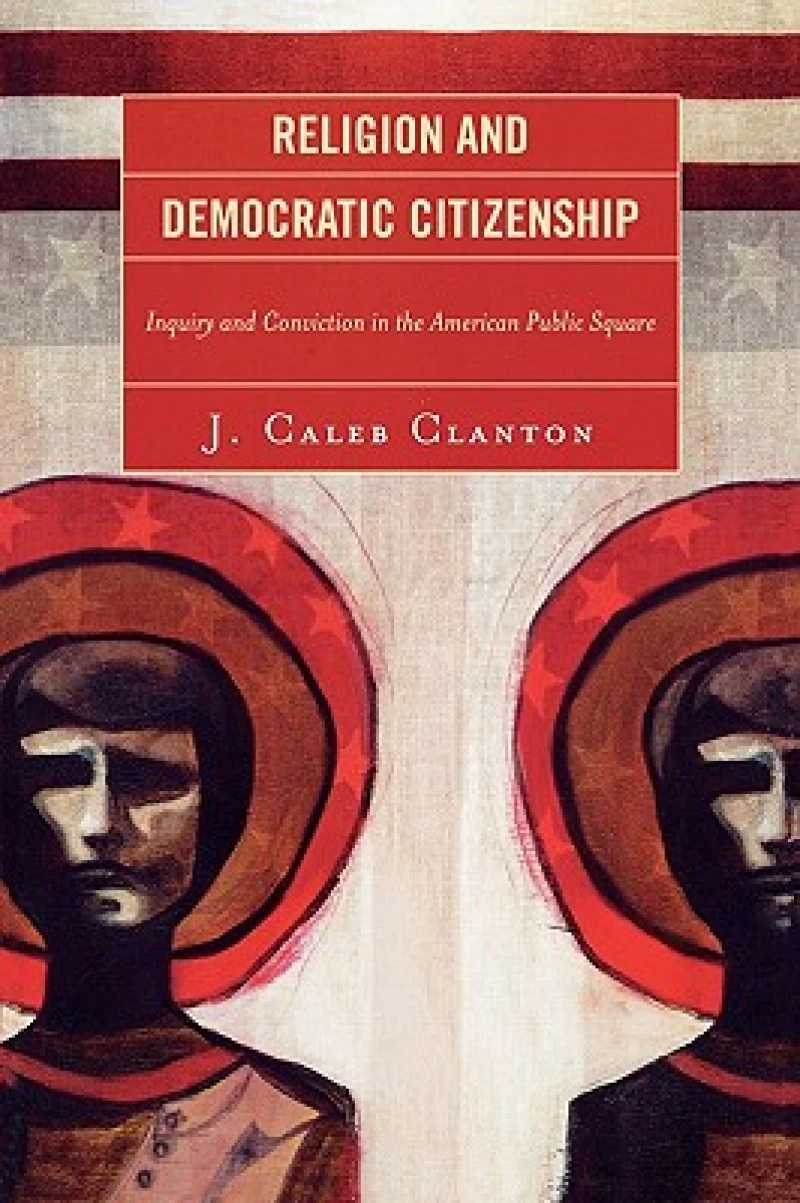
Religion and Democratic Citizenship : Inquiry and Conviction in the American Public Square
Book Details
Format
Paperback / Softback
ISBN-10
0739120816
ISBN-13
9780739120811
Publisher
Bloomsbury Publishing Plc
Imprint
Lexington Books
Country of Manufacture
GB
Country of Publication
GB
Publication Date
Nov 6th, 2007
Print length
172 Pages
Weight
263 grams
Dimensions
23.60 x 15.30 x 1.50 cms
Product Classification:
Social & political philosophy
Ksh 8,400.00
Manufactured on Demand
0 in stock
Delivery Location
Delivery fee: Select location
Secure
Quality
Fast
Polls indicate that many, if not most, Americans think that their religion should play some sort of role in the political arena. But are they misguided? When citizens allow their religious convictions to filter into the political sphere, are they acting as bad citizens? In a pluralistic democracy such as ours, what is the proper relationship between religion and politics? Religion and Democratic Citizenship critically examines a variety of proposals to address the question of whether and how religion should influence the activities of the American public square, from public deliberation to voting. These proposals commonly fall into two broad types of familiar strategies. On the one hand, mainstream liberal political theorists like John Rawls and others seek to keep religion and politics largely separate. On the other hand, pragmatists like William James, John Dewey, and Cornel West seek to reinterpret the meaning of religion itself so that it can be rendered compatible with democracy. Religion and Democratic Citizenship outlines the shortcomings of both of these strategies and aims to reframe the nature of the debate concerning the proper relationship between religion and politics by offering a useful framework for further discussion. Drawing influence from both Socrates and C. S. Peirce, the author proposes a model of the deliberative democracy designed to accommodate as many democratically predisposed citizens as possible, whether they are religious or not. In so doing, this book ultimately offers a strategy to accommodate religious participation in the activities of the democratic public square — a strategy that enables citizens to employ religious reasoning and meet the epistemic obligations of good deliberative democratic citizenship. Readers of this book will include researchers interested in Philosophy, Political Science, Law, Sociology, and Theology, as well as teachers, students, politicians, clergy, and concerned citizens.
Polls indicate that many, if not most, Americans think that their religion should play some sort of role in the political arena. But are they misguided? When citizens allow their religious convictions to filter into the political sphere, are they acting as bad citizens? In a pluralistic democracy such as ours, what is the proper relationship between religion and politics? Religion and Democratic Citizenship critically examines a variety of proposals to address the question of whether and how religion should influence the activities of the American public square, from public deliberation to voting. These proposals commonly fall into two broad types of familiar strategies. On the one hand, mainstream liberal political theorists like John Rawls and others seek to keep religion and politics largely separate. On the other hand, pragmatists like William James, John Dewey, and Cornel West seek to reinterpret the meaning of religion itself so that it can be rendered compatible with democracy. Religion and Democratic Citizenship outlines the shortcomings of both of these strategies and aims to reframe the nature of the debate concerning the proper relationship between religion and politics by offering a useful framework for further discussion. Drawing influence from both Socrates and C. S. Peirce, the author proposes a model of the deliberative democracy designed to accommodate as many democratically predisposed citizens as possible, whether they are religious or not. In so doing, this book ultimately offers a strategy to accommodate religious participation in the activities of the democratic public square — a strategy that enables citizens to employ religious reasoning and meet the epistemic obligations of good deliberative democratic citizenship. Readers of this book will include researchers interested in Philosophy, Political Science, Law, Sociology, and Theology, as well as teachers, students, politicians, clergy, and concerned citizens.
Get Religion and Democratic Citizenship by at the best price and quality guaranteed only at Werezi Africa's largest book ecommerce store. The book was published by Bloomsbury Publishing Plc and it has pages.

