
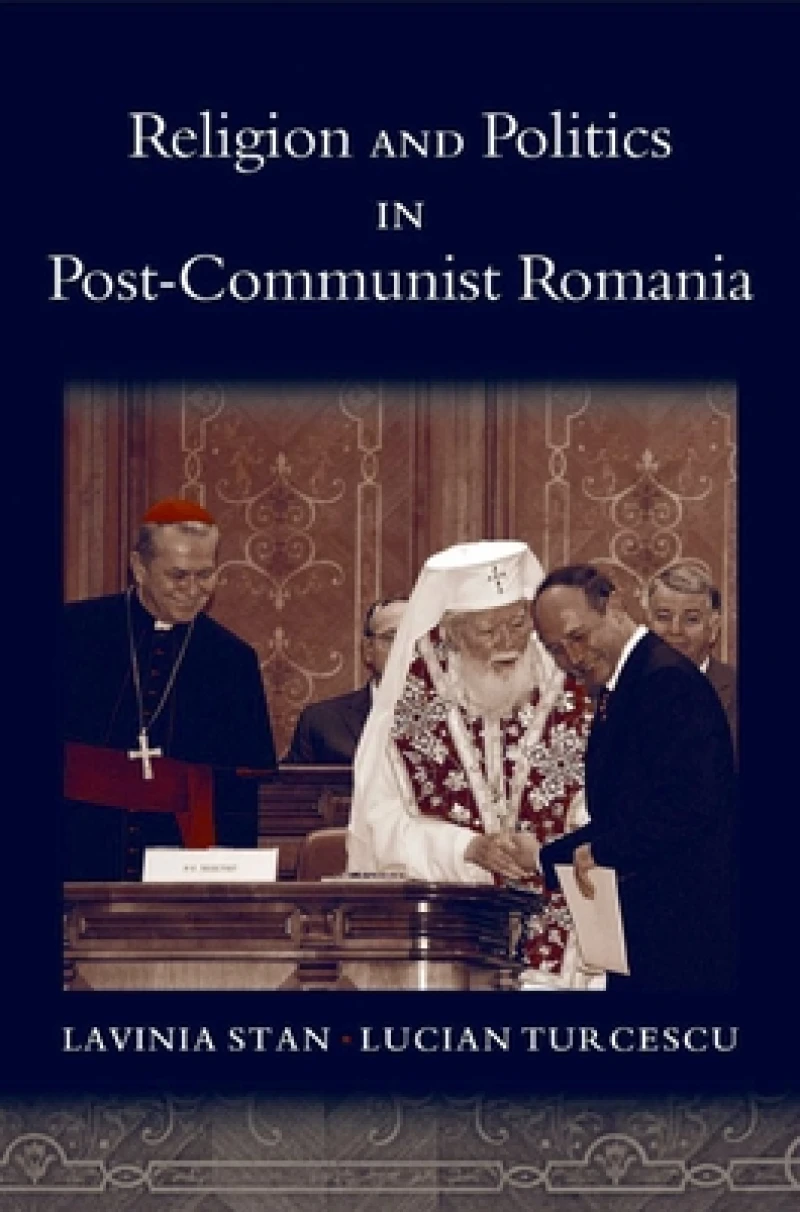
Religion and Politics in Post-Communist Romania
Book Details
Format
Hardback or Cased Book
Book Series
Religion and Global Politics
ISBN-10
0195308530
ISBN-13
9780195308532
Publisher
Oxford University Press Inc
Imprint
Oxford University Press Inc
Country of Manufacture
GB
Country of Publication
GB
Publication Date
Nov 1st, 2007
Print length
288 Pages
Weight
570 grams
Dimensions
16.00 x 23.10 x 2.30 cms
Ksh 16,500.00
Manufactured on Demand
0 in stock
Delivery Location
Delivery fee: Select location
Secure
Quality
Fast
In the post-communist era democracies in Eastern Europe will be determined by many factors. The Orthodox and Roman and Greek Catholic churches have imposed their views through political engagement and the Romanian Orthodox has sought to consolidate its position of national Church, the book examines the relationship between church and state.
In the post-communist era it has become evident that the emerging democracies in Eastern Europe will be determined by many factors, only some of them political. Throughout the region, the Orthodox, Roman Catholic, and Greek Catholic churches have tried to impose their views on democracy through direct political engagement. Moreover, surveys show that the churches (and the army) enjoy more popular confidence than elected political bodies such as parliaments. These results reflect widespread disenchantment with a democratization process that has allowed politicians to advance their own agendas rather than work to solve the urgent socio-economic problems these countries face. In this penetrating study, Lavinia Stan and Lucian Turcescu investigate the interaction of religion and politics in one such country, Romania. Facing internal challenges and external competitions from other religions old and new, the Orthodox Church in Romania has sought to consolidate its position and ensure Romania''s version of democracy recognizes its privileged position of "national Church", enforcing the Church''s stances on issues such as homosexuality and abortion. The post-communist state and political elite in turn rely on the Church for compliance with educational and cultural policies and to quell the insistent demands of the Hungarian minority for autonomy. Stan and Turcescu examine the complex relationship between church and state in this new Romania, providing analysis in key areas: church collaboration with communist authorities, post-communist electoral politics, nationalism and ethno-politics, restitution of Greek Catholic property, religious education, and sexual behavior and reproduction. As the first scholars to be given access to confidential materials from the archives of the communist political police, the notorious Securitate, Stan and Turcescu also examine church archives, legislation, news reports, and interviews with politicians and church leaders. This study will move the debate from common analyses of nationalism in isolation to more comprehensive investigations which consider the impact of religious actors on a multitude of other issues relevant to the political and social life of the country.
Get Religion and Politics in Post-Communist Romania by at the best price and quality guaranteed only at Werezi Africa's largest book ecommerce store. The book was published by Oxford University Press Inc and it has pages.

